A qualitative research study from CoGenerate and 30 older leaders who are committed to working across generations for change ↔ A qualitative research study from CoGenerate and 30 older leaders who are committed to working across generations for change ↔ A qualitative research study from CoGenerate and 30 older leaders who are committed to working across generations for change ↔ A qualitative research study from CoGenerate and 30 older leaders who are committed to working across generations for change ↔ A qualitative research study from CoGenerate and 30 older leaders who are committed to working across generations for change ↔ A qualitative research study from CoGenerate and 30 older leaders who are committed to working across generations for change ↔ A qualitative research study from CoGenerate and 30 older leaders who are committed to working across generations for change ↔ A qualitative research study from CoGenerate and 30 older leaders who are committed to working across generations for change ↔

Supported by AARP, The Eisner Foundation, and the Wallis Annenberg Legacy Foundation

WHAT OLDER LEADERS WANT — AND DON’T WANT —FROM YOUNGER ALLIES

Try our Conversation Guide

30

OLDER LEADERS SPEAK UP

AMERICA TODAY IS ONE OF THE MOST AGE-DIVERSE SOCIETIES IN HISTORY. SADLY, IT IS ALSO ONE OF THE MOST AGE SEGREGATED, WITH OLDER AND YOUNGER PEOPLE’S PATHS RARELY CROSSING OUTSIDE OF FAMILIES.

Introduction

America today is one of the most age-diverse societies in history. Sadly, it is also one of the most age segregated, with older and younger people’s paths rarely crossing outside of families.

The combination of age diversity and age segregation contributes to generational conflict, ageism and misunderstanding, and the epidemic of social isolation and loneliness. It also constitutes a missed opportunity to make the most of our age diversity, to bring older and younger people together to solve the problems that no generation can solve alone.

This report is the third in a series of research studies on making the most of this multigenerational moment.

The first – a nationally representative survey of more than 1,500 adults, ages 18 to 94 – asked Americans what they think about cogeneration, a strategy to bring older and younger people together to solve problems and bridge divides. CoGeneration: Is America Ready to Unleash a Multigenerational Force for Good?

The second – a qualitative research study of 31 young leaders committed to working across generations for change – asked what young leaders want from older allies, and how they believe intergenerational collaboration can be improved. What Younger Leaders Want — And Don’t Want — From Older Allies

The third, this study, turns the tables, asking what 30 older leaders – all committed to working across generations for change – want from younger allies. The older leaders, all over 50, are a mix of nonprofit and business leaders, activists, social entrepreneurs and authors. All have had transformative relationships with younger people they connected deeply with both personally and professionally.

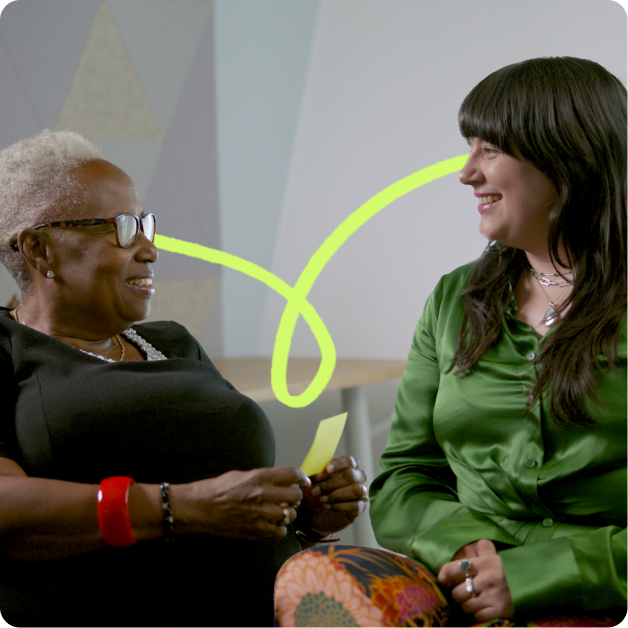
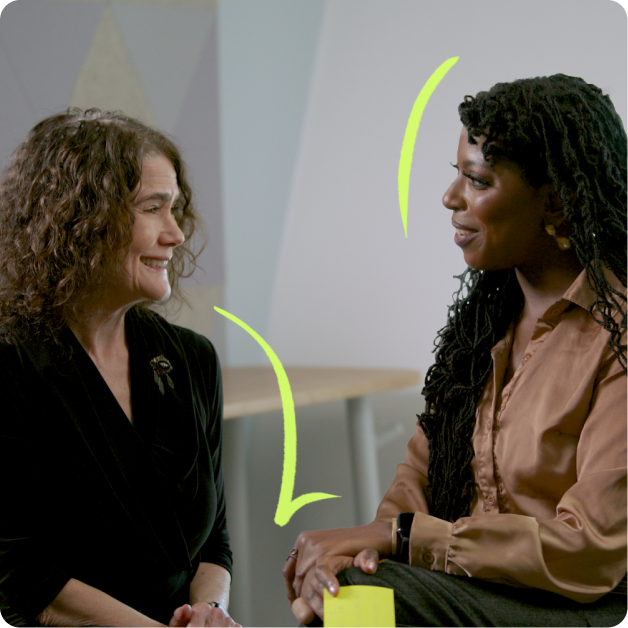
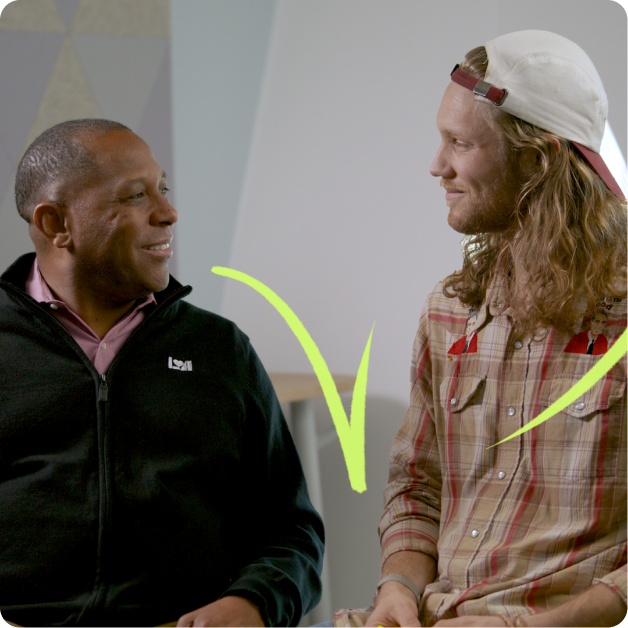
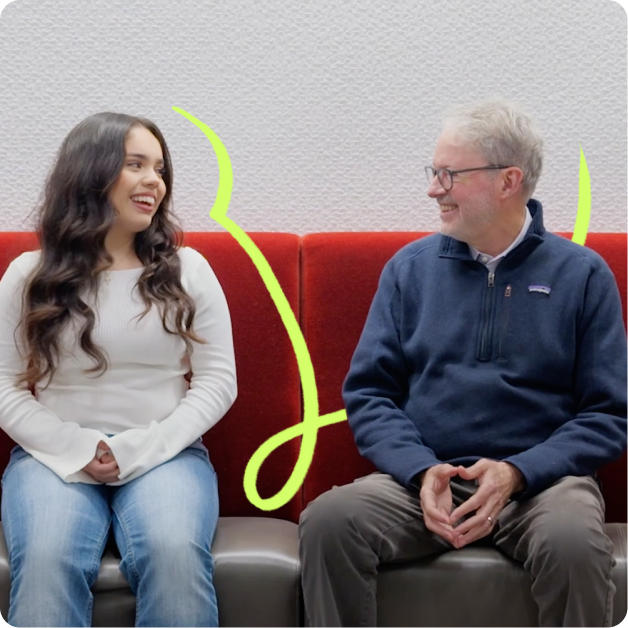
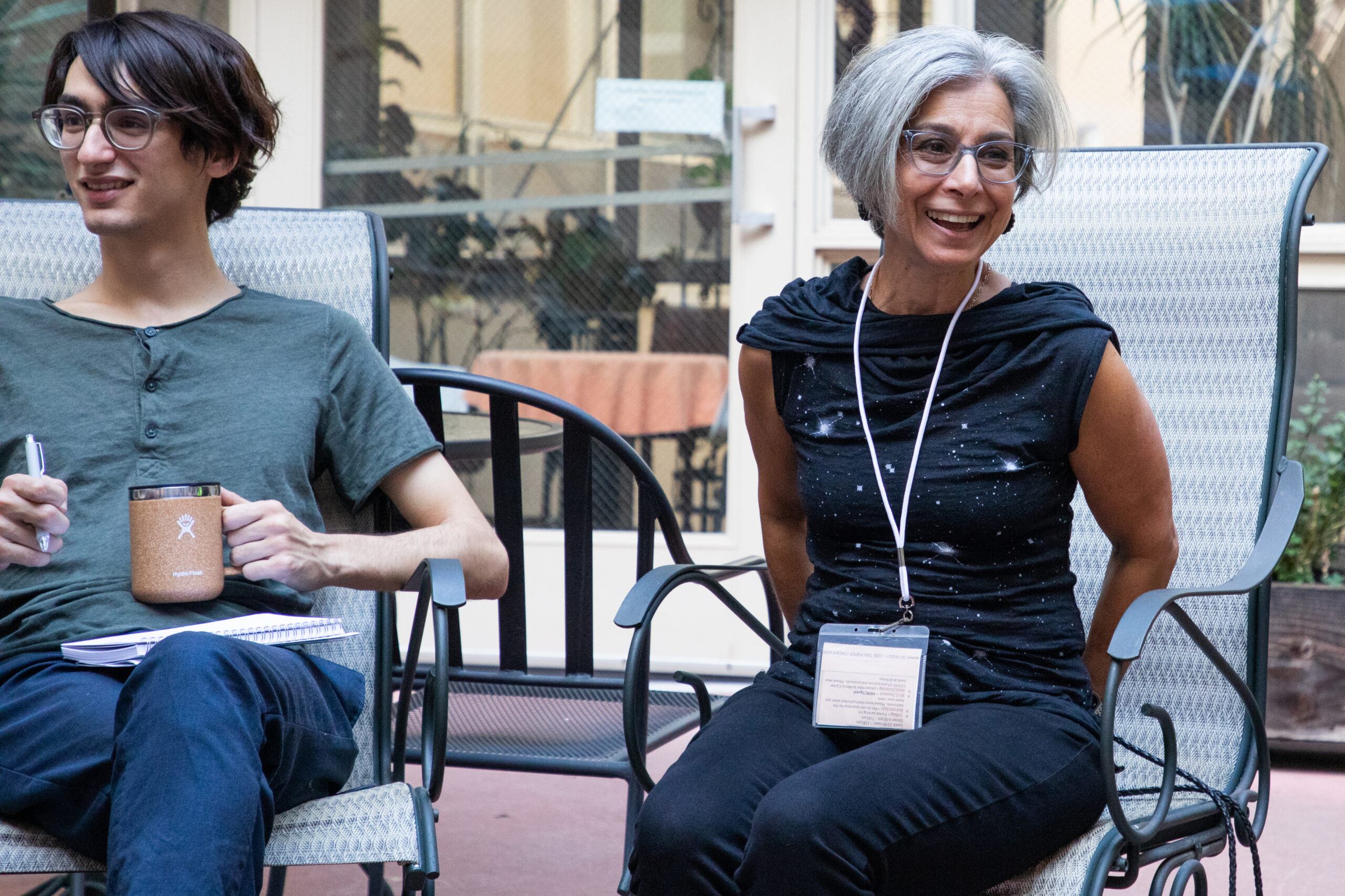
With support from AARP, The Eisner Foundation, and the Wallis Annenberg Legacy Foundation, we spent time talking with these leaders, bringing a dozen of them to Los Angeles for conversations amongst themselves and with younger leaders. The topic: how to bridge generational divides to meet the challenges of today’s chaotic world.

Watch the video below and read on for the insights we gleaned.
Source: Cogeneration

Play video
  1. It starts with admiration. 

  2. Conflict happens; let’s deal with it.

  3. Not everyone is ready to pass the baton.

  4. Sharing power, sure. But how?

  5. Get comfortable with being uncomfortable. 

  6. It’s never just about age.

The older leaders we spoke to were positive, constructive, insightful and honest about the future of cogenerational leadership. In many hours of conversation, we heard six consistent themes.

1. It starts with admiration.

“I admire young people’s boldness in asking for what they want, their confidence in their abilities. I don’t think that I had that at their age. And I admire their dedication to true work-life balance.”

— Atalaya Sergi,
former National Director, AmeriCorps Seniors

From their steadfastness to their values, their resilience to their creativity, there are many things the older leaders we spoke with admire about younger leaders today.  

Dana Coester is the founder and editor of 100 Days In Appalachia, an intentionally intergenerational newsroom whose reporters tell the stories of some of the country’s least covered and poorest communities. She was deeply impressed, and grateful, when her younger colleagues stepped up after her husband landed in the hospital, and she was unable to take on a complicated new project that was “unformed and had a hard deadline.” 

Coester offered as much bedside coaching from her husband’s bedside to the younger cohort back in the newsroom as she could. Then team members “bonded together” and began to implement their own solutions, guided by Coester, executing successfully on their own. 

That’s when Coester realized that cogenerational leadership meant trusting what younger leaders deliver. “I asked them to take the lead. I cannot now override their solutions.” 

Coester also respects her younger colleagues’ choice to work and live in Appalachia, where many of them are from. One staffer traded her dreams to work at a magazine in New York City to stay in West Virginia and work for 100 Days. Coester was impressed that “she doesn’t have to be someone else to have pride in who she is or the work she does.”

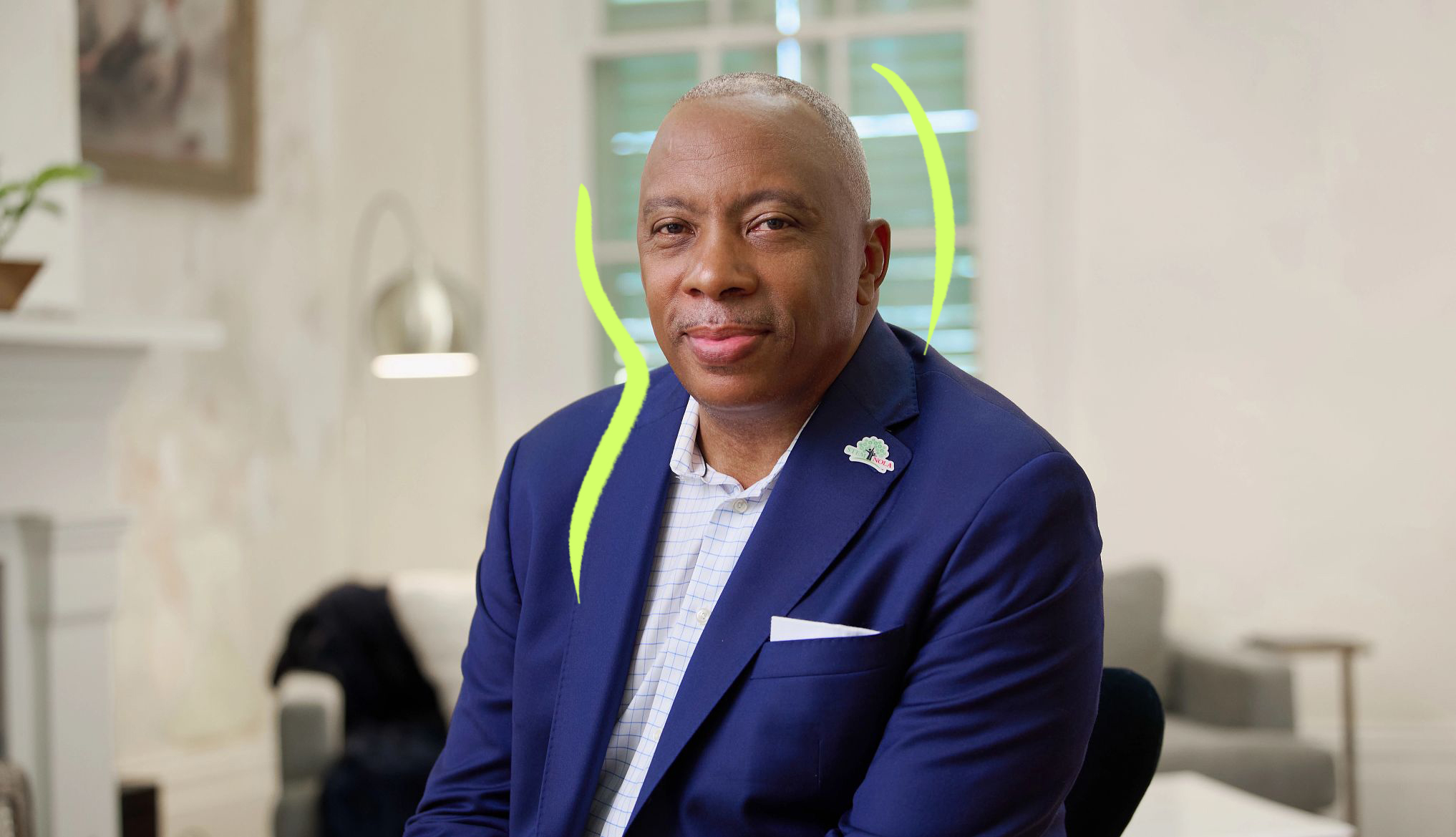
Dr. Calvin Mackie, the founder and CEO of STEM NOLA, a New Orleans nonprofit, respects young leaders’ get-up-and-go. “I really admire the way they move, their freedom, even the stuff that makes me mad about them, like they keep a job for two years and leave,” he says. “Their willingness to just go, the way they move around the world. I didn’t have that privilege.” 

Chip Conley, founder of the Modern Elder Academy, said many young people “have an existential impatience for their own careers, for seeing progress in what they are doing in their organizations, and for solving the world’s problems.” In other words, he says, they have a credo: “Let’s get shit done.” 

All of the older leaders we spoke to acknowledge the resilience of young people and “the difficult world we’ve left them and how they are building it anyway,’ says Rebecca Jim, a Native elder and climate activist. As founder and executive director of a local environmental justice organization, Jim advocates for the cleanup of the Tar Creek Superfund site in Oklahoma. Young people, she says, “didn’t know the earth when you could drink from any stream you came upon.” Now they’re “going full blast because they realize the world is on fire.”

“I admire their creative spark and forward-thinking mindset. There’s a genuine interest in making a difference in the world. They’re not just talking about change; they want to help create it.”

— Sandra Harris, co-founder, Massachusetts Coalition to Build Community and End Loneliness

2. Conflict happens; let’s deal with it.

“When young people get frustrated, it’s often because they’ve been confronted by a more experienced person who starts lecturing them about how something should be done. The other side of it causes just as much tension, when a young person dismisses everything an older person has to say because they are older. Neither group has all the answers, especially these days, when we’re all learning constantly, and we’re all learning together.”

— Susan Giannino,
senior advisor (former chair and CEO), Publicis Groupe

Generational differences can lead to conflict or make it more difficult to resolve. Last year, in our companion report, younger leaders told us that, as digital natives, they have few models for productive conflict. This year, older leaders told us they have some ideas about what leads to intergenerational conflict and what’s needed to begin to resolve it constructively.

The first thing older leaders want younger leaders to know is that disagreement isn’t personal. “One of the toughest things in life is navigating conflict,” says Brenda Atchinson, an advocate for intergenerational homesharing. “But it has nothing to do with whether you’re a terrible person. It’s a conflict of ideas. It means we see things differently.” 

One of the biggest obstacles to managing conflict on both sides of the generational divide is the fear of saying the wrong thing, inadvertently offending someone or being misunderstood. Setting expectations around how tough conversations are handled can help, says Akaya Windwood, lead advisor at Third Act, a nonprofit rallying older adults to support climate action and protect democracy. 

“We want to come into these conversations with good hearts and good intentions,” she says, with no fear of being “cancelled or castigated.”  

Tough conversations might be uncomfortable, Windwood says, but there’s a difference between feeling uncomfortable and feeling unsafe. “My discomfort often has nothing to do with how safe I am. I can be quite uncomfortable and quite safe at the same time. It’s helpful when that is understood all the way around.”

Others told us about the roadblocks they see to conflict resolution. “I want to see a little bit more humility and an attitude more open to listening. Not because I know more than younger people, but because I feel that sometimes they are not that open to listening,” says Mariela Briceño, co-founder of Venprendedoras, a Miami-based nonprofit that supports women entrepreneurs.  

Chip Conley, founder of the Modern Elder Academy, says one of the roadblocks he sees to resolving conflict is an overemphasis on being “blamey” rather than understanding. “At the end of the day it starts with respect on both sides,” he says. “How do younger people respect the life experiences of older people and vice versa. There’s real value in that.” 

“Sometimes younger people are so focused on what they feel is right and what they want to do that they lose sight of the bigger picture,” adds Atalaya Sergi, former national director of Americorps Seniors.

For Raymond Jetson, founder of Aging While Black, solving problems without a minimum of conflict is as simple as having a checklist. 

Jetson is half of a cogenerational leadership team at Metromorphosis, a nonprofit he founded to strengthen the local economy and community in Baton Rouge. A few years ago Jetson, a boomer, and his co-leader Sherreta Harrison, a millennial, developed a rubric for evaluating and getting past disagreements. 

“One of the things we discovered early on, surprise, surprise, was that we didn’t agree on everything,” says Jetson. “If it was going to truly be co-leadership, then we had to understand how we make decisions when there’s disagreement.” 

Over the course of a few months, the pair designed a set of questions to take the emotion out of making a decision. They include identifying which person has daily oversight and responsibility for the issue and which person has the right experience to make the call. 

“At the end of the day,” Jetson says, “the person with the most checks makes the decision, and the other person wholeheartedly supports that decision.”

IN THEIR WORDS

GOTTA LAUGH

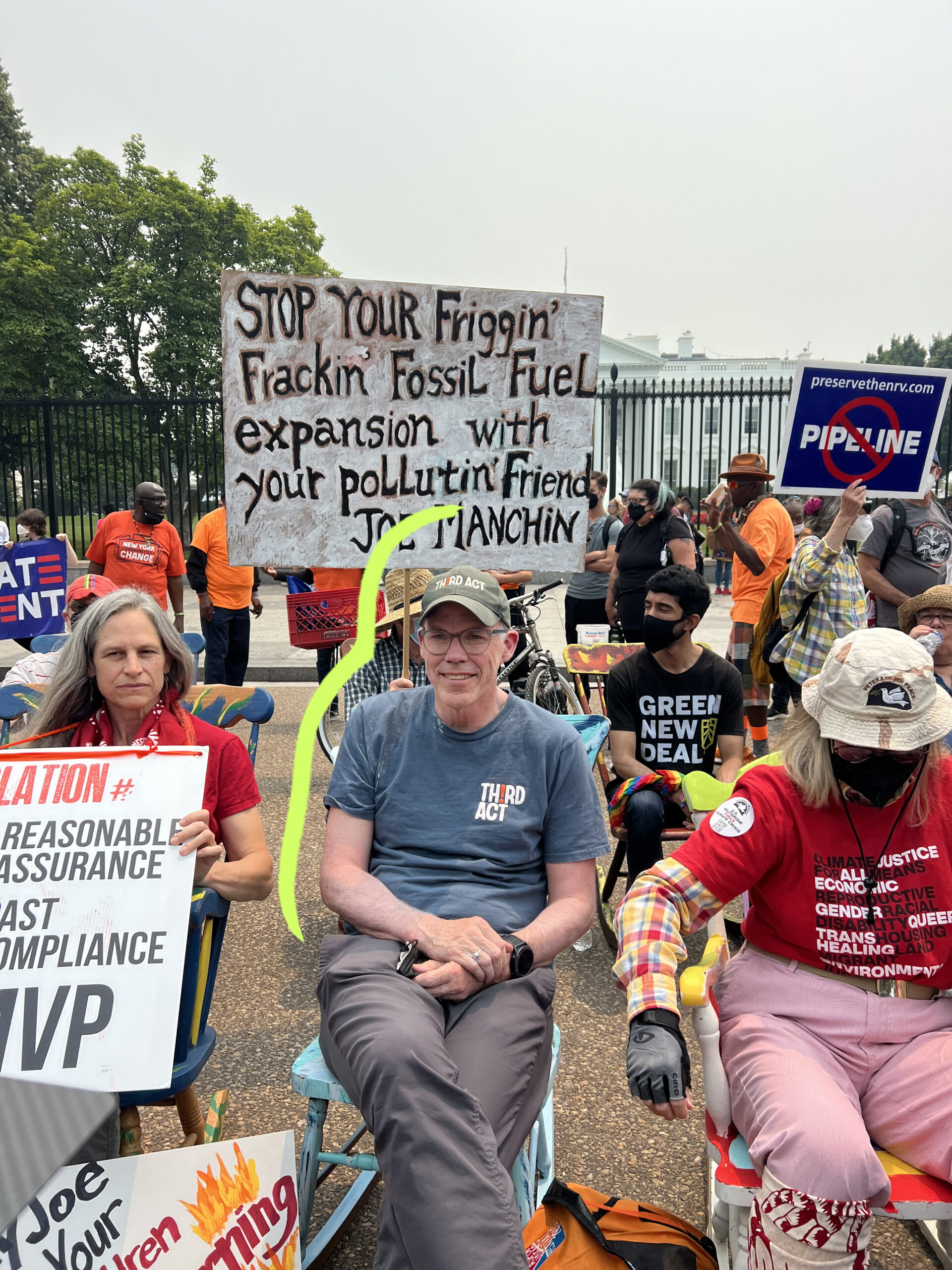
It was called the Rocking Chair Rebellion. Hundreds of older people sitting in rocking chairs in front of four banks across the country that are the biggest lenders to the fossil fuel industry.

The events were launched and coordinated by Third Act, an organization founded by Bill McKibben to organize people over 60 to help fight climate change and protect democracy. “We leaned into the ‘We’re old’ thing,” McKibben says. “We carried a banner that read, ‘Fossils Against Fossil Fuel.’ “Youngers are appropriately earnest,” he adds, “but humor may be a gift that olders bring to this. Reality is tough enough and if you don’t develop a sense of humor about it, you’re not going to last too long in this kind of work.”

“When reviewing a new digital product, someone said to me, ‘I don’t know if someone your age would necessarily understand that.’ We are all ageist. We all make assumptions about someone’s age. Stripping out ageism in any kind of perceptions or response and having an equal playing field would be something.”

— Michael Clinton, founder and CEO of ROAR Forward

3. Not everyone is ready to pass the baton

“In order for me to pass the baton, we need to be clear that we are running the same race.”

— Raymond Jetson,
founder of Metromorphosis and Aging While Black

Whatever you call it – passing the baton, transferring power, stepping down or stepping aside – succession is a touchy topic. Some people over 50 are no longer ambitious for career accomplishments. For others, especially career changers and those who took breaks as parents or caregivers, later years may be among the most ambitious times. While many older adults understand the need to make space for new, younger leaders, they have a wide range of perspectives on when and how to do so. 

Mariela Briceño co-founded Venprendedoras, an incubator for Latina entrepreneurs, in 2020. Now 57, she’s not ready to let go. “I have less time to achieve what I want,” she says “In a way it’s now or never. I feel more pressure than I did before.” 

Other older leaders want to make sure younger leaders are ready for big leadership roles before they step aside. “You have to show that you can carry the load that you claim to want to carry,” says Dr. Calvin Mackie, founder and CEO of STEM NOLA. Mackie acknowledges that the idea of paying one’s dues is “overprescribed by some as a mechanism to keep people out.” But, he says, “you do the work and the world will make a place for you. That’s my challenge to young people.”

At the same time, “Older leaders need to understand that younger leaders are ready for opportunities,” says Gara LaMarche, human and civil rights activist. “Around my middle 50s I realized I wasn’t being driven by the need to be in charge any more. I had achieved a lot in real-world terms. I wanted to contribute and earn a living but I wasn’t so focused on getting to the next peak. I was keenly aware that I didn’t want to be the old white person who overstayed their welcome, who people are waiting on to leave.”

Deciding when to step aside or move into a different role can be a cultural or financial choice, says Beckie Masaki, co-founder of Asian Women’s Shelter, a nonprofit fighting gender-based violence, where she served as executive director for 21 years. 

“I saw a lot of women who were my mentors, the founding mothers of the violence against women movement, cling to their leadership and their recognition. I thought, ‘I don’t want to be like that.’” So she began to shift gears when she turned 50. 

Today, at 60, Masaki says she’s starting her next life cycle, known in Japanese culture as “kanreki.” “It is the time to intentionally pass [leadership roles] on to the next generation.” But like many older leaders, particularly women and people of color, she still needs to work for income and health insurance. “In for-profit work and nonprofit work, there isn’t always a retirement or pension way out for elders.” 

“As a society, we need to make room for new leaders and to create meaningful pathways for older leaders that don’t leave them scrambling to sustain themselves,” says Paul Irving, former president of the Milken Institute, founding chair of its Center for the Future of Aging, and now the Institute’s senior advisor.

“We need to develop new roles and define new responsibilities for older people in workplaces, in politics, and throughout our society,” he says. “We can keep them actively and productively involved while ensuring that younger people have an opportunity to grow and realize their leadership aspirations. All that is possible if we teach people differently, reward people differently, and recognize the value and potential of talent at every age.” 

Some older leaders, like Rebecca Jim, a Native elder and climate activist, are waiting for more younger leaders to step up and continue the work they’ve started. Last year, Jim worked with Loren Waters, a young Native filmmaker, on a documentary about the Tar Creek Superfund site. “There aren’t a lot of people who want to say ‘Move over, I want to be there [to save] a damaged creek that nobody cares about’,” says Jim who works with local schools on environmental education. “The work will be done in their lifetime. It has to be done.”
IN THEIR WORDS

WHAT’S NEXT?

As she was preparing to step down as senior rabbi of Temple Emanuel of Beverly Hills, Rabbi Laura Geller turned inward and asked herself who she would be without that role. 

“Until I can figure out how to answer that question with new roles, then I’m going to not want to give up my power and I’m going to get in the way of the next generation.” 

It was important for Geller to define a new path. “I gave at the office. I don’t need to do that anymore. Now, I want to find a different way of helping people and understanding the richness that can come to us, as well as to younger folks.”

“My ambition is changing. I want to continue to work to make a difference but I also want a life outside of work. I don’t need to be the person out front to be seen. I used to want to be elevated, be seen and get credit for my work. At this stage I just want things to be better when I leave.”

— Atalaya Sergi, former national director, AmeriCorps Seniors

4. Sharing power, sure. But how?

“I don’t want to do it alone. If I want to have a legacy, I have to make room for others to step in.”

— Mariela Briceño,
co-founder of Venprendedoras

Many older leaders told us they are ready, even eager, to share power. The question is, as Raymond Jetson, founder of Metromorphosis and Aging While Black says, how to “rearrange the unspoken power dynamic in the room.” Older leaders’ methods vary – from moving out to moving aside, from sharing some power to sharing power equally.

Some established leaders are able to move from the top job to an advisory role. Advertising executive Susan Gianinno moved from being Chair and CEO of Publicis North America to Senior Advisor to the Publicis Groupe. Today she uses her experience to mentor and guide young leaders in the company.  

In 2022, Ai-jen Poo, co-founder of the National Domestic Workers Alliance, made a similar move when she moved into a new job as the Alliance’s president and named Jenn Stowe as its executive director and her successor. Poo, a Gen Xer, now “offers vision, strategy, help with fundraising and help with mentorship,” while Stowe, a Millennial, manages day-to-day operations. What makes it work? “Having a clear understanding of our respective strengths,” Poo explains, along with “a clear division of labor and a lot of mutual respect and trust.”

When older leaders become advisors, younger leaders retain institutional knowledge and “build off of the wins that previous generations have made,” Poo says. “There are a lot of lessons and a lot of important learnings that were hard won, often through mistakes. It would be great if, from one generation to the next, we can be making new mistakes, not the same ones.”

At CoGenerate, founder Marc Freedman, a boomer, and his long-time colleague Eunice Lin Nichols, a Gen Xer, chose cogenerational co-leadership. Now both are co-CEOs. “It’s truly been an honor and a joy to share the top job with Eunice,” Freedman says. “She’s brilliant, curious, wise, and brings out the best in all her colleagues, myself included.” Having worked together for 20 years certainly eased the transition. “We have a long history of learning together,” Freedman adds.

Some older leaders share power and establish trust with their constituency by bringing young people into advisory roles. Tony Brown, CEO of Heart of Los Angeles and co-founder of its Intergenerational Music Program, says that too often youth-serving organizations fill their Boards with older people “who can fund the thing, but you are missing the voices of the young people you aim to serve.” For the past two years, he has invited young leaders and Heart of Los Angeles Alumni to join the Board of Directors as Board Fellows to give input and perspective.

Effectively sharing power can also happen for smaller tasks. Donna Butts, executive director of Generations United, remembers when a younger staff member chided her for how “ageist” their how-to guides and publications were. Instead of feeling offended, Butts used it as a moment of encouragement, giving the staffer the reins to take the lead on creating new content, videos and materials. 

Elders can share power by offering support, Butts says. “It’s like teaching somebody to swim. You have your hands under them but not touching them. You’re not going to let them drown, but they’re going to swallow a little water.” 

Sandra Harris, co-founder of the Massachusetts Coalition to Build Community and End Loneliness, agrees. Young leaders, she says, bring energy and ambition, but they are still gaining the lived perspectives that shape nuanced decision-making. “I see my role as inviting them into my world, sharing what I’ve learned, what’s worked, and just as importantly, what hasn’t.” 

Harris also takes the time to let colleagues know that all viewpoints are welcome. “As one of the ‘oldies,’ I know it is on us to be intentional about creating space for others to join us and encouraging them to bring their skills, fresh ideas, and perspectives to the table.”

IN THEIR WORDS

ASK ME

Foraging fresh seaweed from the Pacific Ocean is a cultural and culinary treat that former nonprofit executive Beckie Masaki uses to make homemade miso soup. 

When she served the soup at a recent gathering, “The young folks said, ‘Oh, this reminds me of what my grandma used to make!’” Masaki told them how she had foraged the seaweed herself.

“I want to go with you to learn that!” said some of the younger people. “That made me feel good,” Masaki says. “I want young people to be interested and curious and want to learn and to hang out with me. I want them to notice that I have something that they might want to know – and ask me to share it.”

“Cogenerational leadership has created shared responsibility for the big picture, which is a huge relief to me after decades of holding the CEO job alone. It’s less solitary and more fun. And it’s given me the time and space needed to achieve a healthier work/life balance, which is something I admire younger leaders for prioritizing.”

— Marc Freedman, founder and co-CEO, CoGenerate

5. Get comfortable with being uncomfortable.

“Older people may be a little too comfortable with the idea that the arc of the moral universe is long but it bends toward justice. That may make us a little complacent. At the same time, some young people may not have a fully developed sense of what they could hope for.”

— Bill McKibben,
founder, Third Act

It’s not lost on older leaders that they may have generational blindspots when it comes to everything from office politics to sex. 

Akaya Windwood, lead advisor to Third Act, learned that lesson unexpectedly at a retreat. “The way I was taught to think about gender as a young lesbian separatist in my 20s is very different from the way I’ve learned to think about it now,” she says. 

It was during an intergenerational lunch when an asexual guest described wanting to be “sensorially flagellated” by herbs and plants for their birthday. Windwood had never heard of such a thing. “I’m sitting here listening and thinking ‘What the actual what!?’” she says. “I had to seriously expand my notion of what sex is.” 

The conversation pushed her boundaries. “They told me that they could never have had this conversation with most elders they knew and certainly not within their families,” Windwood says. She was grateful for the experience, however surprising. “I won’t ever look at my rosemary plant the same way,” she jokes. 

On a more serious note, Windwood says allowing ourselves to sit with the discomfort of a new idea means we’re allowing ourselves to get smarter. “I’m uncomfortable at least 30 percent of the time these days, and I’ve learned to embrace and appreciate that.”

Not all elders are as willing to step out of their comfort zones as Windwood, something that frustrates Laura Geller, Rabbi Emerita of Temple Emanuel of Beverly Hills. “The idea of being just in a community of active older adults with no young people is not my idea of how I want to be spending this next stage of my life,” says Geller. “I am struck by how difficult it is” to convince some older folks to get out of their comfort zones.”

Older leaders who do decide to challenge their long held beliefs are often rewarded with deeper relationships, a net positive for everyone, says Wendy Lesko, co-founder of both Youth Infusion and the Youth Activism Project. 

Learning to be vulnerable by admitting mistakes, for example, is something Lesko wholeheartedly recommends. Older leaders need to get comfortable having “authentic and full-bodied conversations,” Lesko says. “We have so much more power in the relationship. It’s up to us to offer vulnerability, strength and stability.” 

It’s important that older leaders get comfortable with change in the workplace too, says Chip Conley. “Older leaders who want to hold on to the identity and power that they have earned over the course of time are going to end up looking foolish,” Conley says. 

“It’s not to say they shouldn’t be active or invested in their careers, but careers are supposed to evolve over time. That evolution means maybe you get comfortable with the idea that you report to someone who’s younger than you, or you become a mentor, or you become the most curious person in the room.”

“Young people oxygenate me. We talk about new perspectives and new energy, but it’s so much deeper than that.”

— Wendy Lesko, co-founder, Youth Infusion

6. It’s never just about age.

“You can’t talk about power without talking about inequity. You can’t talk about power without getting intersectional.”

— Ashton Applewhite,
author of This Chair Rocks and co-founder of Old School

The desire to understand each other across generations involves bridging multiple divides. Age is never the only thing in the room.

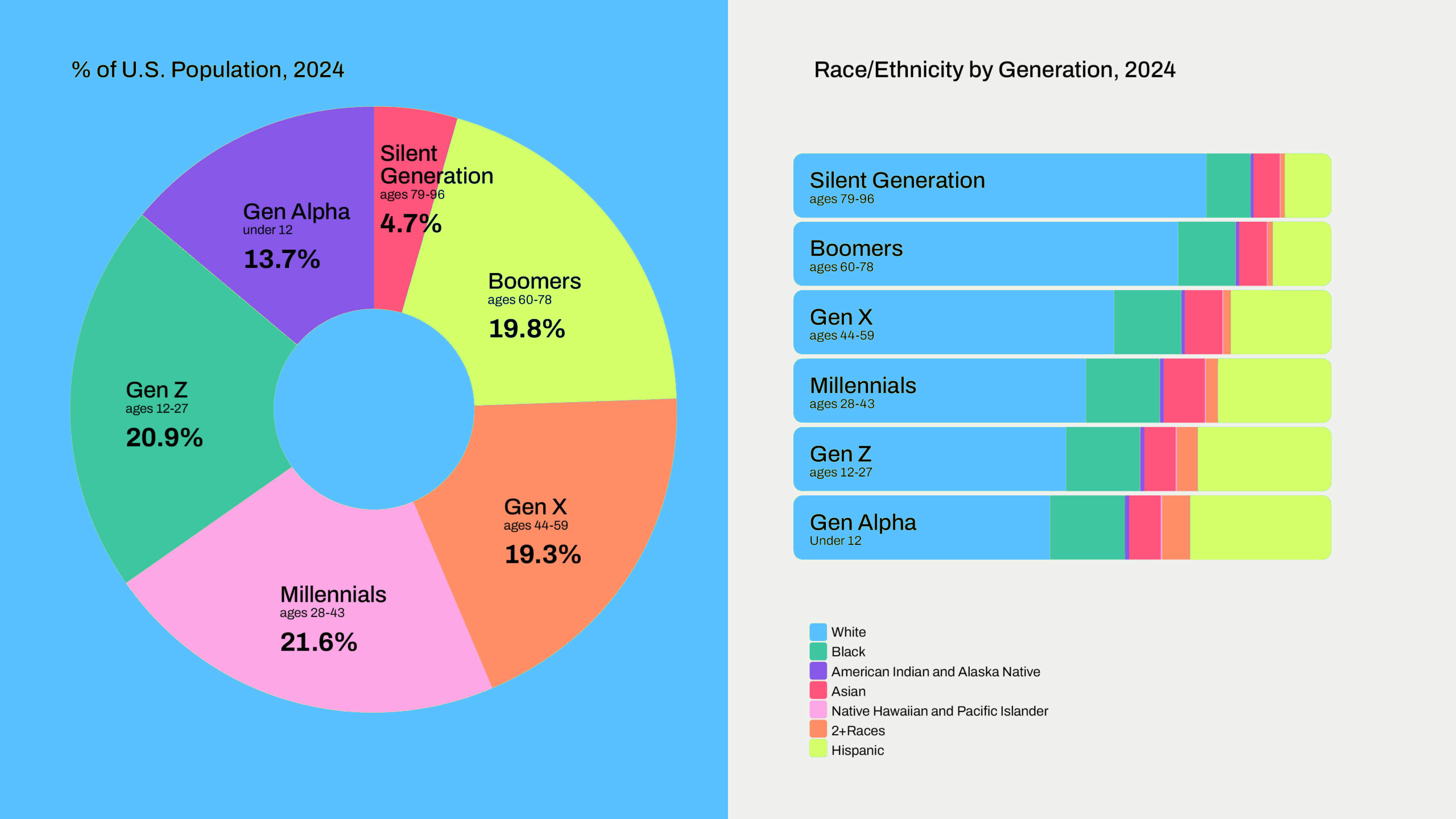
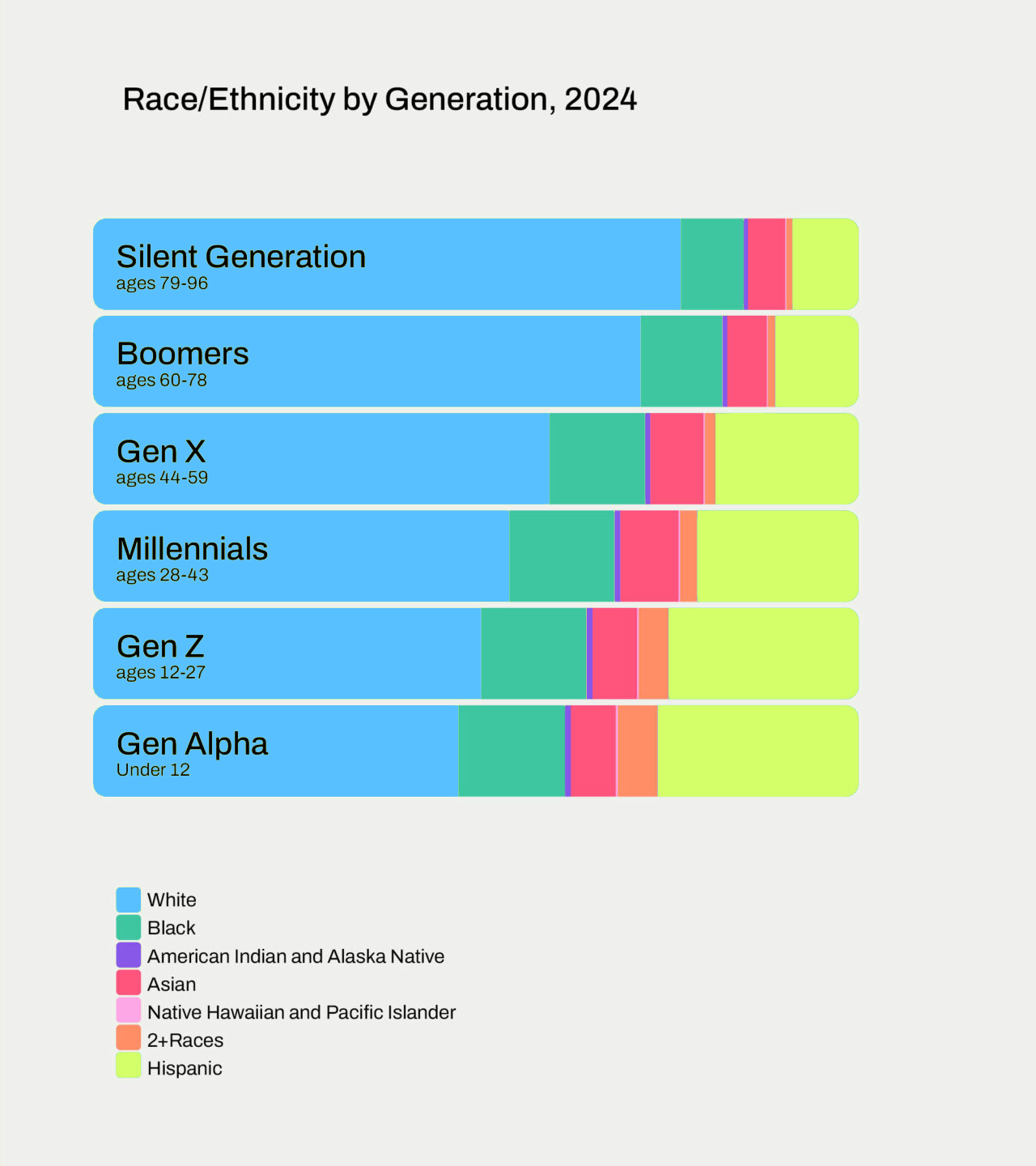
The vast majority of older adults in the U.S. are white, while younger generations are much more diverse by race, culture, language, sexual orientation and gender identity. Older adults are wealthier, more religious, and vote more often than young people.

An understanding of race, gender and privilege should be part of any intergenerational movement, says David Vásquez-Levy, president of the Pacific School of Religion. “In California, where I live, the older 20 percent is predominantly white and holds much of the wealth, and the bottom 20 percent is predominantly diverse and has very limited access to wealth.”

Racial and ethnic diversity will be a key factor in determining the intergenerational future of religious communities, particularly in immigrant congregations, Vásquez-Levy adds. “Leaders in those spaces are really working at figuring out ways to keep the next generation engaged and recognizing the need to make room for their leadership.” 

Dr. Imani Woody, founder and CEO of Mary’s House for Older Adults, wants young people to understand the culture of racism, homophobia, sexism, and ageism that older leaders grew up in. “In my generation, you assimilated to stay safe,” Woody says. “Black and LGBTQ+SGL (same-gender loving) communities have always been marginalized; adding age to the equation only increases the burden. It’s hard to be old in the United States.” 

Gerontologist and professor Fernando Torres-Gil, acknowledges that boomers are responsible for miscalculating the importance of multicultural coalition building. “One of our great regrets is, we neglected to recognize that the older voter base is primarily white,” says Torres-Gil. 

Younger leaders must make the course correction. “You have a long lifespan ahead of you to choose how to rebuild, how to reinvent, how to bring back a form of government that will serve your needs,” he says. “And part of it, of course, is multicultural and multiracial.”

Some things are hard to fix, says Donna Butts, executive director of Generations United. She acknowledges that the team of four white women leading her organization isn’t representative, but “I have three people who’ve worked with me for more than 25 years. Side by side, they built the organization with me.” 
Still, having four women in leadership is an affront to the sexism many of them experienced in other workplaces, Butts says, including “not being paid because I wouldn’t sleep with the boss.” Younger leaders should show “mutual respect in honoring all lived experiences,” Butts adds. “That mutual respect is something I would like. It’s important to me.” 

Dana Coester, the founder and editor of 100 Days in Appalachia, recalls similarly demeaning experiences as a working mother. “Journalism was a predominantly male field where you couldn’t even reveal you were a mom,” Coester says. “If I would have put a single picture of my kids in my cubicle, I would have been banished from the promotion track.” 

The older leaders we spoke with want young allies to understand the history of prejudice in this country, its impact on older people, and the ways all generations must work together to create a more equitable future.

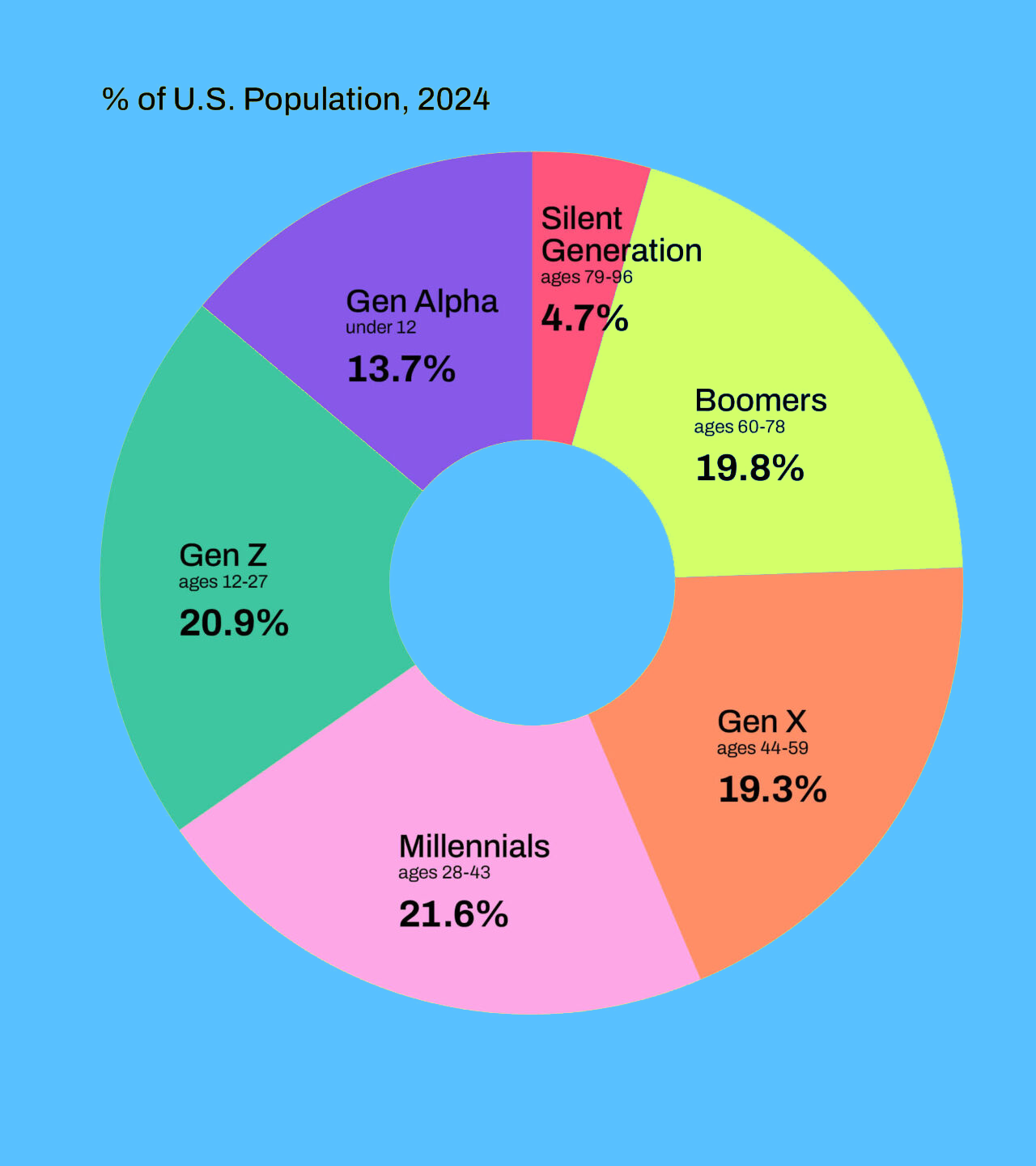
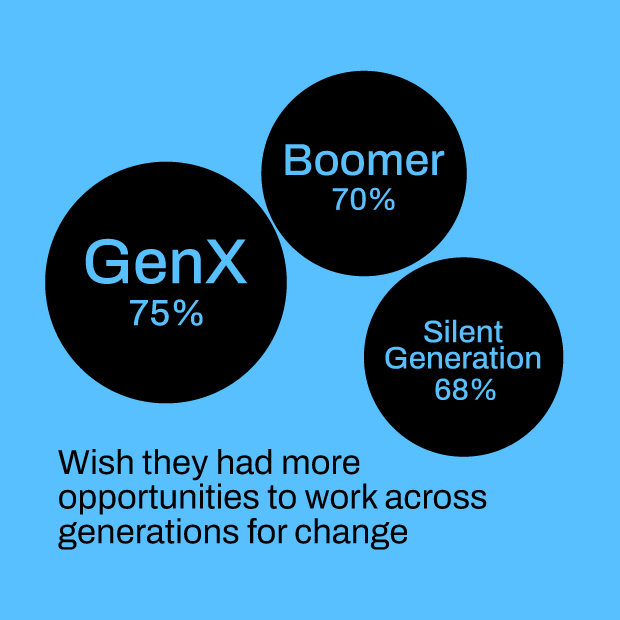
Source: Pew Research, U.S. Census data

Source: U.S. Census data

“I don’t have to be a leader. I’m just as happy to be a follower, but I think our commitment and determination, our need to contribute remains. We need to stand up, we need to talk about things, we need to take action.”

— Brenda Atchinson, intergenerational housing advocate

  • USE US

  • INVITE US

  • UNDERSTAND US

  • RESPECT US

  • “I sometimes feel that I’m being stereotyped by age and other factors. I get it and it can be overcome. But sometimes I wish young people were a little less wary and more open to what older experienced activists have to offer.”

    — Gara LaMarche,
    human and civil rights activist
  • “When I am clustering with a group that’s primarily younger people, I want to be able to contribute, I want to be able to listen, and I want to be able to understand. I try to repeat back what I’m hearing to make sure I’m not misunderstanding it.”

    — Brenda Atchinson,
    intergenerational housing advocate
  • I want to be invited to baby showers and weddings and celebrations. As we get older, more of the events that we go to are sad. I will travel anywhere or host anything to celebrate life.”

    — Donna Butts,
    executive director of Generations United
  • I want to be viewed as a credible resource.”

    — Raymond Jetson,
    founder of Metromorphosis and Aging White Black
  •  “Given the prejudices against women, and older women in particular, I ask to be addressed as Doctor Woody.”

    — Dr. Imani Woody,
    founder and CEO of Mary’s House for Older Adults
  • I want young people to really take ownership of their leadership and their role in shaping the future. And I want them to do it with ambition.”

    — Ai-jen Poo,
    president of the National Domestic Workers Alliance
  • I want young people to be hungry. I want them to desire. I want them to be inquisitive, to want to know. I want them to want to learn. I want them to want something.”

    — Dr. Calvin Mackie,
    founder and CEO, STEM NOLA
  • I want young people to have existential impatience, curiosity, and an ability to find talent in unexpected places in our society.”

    — Chip Conley,
    founder of the Modern Elder Academy
  • I want a world in which what we cannot change about ourselves cannot be held against us.”

    — Ashton Applewhite,
    author of This Chair Rocks and co-founder of Old School
  • I want to partner with young leaders to move beyond the fully understandable frustration with what is – and to give voice to their visions of tomorrow so we can work towards them together.”

    — David Vásquez-Levy,
    President, Pacific School of Religion

Conclusion

When asked what they want from younger allies, the older leaders we spoke with didn’t offer complaints or cliches. Instead, they spoke about how much they admire younger leaders’ confidence, courage, values and insistence on work-life balance. 

Many said they no longer need to be quarterback, but they don’t want to be sidelined either. They told us they want to share power but have many different answers about how. They said they want to learn from their younger allies on leadership and life and, oh yeah, technology too.

They said they want to be invited – to be part of the good fight, to share what they’ve learned, to become friends, to join in life’s celebrations. 

We’re struck by the similarities between what older and younger leaders want and don’t want. Young and older adults told us they want more curiosity and listening, less blame. More time to build trust and understanding. More chances to work with and learn from one another. An end to ageism against old and young alike. Not all older people are ready to share leadership across generations, but many are. We believe their voices can help shape a future where generations don’t compete for power, they share it.

Dig Deeper. Try This.

Discuss this report with older and younger people in your life. What resonates? What’s missing? What changes can you make to age-integrate your life?

Share this report with your friends, colleagues and family.

Check out these resources:

What Young Leaders Want — And Don’t Want — From Older Allies + Conversation Guide

Cogeneration: A National Opinion Survey with NORC at the University of Chicago’s AmeriSpeak Panel

Marc Freedman, How to Live Forever: The Enduring Power of Connecting the Generations (Hachette Book Group – Public Affairs)

Gara LaMarche, What Happened When Four Older Social Justice Activists Were Paired with Four Younger Ones? 

Raymond Jetson for Next Avenue, The Future of Leadership is Plural

Denise Webb and Wendy Lesko, Why Aren’t We Doing This! Collaborating with Minors in Major Ways

Janet Oh, Want to Jumpstart a Conversation About Collaborating with Teens?

Old School: A hub for age equity and ageism awareness

JOIN THE MOVEMENT. TOGETHER, WE CAN SOLVE PROBLEMS THAT NO GENERATION CAN SOLVE ALONE.

Acknowledgements

We are grateful to AARP, The Eisner Foundation, and the Wallis Annenberg Legacy Foundation for the support that made this report possible. 

A special thank you for their leadership and support to Barb Quaintance, former Vice President, Enterprise Strategies at AARP; Kevin Donnellan, former Executive Vice President and Chief of Staff at AARP; Trent Stamp, CEO of The Eisner Foundation; and Aradhna Malhotra Oliphant, Chief Operations and Strategy Officer at the Wallis Annenberg Legacy Foundation. 

Thanks also to Christopher Leach, Director at Wallis Annenberg GenSpace, and to the Second Peninsula media crew: Steve Goldbloom, Melissa Williams, Mira Kittner, Ana Davila, and Peter Shin.

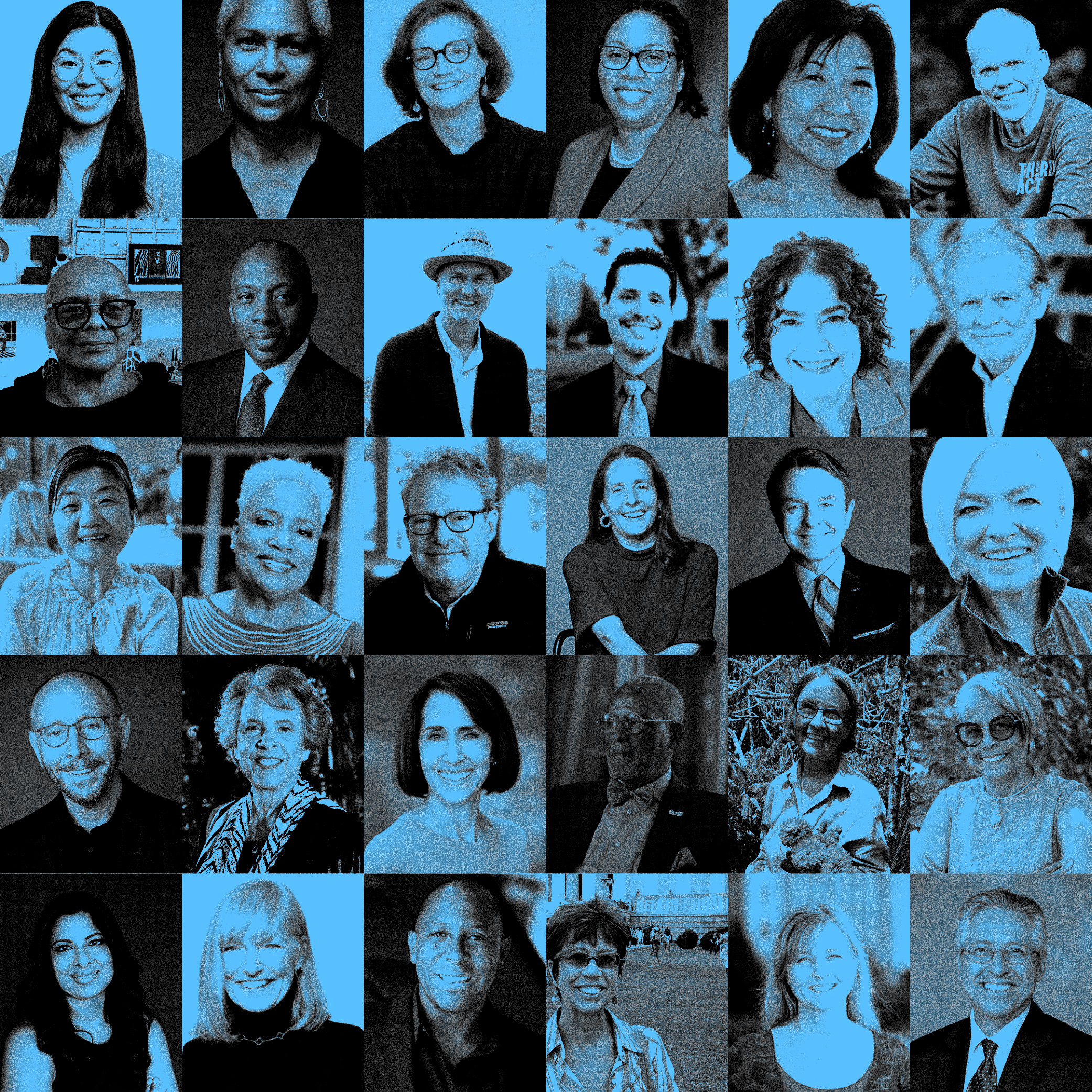
We are enormously grateful to the 30 older leaders who participated in this study — taking time to connect with us and share their honest thoughts and feelings about how to improve intergenerational collaboration. You can learn more about them below.

THE 30