Want to connect across generations? Join us:

Purpose Prize

Marc Freedman Portrait

The Latest from CoGenerate

Event Recording: Book Talk: Cogeneration in the Age of AI

Event Recording: Book Talk: Cogeneration in the Age of AI

Simple question: Do you miss human connection when you use self-checkout at the grocery store? Complex question: How is cogeneration threatened by AI, profit-driven “efficiencies,” and automation — and what can we do about it? Allison Pugh, author of the book The Last...

Putting Two Things Together

Putting Two Things Together

On Friday, May 15, I had the great honor to address the 2026 graduates of Drew University, including the undergraduate College of Liberal Arts, the Theological School, and the Caspersen School of Graduate Studies. I'm very grateful to Drew's remarkable President...

Introducing the CoGen Voices Fellows

Introducing the CoGen Voices Fellows

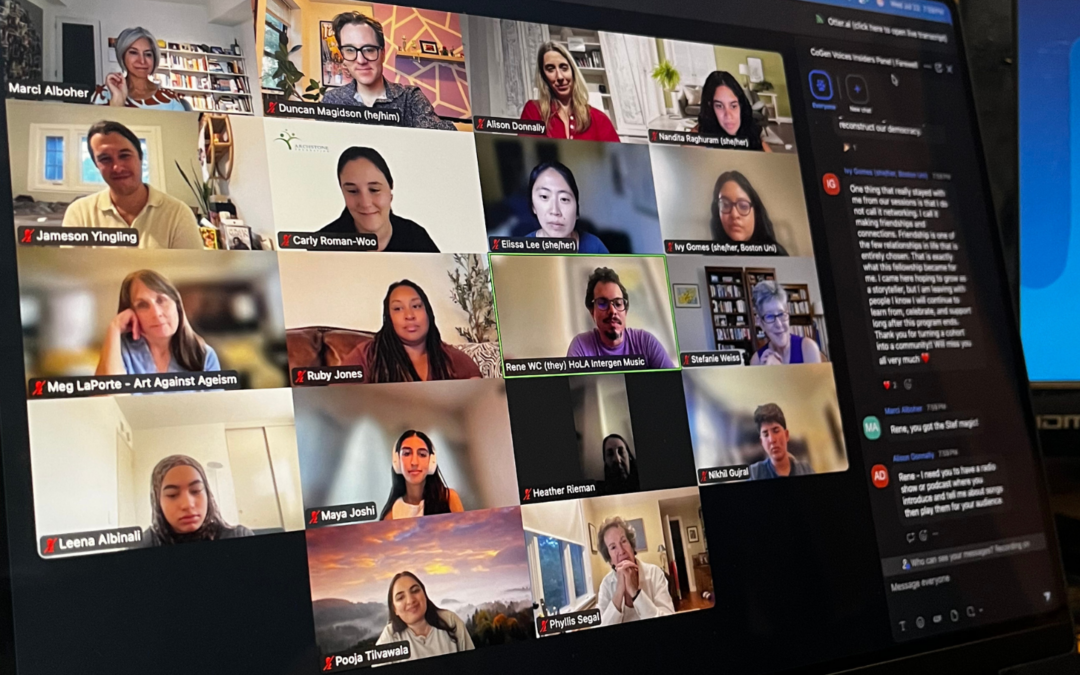
Across the country, young people and older people are stepping up as civic leaders. But too often, they do this critical work with peers, in age-segregated spaces. Young people work without the benefit of older generations who bring lived experience, networks, and a...

*

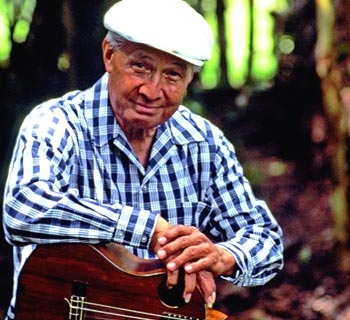
Eddie Kamae

Hawaiian Legacy
Purpose Prize Fellow 2006

Preserving and perpetuating the cultural heritage of Hawai'i

Eddie Kamae, now 79, was in his sixties when he began to make documentaries. A professional musician, he dove into filmmaking after being inspired by a 90-year-old traditional Hawaiian songwriter. In his film work, Kamae tells the stories of Hawaii and its people before the state’s rapid transition from an isolated agrarian community to a Western-influenced modern society. His goal is to pass on the traditional values, voices, and culture to younger generations. In his eight films, Kamae has captured the words, songs, expressions, and activities of more than 40 kupuna, or Hawaiian elders, the last living links to pre-modern Hawaiian life. The films have been shown at major film festivals in the United States and have been purchased by the state prison system for its rehabilitation program. Though 2.3 million people have seen his work, including 800,000 school children, Kamae works to make sure his films remain widely accessible and to preserve the irreplaceable materials entrusted to him by his subjects.