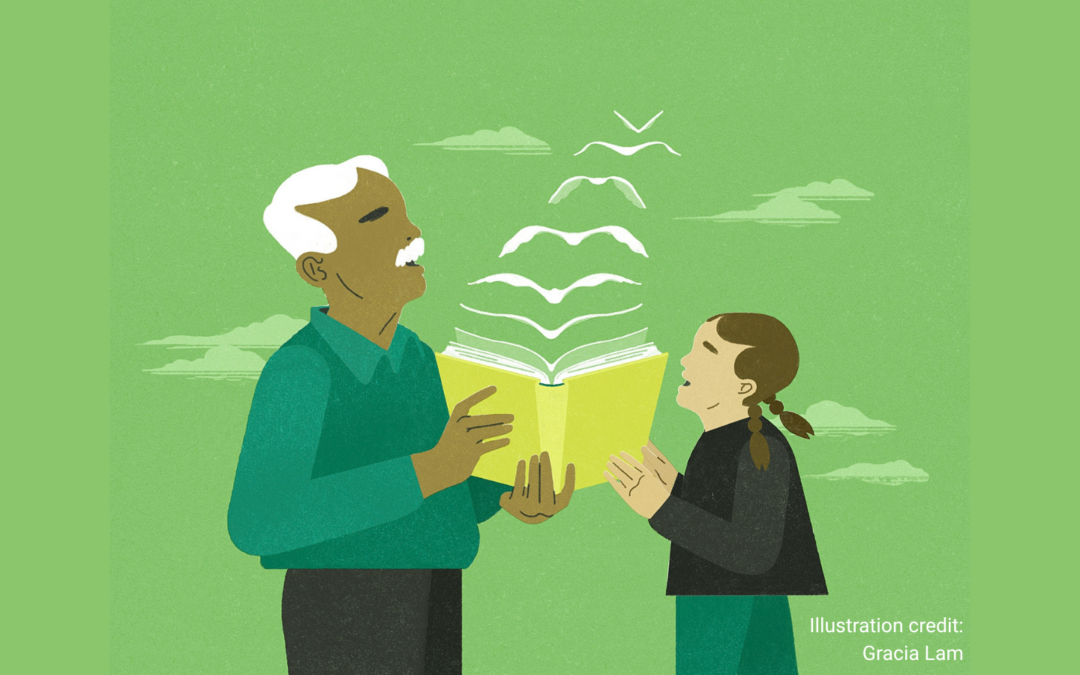
Intergenerational collaboration starts with our ability to be in genuine dialogue with one another. Use these questions to have a meaningful conversation with someone you’re just getting to know or someone you’d like to know better. Listen well and be vulnerable.The...
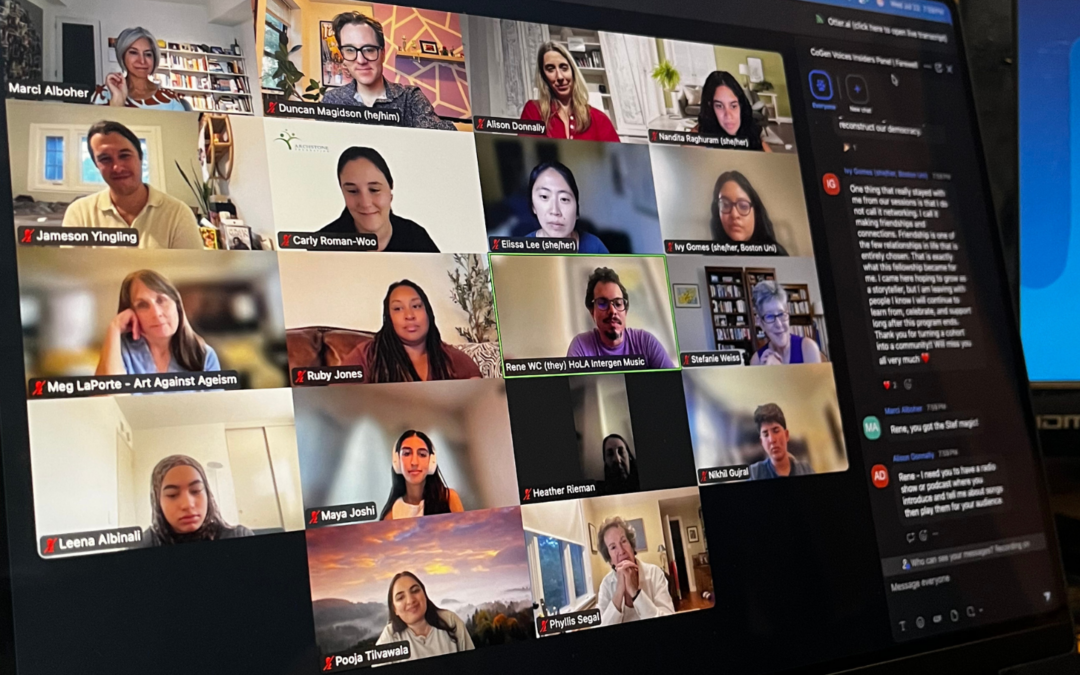
When we first began planning the CoGen Voices Fellowship, we knew we'd face a few challenges. The group of 21 community changemakers was intentionally diverse — by age (15 to 81!), race, location, work, experience, and more. We'd have to meet many different needs and...
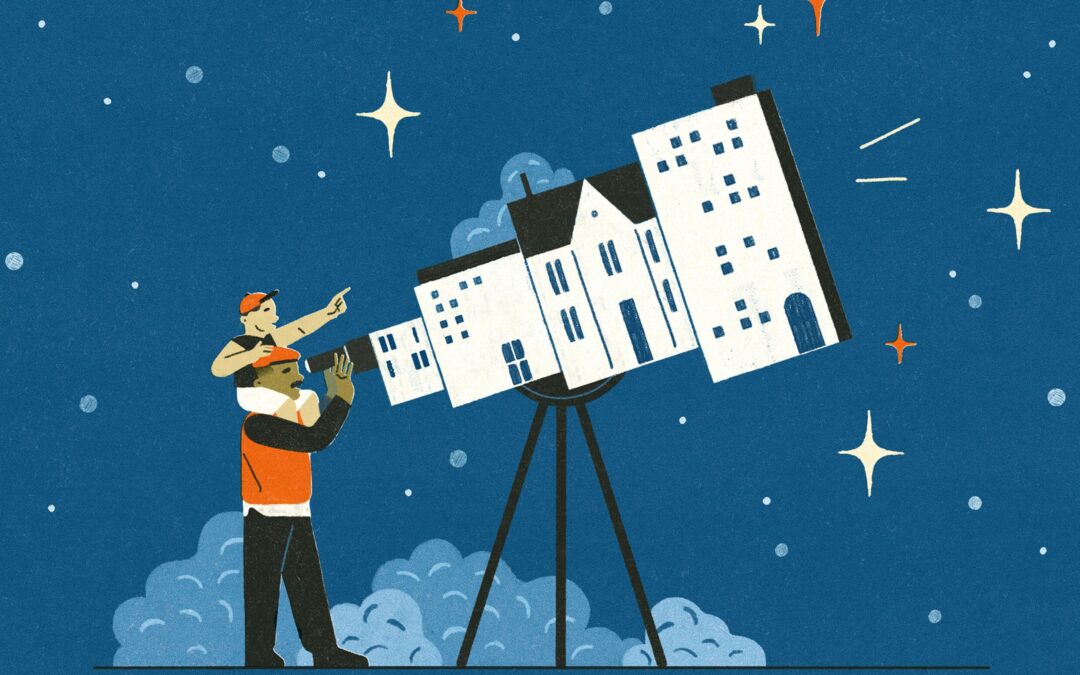
At CoGenerate, we believe in the power of cogeneration: a strategy to bring older and younger people together to forge bonds across differences, combat polarization and ageism, and help solve today’s toughest problems. If you’re involved or interested in cogeneration,...
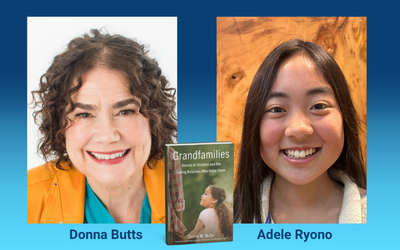
https://youtu.be/OedAsZVTm9U?si=q20TIH8zuwPEhE0a Today in the US, more than 2.4 million children whose parents are unable to care for them live in grandfamilies, where they are raised by grandparents or other loved ones. Until recently, their experiences have been all...
Event Recording: Faith, Cogeneration, and the Path to Spiritual Renewal
Faith communities have both the infrastructure and the spiritual mandate to bring generations together as a source of healing and renewal. But the task requires an honest reckoning with power dynamics, authentic work through conflict, repair from rupture and harm, and the patient cultivation of relationships that can weather difficulty and grow stronger through it.
That’s the message of CoGenerate’s newest study, Honest Conversations: Faith Leaders on the Real Work of Intergenerational Collaboration, which offers insights, stories and case studies from 42 leaders – clergy, congregants, thought leaders, theologians, and spiritual innovators, ranging in age from 20 to 85.
On this virtual conversation between the report’s co-authors and three of the study’s participants, you’ll hear:
reflections on what makes cogeneration in faith settings both hopeful and challenging
concrete examples of how leaders are experimenting with bringing generations together
ways you can use the report and accompanying discussion guide to spark conversation and collaboration in your faith community.
Speakers include:
Eddie Gonzalez, CoGenerate
Eunice Lin Nichols, CoGenerate
Deepa Patel, Inayatiyya International Board
Rev. Ian Carr McPherson, Salem Lutheran Spokane
Jeremy Fricke, Naco Heritage Alliance and Camp Naco
I’m Eunice Lin Nichols. I’m the co CEO of CoGenerate, a national nonprofit focused on bridging generational divides, and I am so excited to welcome you to this webinar on our newly released study, honest conversations faith leaders and the real work of intergenerational collaboration. If you made it into this room, you were truly meant to be here. So this report is deeply personal. Growing up in a Chinese immigrant church immersed me in intergenerational spiritual life at a very early age, and it deepened my fascination and comfort with navigating the in between, and it honed my identity as an integrator of culture and community. But over the last decade, as I’ve watched a mass exodus of young people, including my own sons from institutional religion, I’ve felt a growing urgency to explore this question, can intergenerational collaboration, or cogeneration, as we like to call it, be a source of renewal for spiritual and community life? With generous support from the Templeton Religion Trust, we partnered with YouGov to conduct a survey of 1500 nationally representative adults, and the survey revealed considerable age segregation in people’s lives and the decline of intergenerational infrastructure and religious life that once made connections across age, experience and perspective feel natural even inevitable. But the survey also showed that intergenerational collaboration remains a powerful source of meaning and renewal for faith communities. In fact, 45% of religiously engaged respondents are more likely to participate in religious activities if they’re offered the chance to build relationships with older or younger generations. That means that even in this time when religion is sometimes seen as a polarizing vector in our American life. Spiritual communities still have the potential to really shape the cogenerational landscape of contemporary life for the greater good. We brought in cogeneration impact fellow Eddie Gonzalez, to help us put a human story behind the data, drawing on his craft as an oral storyteller, his compassion as a hospice chaplain and his curiosity. As a fellow spiritual seeker and innovator, he was able to capture four principles about cogeneration in spiritual life that I think every faith leader needs to know. So in a moment, I’m going to ask Eddie to introduce himself, share why this work matters to him, and to give us some background on how he approached the project. After that, we’ll host a conversation with three amazing faith leaders who contributed to the report, and we’ll talk about how those of you listening in might use the report to spark similar conversations in your own faith communities. And then before we end, we’ll take time to answer as many of your questions as we have time for. So we invite you to put them in the Q and A box as they come up so we can track them. So with that, I am going to ask you to be very respectful of the different faiths and spiritual traditions that are showing up in this virtual room. Not everyone here or folks that you hear on the panel will share your specific views or practices, but we believe there is so much we can learn from one another here on the real work of intergenerational collaboration and from the honest conversations we’re about to dig into. So over to you Eddie.
Eddie Gonzalez
Hi everyone. It’s a joy to be here with you. It’s a joy to see everybody’s location starting to pop up in the chat. And thank you, Eunice, for that really beautiful introduction and introduction of you know me and my work, one of the things that really brings me into this conversation, one of the questions that I’ve been asking in the conversations I’ve been having with faith leaders was, what parts of your experience are you bringing into this conversation? And for me, I was raised in the intergenerational household. I’ve been part of intergenerational faith communities, both in the Catholic Church and also through projects like nuns and nuns that are bringing together people across faith traditions and more of a sort of secular seeker, spiritual seeker, misfits, kind of community. And I was really eager to be part of this project and to do interviews with more than. For you religious and spiritual leaders, my approach was to contact clergy, theologians, spiritual innovators, practitioners, congregants, you know, sort of influencers of, you know, sort of new forms of spiritual communities. And I really wanted to bring that YouGov survey data that Eunice had just talked about and understand from their perspective what they thought was beneath it. You know, the stories, the experiences, the wisdom, the things that numbers and statistics can’t really capture. Those conversations were incredible. They were warm, they were candid, and they were filled with both deep hope and also honest acknowledgement of what is difficult and challenging about this kind of work. And of course, what came through was layered and complex. People talked about, you know, their own intergenerational households, their neighborhoods, the relationships that had formed them across ages. You know, the joy of being in communities that where they felt like they really belonged, the generosity and unique creative gifts that were part of being part of those groups. And they also shared sobering and sometimes painful stories of harm and exclusion and judgment, conflicts, power dynamics that really fractured relationships sometimes led to disillusionment and drove people away. They also talked about dwindling numbers and the difficulty of navigating authority structures where oftentimes seniority equals authority and genuine collaboration is intention with this because it also requires some shared power. And more than anything, I feel like leaders always came to the caring ways that people carry one another through hardship and over and over, sort of came back to this power of relationship across generation to transform us, to sustain us, and to remind us of the mystery that is larger than any one life. They were these relationships, intergenerational relationships, were described not just as a nice to have in the spiritual perspective, but truly essential core to the vitality and longevity of faith traditions. And so I want to introduce you to the four sort of big insights that we organized around. One of them is around culture, and this is really around that authentic intergenerational work begins with the truth that there’s no one size fits all, model how generations relate with with within their communities, as, you know, as distinct as the people in the places that are there. Conflict was another major theme, which was basically, you know, not sort of, how would I say it? Like the intergenerational faith communities can see conflict in many forms, from everyday friction to like, really, exclusion, silencing, even abuse. And because faith touches people’s deepest identities and values, conflict is essential to pick up. Is essential to address and and when addressed with honesty and care, it’s not a failure, but it’s a doorway to renewal. The third insight was around power, and this is back to the idea of moving beyond symbolic inclusion in many institutions where longevity equals authority, it’s you know, younger and newer members gifts can often be sidelined. So what does it look like to start, you know, asking the question, not just who has a voice in this conversation, but who has authority, who controls the budget? And this is very complex, and it’s very difficult and challenging, but yeah, one of the big themes relationship everything depends on it. This is the fourth one, and even when context is honored, conflict, engage and power shared, cogeneration really succeeds or fails on the truth, whether or not people know and care for each other. So these four insights are really the big areas of exploration within the report, and I’m excited to sort of bring in our our panelists today to move a little bit further into that conversation.
Eunice Lin Nichols
Great, wonderful. Thank you, Eddie for that, and some of you have noticed the gorgeous artwork that has been part of our report. We’re grateful that we were able to make this visually accessible as well. So I want to invite Deepa, Ian and Jeremy to come on video, and I’m going to ask each of you to introduce yourselves, because this is such personal work, and I hate it when you talk about personal work and somebody reads a formal bio. So we’re going to ask you to aim for something a little more soulful. What’s your religious tradition or lineage, and what about your cultural background, family structure or spiritual experience has sparked your own interest in this conversation about the real work of intergenerational collaboration. So Deepa, I’m going to start with you.
Deepa Patel
Thank you, Eunice and Eddie and for this invitation to be here, my spiritual path is a. Sufi path. And I’m part of a lineage called the nyatiya, which really was something that a musician called Harriette NAIT Khan brought to the west from India. And I think that that that whole thing about living between cultures is definitely what’s got me interested in intergenerational work? I was born in Kenya of Indian heritage, and live in England, and I’ve lived here most of my life. My grandmother was a community organizer, and that was really within a spiritual tradition. So I felt like my first 10 years, I always seemed to be at some gathering where we were making something or listening to someone, and that that just kind of kept going through my life, and as I became more involved in the Sufi path and was kind of taking up organizational positions, I’m constantly looking for things that surprised me, and I remember watching a kind of 65 year old sitting with a 10 year old, and they were one of them was peeling carrots, and the other was watching and it was like realizing that there was a wisdom moment going on between these two people in this camp that felt so rich, and what did that? What would it look like if the camp was like that in everything that we did? So I think those are the main things that I’ll say for now. Wonderful.
Eunice Lin Nichols
Thank you, Deepa. I love your gift of storytelling. All right, I want to go to Reverend Ian McPherson next Sure.
Rev. Ian Carr McPherson
Thank you, Eunice. Thank you Deepa, that was a beautiful reflection. I love the image of the carrots. I think that for me, I also come from a lineage that a spiritual lineage of the charismatic tradition. And so I grew up in a kind of Pentecostal faith community that was originally the vision of my grandparents. And so the as I think about building cogenerational community, it really is sort of the family business that I’ve gotten into. My maternal grandparents created an intentional housing community with young people who were interested in joining the charismatic faith tradition and who were, as they would describe themselves sort of burnout hippies who are interested in continuing to to build community with one another in a new spiritual tradition. And so my father actually met my mother as a member of this, of this community that was built and so and I grew up in a congregation that was sort of a in many ways, a continuation of the legacy of my grandparents. And so for me, this is my ministry is a bit more expansive and has gone through more traditional institutional models, rather than being part of the the charismatic faith in and of itself, but that intergenerational and cogenerational community that nurtured me and formed me really is the heartbeat of of a long legacy that I carry in In my ministry, even though I am now in different faith spaces, and so I am again, just in the family business and continuing to try to build those cogenerational connections that formed me and made me who I am and really loved me into Being
Eunice Lin Nichols
Wonderful. Thank you. Thank you for being here, Jeremy, you’re going to bring up the rear here.
Jeremy Fricke
Thank you very much. Ian, those are beautiful words, too. So I, I’m Jeremy freaky. I grew up mostly in the Midwest and working class Nebraska, and we, I, I, I grew up in a town with a lot less diversity, but I come from a lineage, if you will, of mostly Missouri Senate Lutherans, although I have mostly broken that lineage, And I think that my story describes quite a few people’s experiences in in the Midwest and in kind of the before middle age journey. But today, I see myself primarily as a seeker, but I engage a lot with Christian communities and. Particular I’ve worked for many churches, and I have worked for a lot of interfaith efforts too. So I’ve worked with synagogues, churches, mosques, seek gurdwaras, Hindu temples and many others. It’s a passion of mine to make sure that our religious communities are inclusive to all. Thank you.
Eddie Gonzalez
Jeremy, I want to start to draw you all out too in terms of your experiences and Deepa and Ian, I thought maybe I could start with you know, the two of you all but thinking about intergenerational relationships, relationship building and how faith and spiritual communities are sort of working towards, you know, supporting that. What can you know? What are you seeing is working well within your communities, or sometimes maybe not well, but you know, what can we learn from your communities and your experiences about what it takes to nurture an atmosphere of listening and care and friendship across generational lines.
Deepa Patel
Shall I go first? Sure, yeah, it’s really nice having a question like this, because it got me reflecting. And I’d say that we have one particular part of our organization, which is a camp, which happens every summer, and it’s been going for over 30 years. And the amazing thing about this space is it’s always had, you know, while there’s a retreat going on, there’s always a children’s tent, and over the years, there’s been a kind of teenage tent, and then over the years, there’s been a young adults kind of program, and now the young adults that I met, or the teenagers I met, are coming back with their children, and can because they and some of them, grew up as children over the 30 year span. So they want their children to experience this kind of space, and I think, and that just keeps growing. And I can talk about specific examples in other ways, but, but that, that very act of, you know, just as Ian was talking about it, that’s kind of carried on. So how we nurture things over time? But that can also be a little bit of a stumbling block, because it’s not necessarily a diverse community, you know, it’s had a particular kind of people from a particular background, and, you know, predominantly German that have been coming to it, but that’s where we need to look at how we might open it up. But longevity, I think has something to do with whereas things work well, it’s amazing to hear.
Rev. Ian Carr McPherson
Yeah, so I’ve been thinking about this question. I have a lot of experience in kind of faith formation throughout the lifespan, and that, in some ways, is often the first place that I go when I think about, How do children and youth, you know, interact with with others, and I’ll probably share some stories from that experience later in our conversation. But one of the places where I have been more surprised to see these kind of conversations across generation spring up have been within the queer ministries that have been a part of my the congregations that I have served. And so what I have found is that, particularly among young adults and elders within, excuse me, within our community, that there is a genuine yearning for cross-generational connection. And I agree with Deepa that being asked this question gave me some space to think about like, Well, why? What is it that is like? What are the ingredients of of this yearning that I see in this curiosity, this genuine curiosity across generational vibes that I’m seeing, and I think that there were sort of two things. One is that each of these generations, the elders and the young adults, have been shaped and formed by different life experiences. They have very different experiences of what it means to be queer, of what kind of their particular political or civic calling is with that identity, and yet there’s also a shared interest in the pursuit of justice within a broader kind of identity category that that we share. And so those two things, I think, have have created this dynamic where there’s a turning toward one another with genuine curiosity and a desire to learn from one another. And. And so the exchange is not merely one group giving their wisdom to another or vice versa. It really is a an equal sharing, an opportunity for folks to say, I have something to give to you, and I also have something to receive from you. And that really has been the place where the greatest kind of cross-generational Connection has been sparked.
Eddie Gonzalez
It’s amazing. I love this sort of, like, cross-generational relationship building to sort of learn with and from one another, and also deeper how you’re sort of explaining the sort of cyclical like how these shift as people age and as the community, as people move from childhood to into adulthood, into elderhood, it’s,
Eunice Lin Nichols
yeah, wonderful. I’m really excited to bring Jeremy into this conversation, because I think you’re right in and Deepa that often the intergenerational context begins across families, and that there’s just such a yearning and a longing to be together. But as a result, we’ve also been paying attention to when the yearning to be together across generations gets in some ways broken by intergenerational tension, which can really show up in small ways, but sometimes really big ways, especially in spiritual communities, because you’re expecting belonging and family, and then sometimes that isn’t there. I’m curious, Jeremy, what your experience has been with holding conflict in the intergenerational conflict in spiritual spaces, and what are some concrete steps you’ve taken to facilitate the kind of space that allows for healthy conflict, rather than avoiding it. To say, healthy conflict can be an avenue for spiritual growth. Yeah.
Jeremy Fricke
Thank you so. So what I might start with is, you know, I proposed an article a long time ago, is about six months before the article was due, and the article was intended to be about how young leaders are shifting the narrative around interfaith, interfaith collaboration. Okay, that that we have a new generation of folks, 40 and under, I would say that are really heavily engaged with moving toward better connection and being able to involve more people than than we’ve seen in a couple decades. But I will also say that when it came time to write that article, the leaders that I was looking at all had already left. They the young Imam had left, getting burned out and became a paralegal instead of an Imam, the youth minister was ousted for having weird work hours. The the young, young educator for for the synagogue, had left because he wanted to be a rabbi and couldn’t find the mentorship in his community to to get there. They all kind of represent a few different things, but, but really what we find is that there are young people who are very interested in in helping to lead the path toward a better future for our religious communities, but often are struggling to either find The CO leadership, if you will, the kind of mutual mentorship, I suppose, or they’re struggling to find the culture of the institution that actually allows for them to to be successful. We have had a significant amount of conflict, you know, I mean, to be honest, I the last couple years includes things like October 7 and and all these elections and many other issues that have come up that have often been divided on generational lines. But what we find is that, again, there’s there’s a bit of a of a difference between what some of the elder generations in these communities and some of the younger generations are doing. The younger generations in general are having these conversations outside the walls of the religious institutions. They’re having the conversations with their friends, their family, their their even their fellow congregants, when when they can, but never inside the walls of their religious institution, while many others are really focused on let’s have relationship building. Um. And ignore the conflict. Let’s avoid the conflict, which, of course, as I think all of us probably know when we say it out loud like that, that’s not going to work. You don’t build a relationship with with no challenges between each other. So I think we see that there needs to be space for really difficult conversations, and sometimes conversations that don’t have a really good answer, right? The very fact of sitting with each other and having difficulty together is in itself a way to build relationship across generations within a community.
Eunice Lin Nichols
Thank you. Jeremy, I think that’s a really good point. I think sometimes in spiritual communities, there can be this pressure to feel like you have the answer or the right answer, and conflict is a space to hold things that are not yet resolved. I’m wondering, Ian, if you have anything to add to this based on your experience in an institutional setting. How do you create spaces that are safe for processing conflict together?
Rev. Ian Carr McPherson
Well, I’m grateful to hear you say that I don’t have to have the answer, but I can share a story, which is that I recently took a cogenerational or intergenerational group on a trip abroad to Cuba to visit one of our partner congregations there. The situation in Cuba right now is extraordinarily challenging, the most challenging that it’s been in a long time. And this is a decades long, very deep, actually, the relationship between these institutions is older than I am, and what I discovered on the trip was that the really challenging circumstances that we found ourselves in put a lot of pressure on particular fracture points and caused a lot of conflict within the group. And one of the things that happened when we came back is that, as I was exploring the nature of these fractures, I realized that one of them was generational, that there really were some very interesting and challenging differences between, especially communication styles, between these generations, one group of folks who had been to Cuba many, many times and had a particular kind of wisdom that they had gained, and folks who were new to the trip and also had a lot of expectations that they didn’t quite know how to communicate. And so there were a lot of assumptions that were, that were made by both groups, and when I sat down and created the container for us to have some intentional conversation, just naming these, these tensions, there were just a we just created a space together where we could make the implicit explicit, where we could talk about different assumptions and communication styles across generational divides, and to have a really intentional conversation about where and how power shows up and power differential show up among groups, especially these cross-generational power assumptions. I love the quote that was that comes up in the report, that not everyone who is older is an elder. And so I think that there were a lot of assumptions from some of the older folks that they were stepping into an authority that they hadn’t necessarily earned the trust to inhabit among the younger folks, and there were a lot of unspoken needs and expectations and assumptions that the younger folks were bringing to the table that needed to be made more explicit in a way that the that the older folks knew how to hear right and respond to, And that that conversation didn’t solve all of the intergenerational tension, but I think it was certainly a good starting place, absolutely.
Eunice Lin Nichols
Thank you. Ian, it’s a perfect tee up for your next question. Eddie,
Eddie Gonzalez
yeah, and Deepa, I thought maybe I would ask you, you know, because in part, this deals with, you know, conflict and power, sort of hand in hand with some of the reflections that I heard in conversations were about people would get invited in to sort of be a voice for a structure that already existed, rather than to be part of the sort of intentional, sort of, it’s culture work like, what is the culture that we’re trying to build, and Does it work for everybody? So one of the questions I have for you is sort of, rather than molding young people to programs that already exist or to, you know, institutional structures that are already there, how might you involve them in building something together? What have you tried? Are there any signs that a cogenerational approach could spark so. Some kind of renewal with within that kind of work?
Deepa Patel
Well, one of the things that I’ve really seen work was there were a few things that happened, particularly in the camp that I’m talking about, which which were, you know, around inappropriate behavior from adults to adults, and out of that came a group of young people that really wanted to lead a sort of what were going to be the protocols of behavior within the camp, and how did we really kind of make sure that if anyone felt unsafe in the camp, what were the ways in which they were going to be looked after? Now I know how the adults who had already tried these processes, and I’ve got these two examples, because we’ve done that in one part of our organization with just a group of adults that have done that work right, and then this other piece of work ended up being a co an intergenerational piece of work led by young people. And that two it’s like reading two different documents in some ways, just and that really shows what happens when, when actually people are given the authority, if we’ve said, and all of those things, to come up with something else with enough backing. What intergenerational work does is it doesn’t leave them just floundering, which can also, which is what we are also do to a younger generation. It’s like, well, tell us what you want, and here’s the space, and go and create it. And then they’re like, going, wait, what? Because that doesn’t quite work either within these settings, right? So I think that’s a really good example that I can hold up, which is, which is around something that matters to everyone, and is actually about behavior towards everyone. It’s just that. It’s just a different document. It’s a includes different things, because it’s been intergenerational so but we you know what? What I’d say is a little bit like what Ian was saying is, is that there does tend to be a what is it that we’ve got to offer young people, but very rarely, and what is it that they’ve got to offer us, which is reflected in the report. And I’d say that was, that’s one of the main dynamics that needs to change, that it, it becomes a learning space for all, in a way, or even a practice space for all.
Eddie Gonzalez
Yeah. Thank you, Jeremy. I also wonder if you have anything that you want to add to that, to this, you know, this reflection on power and inviting young people in, and what’s been tried,
Jeremy Fricke
yeah, I mean, in, in general, you know, I, firstly, I totally agree with what deep is talking about, also, that there needs to be kind of a meeting in the middle. Is not the right word, but, but a meeting. There needs to be a meeting somewhere, somewhere in general. In my experience, I think it has worked the best to have a space that is open to to transformation, I suppose, is the best word to leaning more deeply into actually what they say they stand for. So, you know, many religious communities have, you know, kind of a set of ethics and guidelines and morals that that tend to guide their community this, this tends to be highly what’s the word? Basically, in general, when I’ve seen young people look that, they take that very seriously, and if it’s not followed, like what you are, if you’re not practicing what you’re preaching, in a sense, then that is, that is a no go. It’s not worth being part of a community that’s not practicing what it’s preaching, to some extent. And if it’s practicing what it’s preaching, that means that it’s open to new ways of impact, of making that kind of impact, that kind of significant impact. You know, I I’ve talked to a lot of young people about what, what they would look for in a religious community, regardless of religious background. And I know this is probably controversial with many of the folks in the in the room, but you know, in general, most younger people would prefer to meet in a park rather than in the institution. For example, they would rather find people just serving food to the homeless rather than having a traditional sermon. That’s not always true, but there’s a lot of people who feel very strongly. They’re so connected in some ways. To certain religious and spiritual ways of being that if that does not align with the community that they are interested in, then they don’t need a community at all. So. So I do think that those are, those are very important things to keep in mind that we need to figure out, how are we providing those spaces for people to lean into what you are already preaching, in a sense, but really putting into practice, not just sitting there and telling people about it?
Eddie Gonzalez
Yeah, thank you both. And I just want to lift up that I’m seeing even in the comments. You know, how challenging this is. Manny, I’m seeing your, you know, comments here and and also that the need is for relationship, which is that sort of fourth principle, right? Like none of this works if the relationships aren’t built there in the first place to even enter into this kind of work. And also this kind of work is the type of thing that brings us into real relationship. And so they kind of go hand in hand, don’t they? The difficulty of it.
Eunice Lin Nichols
I want to bring up a somebody who’s not a panelist here, but easily could have been Daniel from sampara, who told us a great story. He works on helping churches turn their spaces into sacred civic spaces. And he told us a story about somebody at the church who saw a young person coming in and said, Hey, are you going to join our program? We really have a spot for you. And and Danny was able to say to this elder, you know, actually a better question would be, how can we join you, young person, in the thing you’re doing out in the community? And it was a flipping of the script that was so helpful. Actually shows up in one of the case studies in our report. But we’re so not used to thinking about how we might actually join young people in things they care about and allowing them to lead us in our sense of how our role in the world. And so I think Jeremy, you really provide a good point that we all need to reflect on. There also our YouGov study that we did that I hope some of you will will take a look at really pointed to the fact that in these divisive times, it may be a losing proposition if your only pathway to reach out to people is to insist they come into your religious walls, you know, your synagogue, your church, your mosque, whatever that we will need to and want to be out in the world, doing things with younger people in order to have that relevance. So really important point, I want to end us with this one question before we take any questions you have in the audience. So please get those in the Q and A box. If we get a little practical, what is a specific practice, rhythm or ritual or a celebration that you’ve designed or redesigned in order to put intergenerational connection or collaboration at the heart, and what’s been the result or impact of that? Ian, can I start with you?
Rev. Ian Carr McPherson
Sure? This takes me back to my faith formation days when I was doing more intentional kind of cross-generational work with folks across the lifespan. One of the programs that I inherited and cherished while I was at a different congregation was something called mystery pals, where we would take rising fourth and fifth grade students who would be partnered in consultation with their parents and their parents permission, obviously, we would facilitate a pen pal relationship that they would build with someone, an elder in the congregation and at the they would they would do those that the the identity of who they were writing with would be would remain a mystery until the end of the year, when we would have a big party where your mystery PAL is revealed, and this person that you’ve been building a relationship with, you get to To connect with in a different way. And I have heard stories about folks remaining in connection with their mystery panel for many, many years after the fact, and it often will. I mean, I heard college students who were telling me they were still receiving care packages and exchanging letters with folks in their in from the congregation that they had connected with first when they were in, you know, elementary going on middle school and so those kinds of, I mean, that’s a very old civic technology, letter writing, but I think that it still has this Rich there’s a rich, a richness and an intimacy to it that allows folks to be open to one another without necessarily having to be face to face. And those cross-generational connections have been rich in that community and remain to continue to be to this day.
Eunice Lin Nichols
I love. And it ties perfectly to a quote I put from Deepa in the chat box where she said, for conversations with children, how important it is to say you’re a mystery, a complete and utter mystery. What does it mean to be that mystery, to approach that relationship with curiosity and two way learning so Deepa, I’m going to throw it over to you, what’s a specific practice, rhythm or ritual that you’ve worked on to et center intergenerational work?
Deepa Patel
Actually, it’s interesting because I was thinking about it’s very personal, and I think some of this is for me, it was about the moment that I realized that I didn’t have friends that were really old or really young, and what would it mean to cultivate friendships with really young people so I can, I could actually kind of go, oh yeah, I have a friend who’s, you know this. So I think it starts with each one of us in a in a small way, because that changes something but, but the other that I’ve noticed is, is that some of this is really simple, like we introduced wherever possible, that where we have a big kind of gathering. Having said, the thing about inviting going to their space rather than this space, is this blows that a little bit. But the kids would always come in and we’d have story time first thing before we started anything else. And for the first year, be whoever the teacher was that would tell the story. But on the last day, the children would then tell the story back to the crowd of what they’d heard over the week. And I think it’s really small, and I think I wanted to give a small example, because sometimes you feel things have to you have to make really big changes, and there’ll be very small things that you can start with
Eunice Lin Nichols
love that thank you. Deepa Jeremy, close us out on this one.
Jeremy Fricke
So like I said, I’ve really enjoyed my experience with many different religious institutions. I think that there’s some value also in just finding inspiration from different communities, even if you’re even if it’s not your community, right. There’s a there’s a whole conversation we had about appropriation versus appreciation. But let me give you an example. So one of my favorite rituals that already exists is Sikh Langar, which is basically a free lunch. It’s vegan, even though Sikhs are not usually vegan, and that’s to be inclusive. It’s over simplifying it, but really community lunch for everybody, free lunch. I with some various church communities I’ve, I’ve worked with them to rethink, you know, the Lord’s Supper as a community meal that is more inclusive and more open to folks, you know, we I think a lot of Christian communities see themselves as wanting to serve the poor and and those in need. You know, there are rituals that already are kind of in existence that you can just reframe and and do that with. Yeah, I also think that that that itself could be vegan if you’d like it to be. Or really, how can you be more inclusive with those How can it feel, not like the church potluck, but really a service for the community? That’s something that each community has to figure out, though. And then the other ritual, if you will, again, in a more Christian community is is really reconsidering the Bible study in the first place, not not as getting rid of it, but as rethinking it. I know it. It had been very successful in the past to really think, you know, we take the Bible too seriously, to take it literally as an approach and having intentionally people who are atheistic, different forms of Christianity, different people who can have a more interesting, to be honest conversation about the scriptures that are held by a community in general, I found that those tend to Bring generations together if people are open minded enough and really allow some space for collaboration and mutual learning.
Eunice Lin Nichols
I love that. Thank you. We’re going to switch over to actually a couple questions that have shown up in our Q and A box. One is actually a little tied to what you just said there, Jeremy. But one question is, basically during the pandemic, so many of us went online with our spiritual communities, if we had it, and then for young people even more so, not just their spiritual lives, but their entire lives. How? How has that impacted the intergenerational connection? Action or potential for that. Wondering if anybody here has thoughts on our increasingly technologically focused lives. And Eddie, you are welcome to answer as well. Deepak, go for it.
Deepa Patel
I don’t know if it’s just intergenerational. We’ve offered loads and coming from people like, could we create spaces and make, you know, time for conversations on Zoom, and it’s been really hard since we stopped covid, people just don’t show up for those types of conversations, even though they’ve been requested, which is the bit that’s that’s really puzzling, and I’m just throwing in a thought. It’s a personal thought, which is, I don’t know that we have learned how to actually work with technology, even, I’d say zoom and webinars. It feels like what we did was we’ve transported what we used to do in a room now we’ve just transported it to zoom and that. So I feel like there’s more work that needs to be done in in what we actually do with technology we haven’t got there yet. It’s a very personal reflection, I’d say,
Eunice Lin Nichols
yeah. Any other thoughts on that? One from others?
Eddie Gonzalez
I’ll lift up a story that I heard from a pastor in Georgia who said that noticed this exact thing happening. Young folks were saying, you know, I sent, I sent them a text message and they never responded back to me. And older folks are like, well, I sent an email and they never responded back to me. So even something like text and email communication norms were getting in the way, and those things just weren’t being spoken to one another. And I think back to some of you know, there’s another question in here about, you know, older and younger generations working creating community together, and in that way, I feel like that’s just a perfect example. And zoom is another one of them, of the opportunities we have to sort of bring up here are some differences in the ways that we communicate. How are we going to navigate that together and find a new norm in our community that works for that works for us across these differences?
Eunice Lin Nichols
Yeah, I feel like in both cases, there is we talked about, like this hunger for connection, but so much of what society and even spiritual space to serve up is like consumption of content. And I think that’s where the intergenerational collaboration is going to be key. Is we can actually gather older and younger people around not just content, but connection and the collaboration piece means we can go out and actually do something good for the community and be manifestations of love and care out in the world. I want to make sure we have a minute for Eddie to actually show us the report for those who haven’t seen it, and maybe give us some tips on how you hope we would use this resource. Eddie,
Eddie Gonzalez
yeah, happy to Oh perfect. Duncan, thank you for pulling this up. So this is the report, and I’ll just say, you know, the re the way that we created this report was not necessarily something that you would sit and read in five minutes, and then you’re sort of done. There are a few things that were really important to us when we created this, and we hoped it would be a resource that you could return to, that you could reflect with. And so it’s meant for reflection, and it’s also meant for conversation. We started with some introductory remarks, you know, just to introduce you to the context of the study, to link back to the youth of survey. And then we led into the four sort of insights that we’ve been sort of, you know, loosely reflecting on here. And from those insights, we then moved into a practice session. I’ll also say that all of these sections, you’ll see these cards with quotes, we really wanted to maintain the words of all of the people that we had spoken to, because we weren’t the ones that were coming up with these insights on our own. Right. This is the product of so many conversations, so you’ll see lots of quotes that are good on their own for reflection. But the practice section is a really beautiful we’re really excited to show you this. This is a collection of videos of audio, of longer quotes that didn’t make it into the sort of, you know, Insight sections. And there are ways for you to go a little bit deeper into the rituals, daily rhythms, physical spaces, organizational structures, relationships that people were reflecting on within these interviews and and the last section is meant for reflection, and has sort of case studies, things that people have tried. And this is less, again, trying to get people to copy and paste an experiment, but really trying to, we had somebody say, what are the values underneath the projects? And we have, like, lifting up, like, why was this? Seem to be working? And and how then can you sort of lean into those principles to start reflecting and be in conversation with your community about what you might do in your own space. So yeah, there’s a lot here. There’s a conversation guide as well. I hope you’ll spend some time with it. It’s, yeah, really excited to share it with
Eunice Lin Nichols
you. Thanks, Eddie. We are in the two minute zone, where I’m always conscious of landing the plane on time. And I know some of you, including our panelists, have congregations and communities that you are literally in the midst of caring for right now. So want to honor that, I will say Stef did ask one question in the Q amp a, about if I had a favorite story in the study I had so many this is like asking for your favorite child, but I will say some of my favorite stories were unexpected collaborations between a faith institution and the community where they found mutual mission and values. One example the the jazz and justice church in Oakland, where a church took space that they had and found connection with jazz musicians that needed a place to perform, and brought in older folks who play jazz and young people who love the music and around mutual love of music. So that’s in our report. And there was one other story that I love of a dance group, dance generators that actually took a very kind of old ritual from the Christian faith and then met with a bunch of intergenerational students of dance who created a performance that they performed in a church based on their reflections on that ritual, and brought in community members that otherwise would not have would not have participated in this at all. And I just think it was so creative to find ways to intersect church and, in this case, a Jesuit College, and then dance, and then older and younger people. And it was just beautiful. So with that, I’ll just say Eddie, just thank you for the heart that you put into the interviews, it is reflected deeply in the report Deepa Ian and Jeremy. You are the representatives of 42 voices that deeply informed this body of work. What we tried to do here today, for those of you who listened in and persisted despite our tech challenges up front, this is an example of a kind of conversation we hope will be possible because of the report, there are so many good quotes and questions in the report. Use those. There’s a conversation guide to spark the conversations. This is just the beginning, and we hope that as we do more work in this area, we’ll hear from you the stories of what transpired and the creative collaborations that happened that are consequential, because we decided to have the hard conversations and to do this work together. Thank you so much for spending time with us until next time. Thank you all. Thank you very much.
To provide the best experiences, we use technologies like cookies to store and/or access device information. Consenting to these technologies will allow us to process data such as browsing behavior or unique IDs on this site. Not consenting or withdrawing consent, may adversely affect certain features and functions.
Functional
Always active
The technical storage or access is strictly necessary for the legitimate purpose of enabling the use of a specific service explicitly requested by the subscriber or user, or for the sole purpose of carrying out the transmission of a communication over an electronic communications network.
Preferences
The technical storage or access is necessary for the legitimate purpose of storing preferences that are not requested by the subscriber or user.
Statistics
The technical storage or access that is used exclusively for statistical purposes.The technical storage or access that is used exclusively for anonymous statistical purposes. Without a subpoena, voluntary compliance on the part of your Internet Service Provider, or additional records from a third party, information stored or retrieved for this purpose alone cannot usually be used to identify you.
Marketing
The technical storage or access is required to create user profiles to send advertising, or to track the user on a website or across several websites for similar marketing purposes.
To provide the best experiences, we use technologies like cookies to store and/or access device information. Consenting to these technologies will allow us to process data such as browsing behavior or unique IDs on this site. Not consenting or withdrawing consent, may adversely affect certain features and functions.
Functional
Always active
The technical storage or access is strictly necessary for the legitimate purpose of enabling the use of a specific service explicitly requested by the subscriber or user, or for the sole purpose of carrying out the transmission of a communication over an electronic communications network.
Preferences
The technical storage or access is necessary for the legitimate purpose of storing preferences that are not requested by the subscriber or user.
Statistics
The technical storage or access that is used exclusively for statistical purposes.The technical storage or access that is used exclusively for anonymous statistical purposes. Without a subpoena, voluntary compliance on the part of your Internet Service Provider, or additional records from a third party, information stored or retrieved for this purpose alone cannot usually be used to identify you.
Marketing
The technical storage or access is required to create user profiles to send advertising, or to track the user on a website or across several websites for similar marketing purposes.