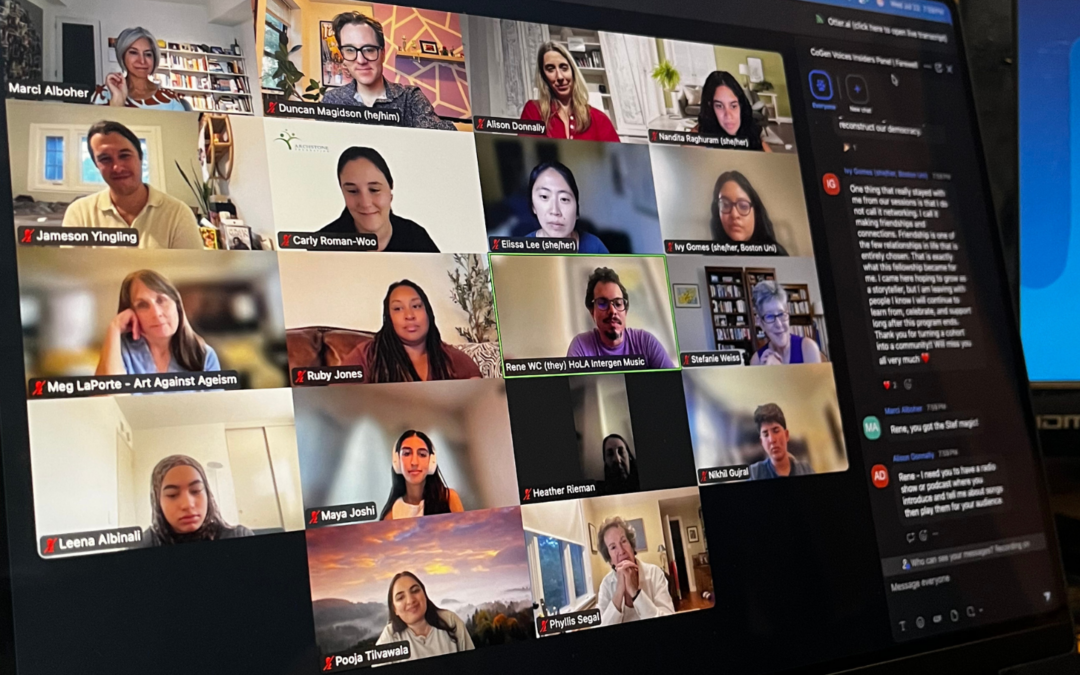
As colleagues from different generations (X and millennial), Marci Alboher and Duncan Magidson have been leading talks and workshops sharing their insights about working across generations. As they plan, they often text furiously, sharing ideas and reflections. In this edition of Overheard, they unpack a question that rarely surfaces in debates about DEI: why age diversity keeps getting left out.
Duncan Magidson (CoGenerate Director of Digital Communications & Engagmeent): A new Overheard thought: With the federal attacks on DEI initiatives, tons of organizations have been moving away from a focus on race, gender, sexual orientation, etc.. Which raises the question of where folks like us, who are working on age diversity, fit in. Our central argument is that age belongs in that conversation, but historically it’s been left out. Why do you think age got sidelined originally, and do you see any signs that’s starting to change?
Marci Alboher (CoGenerate Chief Engagement Officer): I can’t believe it’s taken us this long to dig into this here — we’ve been having conversations about it for more than a year! So many ways into this one. As a former lawyer, I think one of the reasons age has been left out of DEI convos is that it would force employers to reckon with what’s going on with older employees. And because ageism is rampant and we live in a litigious culture, workplaces don’t generally want to be transparent about the age breakdown of their workforce.
Even during the period of increased disclosure about various identities at work in the early 2020s, along with the rise in DEI attention, age was rarely part of the mix.
On the other hand, the demand we are seeing for our “CoGen @Work” talks does suggest age might now be one of the ‘safer’ kinds of diversity to discuss (along with disability, and income/economic disparities). What’s it feel like to you?
Duncan: It feels like kind of an open secret how often employees are pushed out of roles because of their age. And even though the legal requirements against age discrimination are just as strong (or even stronger) as those against other forms of discrimination, I feel like it has a much lower social toll. To your point that workforces might be reticent to even look at the age diversity conversation, it could be a combination of momentum and social permission that keeps age out of the headlines.
It’s enticing to think that age might be a covert way to bring diversity back into the conversation. At least in the US, bridging age divides will inherently lead you to bridging across race, gender identity and sexual orientation. But honestly, the companies we’ve been talking to seem like the ones who are still strongly committed to DEI principles. Those that are backing down feel like they’re backing away from any diversity conversations, rather than trying to find new ways in.
I’m optimistic that will change, though, especially as demographic changes (e.g. an older population) force organizations to confront age more directly.
Marci: I like your optimism! I’m optimistic too because we’ve seen so many employers refusing to back down, and, to your point, we know that when you focus on age, you necessarily start having relationships across other kinds of difference. As we like to say, age is never the only thing in the room. We all carry all kinds of identities/life experiences, and when we show up in mixed-age settings, we inevitably encounter folks who are different from us in a whole lotta ways). Which gets to why I care. I’m in this because we really need to get better at collaborating across differences and age is one of the easiest places to start— we all have some experience of bridging age divides in our families (for good or ill). But if workplaces end up having the majority of their staff hovering around the same age, you miss any chance for that kind of connection.
Duncan: Exactly. You don’t need to have the conversation at all if you don’t have those age differences in the first place. And it probably feels easy (maybe even fun) to be in the room with a bunch of peers, but that’s cotton candy. Eventually, you’ve got to sit down for a real dinner.
To be more direct, at a certain point it looks less like unconscious bias and more like conscious design. Teams will intentionally steer toward age-homogeneity in total defiance of the benefits of age diverse teams. This is an extreme example, but I’m reminded of FTX (Sam Bankman Fried’s crypto trading platform). They were so committed to their team of 20-something leaders that when a VC firm recommended they put together a board of seasoned professionals, they literally called them back and said “go fuck yourself.”
Marci: I know our exchanges would be more provocative if I could disagree with you, but I can’t on this one! (Though I’d like people to know that we aren’t always aligned…you do know that I’m unlikely to become a vegan even though it’s one of the things I most respect about you. And don’t get me started on how much time to build into an airport trip – you nearly gave me a heart attack the first time we traveled together. But those are probably fodder for future Overheards!)
Read our previous installments of Overheard on Text.