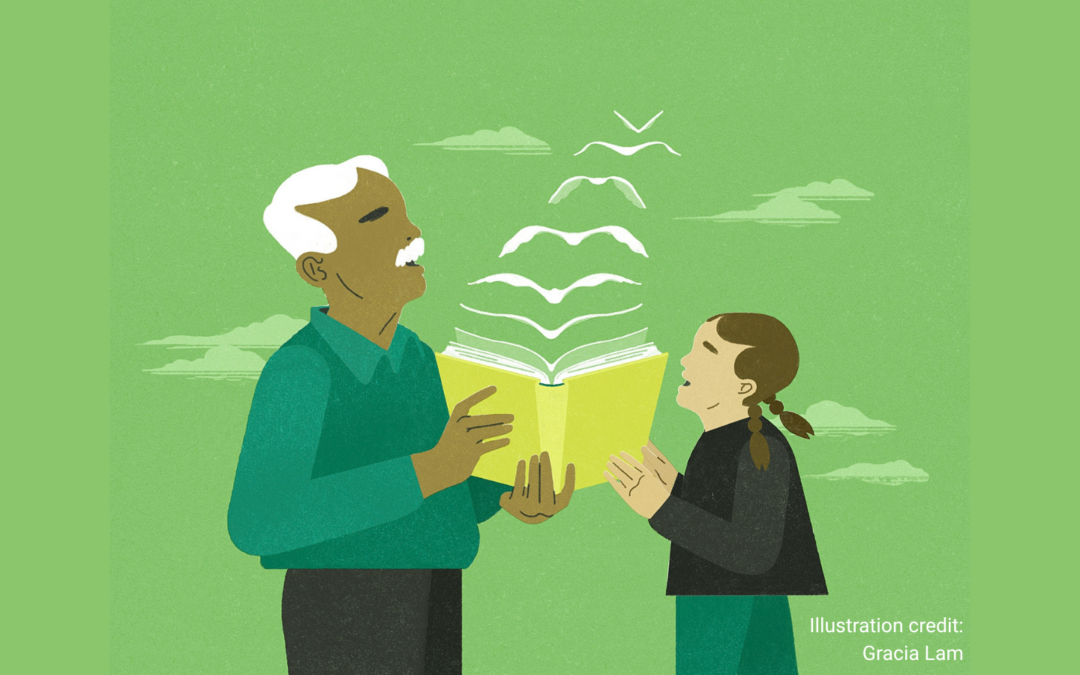
Intergenerational collaboration starts with our ability to be in genuine dialogue with one another. Use these questions to have a meaningful conversation with someone you’re just getting to know or someone you’d like to know better. Listen well and be vulnerable.The...
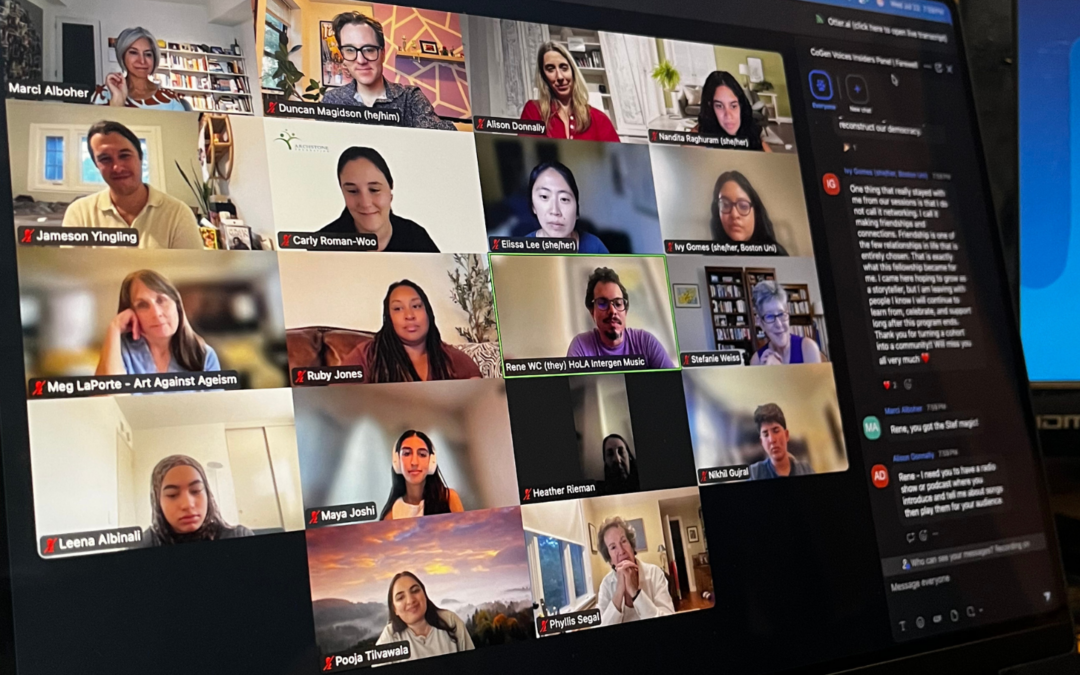
When we first began planning the CoGen Voices Fellowship, we knew we'd face a few challenges. The group of 21 community changemakers was intentionally diverse — by age (15 to 81!), race, location, work, experience, and more. We'd have to meet many different needs and...
At CoGenerate, we believe in the power of cogeneration: a strategy to bring older and younger people together to forge bonds across differences, combat polarization and ageism, and help solve today’s toughest problems. If you’re involved or interested in cogeneration,...
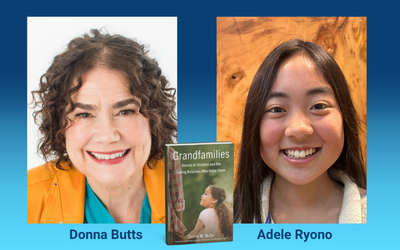
https://youtu.be/OedAsZVTm9U?si=q20TIH8zuwPEhE0a Today in the US, more than 2.4 million children whose parents are unable to care for them live in grandfamilies, where they are raised by grandparents or other loved ones. Until recently, their experiences have been all...
Event Recording: Teen Leaders Speak Up About Intergenerational Collaboration
If you work with teens, or want to, this session is for you. If you are a teen who works with older people, or wants to, this session is for you, too.
CoGenerate’s newest report, What Teens Want — And Don’t Want — From Older Allies, is based on conversations with 26 teen leaders, ages 12 to 19, to find out what they believe helps and hinders intergenerational collaboration.
This 60-minute briefing features three of the teen leaders who participated in the study. It is moderated by Dillon St. Bernard, a CoGen Impact Fellow and digital storytelling expert who led the study and wrote the report.
Speakers include:
Elijah Lee, Voters of Tomorrow
Angel Song, Civicate Youth
Leena Albinali, Golden Connections Club
Dillon St. Bernard, CoGen Impact Fellow & founder of Team DSB
Marci Alboher, Chief Engagement Officer at CoGenerate
I’m Marci Alboher, and we’re really thrilled that you’re here for this conversation about what happens when teens and older allies collaborate to create change? I serve on the leadership team of CoGenerate. If you are an old friend, welcome. It’s so good to see you. If you’re new to us, we’re a national nonprofit dedicated to bridging generational divides. I’m 59 years old, and I’m sharing my age because it relates to the topic of the conversation tonight. So our research tells us that people of all ages want to work across generations to improve their communities. But interestingly, Gen Z wants it the most. Every generation in our research reported that they cannot find opportunities to work across generations, and that is a top obstacle to working together for change. Interestingly, all generations reported communications challenges, but Gen Z twice as much as the other generations, given that we are living in the most age diverse time in history, in our history, we have equal numbers of people at every age, from birth to 70 and beyond, we feel that it’s crucial to equip youngers with opportunities and skills they need to collaborate across generations. Certainly older people need the same support as someone who is embracing my age, my silver hair, I strongly feel that the place to start as an elder is to listen.
Dillon St. Bernard
Hey, Marci. I am Dillon St Bernard, a CoGenerate Impact Fellow. So for the last several months, I have been on quite the journey to interview and talk to 26 teen leaders about what they do and don’t want from older allies. So today you’re going to hear a few of their stories and how all we can how we all can really just learn from them.
Marci Alboher
So before we go any further, we really want to acknowledge our profound get it gratitude to our funders for this work, the Bezos Family Foundation and the Eisner Foundation, real partners in doing this work. I want to explain a fun tool that we’re going to use. It’s called Mentimeter, and it is going to be our way to make this program as interactive as possible. So you will now see a QR code on the screen and a numeric code. So there are two ways to use Mentimeter. You can either point your phones camera at the QR code, or just go to menti.com and point your phones can’t, you know and type in the code that you see on the slide, which is 88228132, that’s going to also live at the top of every screen as we go through the slides in this presentation, so you won’t lose the opportunity to find it once You’re in you will see a question on your device, and we want you to answer that question. That’s going to happen many times. I can see some people have already figured out how to do it, yay. And the first question is a poll of, how old are the people who have showed up here tonight. So curious about who is in the audience with us, so by decade, we’ve asked you to tell us how old you are. All right, it’s coming in like a horse race in real time, which is so much fun. Wow, are so far the winners are really people between 60 and 80 years old. We have very few people under 40 in the room right now. Let’s see. Let’s see if that changes at all. And obviously our panelists haven’t voted, because if they did, I think we would at least have those first two slots a little higher. And this might be you haven’t voted. Try to get into Mentimeter and do it. All right, this is good to know. Great.
Dillon St. Bernard
Yeah, so I’m really got to see the various ages in this conversation. It’s great to see kind of folks being willing to just come here and listen. I think that’s a huge, huge piece of this puzzle. So before we discuss the findings, we’re going to hear directly from the team. So this is a video produced by Team DSB, a Gen Z web creative agency.
Video Transcript
Hi, I’m Dillon St. Bernard. I’m 25 and a CoGenerate impact. Fellow. Cogenerates vision is to bridge generational divides. For the last several months, I have been interviewing 25 teens about what they do and do not want from older allies. Let’s jump into it.
08:13
What do you think an adult can do to be there and be supportive of teenagers?
08:20
I’m a part of the student Mental Health Alliance at my school, and we’re currently pushing for some mental health policies. And sometimes like a frustration that I experience is when we push for certain ideas, and administration will probably just say, Oh yes, that’s a great idea, but then never really do anything to follow through with that idea. And then that’s when the adults come in and they help us push it even further so that the administration can help us implement it into reality.
08:45
So Petra, tell me about the organization that you’re volunteering with.
08:49
I volunteer at the Pasadena Senior Center, and I work helping, like, with tech support. Have you made any friends? Either people like learning about my life or I people, a lot of people a lot of people like to tell their stories about like, when they were in high school.
09:03
That’s how they relate to you, because they were high school students.
09:06
Yeah, the first time I really kind of knew you when you came to volunteer for the organization Olive Community Services.
09:13
Yeah, I came and I volunteered at Olive and I loved it, and I realized that’s what I want to do. So then I created my club, Golden Connections at my high school, and we do intergenerational activities with seniors and teens. Roman when you started
09:27
In intergenerational again, man, it’s just think 2022, this is my third season.
09:33
This is my fourth now, this band in particular gets intergenerational in a way, so that I get to interact with folks younger than me, but I think
09:42
Something that does come naturally to, like intergenerational relationships is learning and like telling stories. And even though you’re not maybe of the age of, like telling stories from like the good old days when you’re a lot younger, I think it’s still just like i. Good to hear about other people’s experiences and like, what they did when they were my age, I think of like, the jazz setting and the music setting is, like, very intimidating and very scary. And I know it can be, but being in such like, a supportive, community oriented intergenerational fan just really showed me that it’s not so scary, and adults are just like you in 20 years or 40 years, or whatever, like, there’s not really any crazy difference, except maybe they pay taxes and you don’t, they have a job and you don’t.
10:26
So how do you like working with seniors?
10:28
I love it. It’s so fun. They love to treat us like with respect, like they don’t always treat us like we’re their grandchildren. They’d like to treat us on the same level and speak to us like we’re just people with ideas and passions, and I really appreciate that, and it makes me feel like I want to be involved in the conversation
10:48
In my intergenerational Big Band sometimes with the teenagers, they’re more shy, but if I reach out to them and I express an interest in them, then they respond, what do you think that older adults can do in terms of setting the tone when you have interactions with them that would put teenagers at ease, make them more comfortable and willing to share some of themselves with the older person
11:14
Sometimes just taking time to listen, because when we have such different views, even just talking about it and finding something to connect on is really important. I do have other friends who are involved in these kinds of things, like youth civic engagement, but they do often comment about how they’re the only youth in the room, and ultimately, that could be a little unhealthy, considering the fact that we’re not really being considered as like somebody else, who’s like equal to adults. I think it’s very important that adults take in youth perspectives, because the society that we’re living in is like, vastly different approach the situation like you would approach an adult, because teens are like, not very much different, and the teens also have, like, a variety of fresh, new perspectives to bring.
11:55
As a very young child, I did not like being treated like I didn’t matter, so it was always important to me, as my kids and my step kids were growing up to understand their perspective and to not invalidate their feelings about things.
12:11
Nowadays, teens are with the teens, and the seniors are with the seniors, and everyone’s with their own generation. But I think the most powerful thing is when we combine, we’re not like from a different planet. We’re just a different generation.
Marci Alboher
Dillon, I’ll hand it to you in a minute, but I have to say I’m still watching the ages come through the chat, and it’s really kind of comforting, like I really appreciate that so much of the audience is in our 50s, 60s, 70s. This is exactly the audience we wanted to reach with this report.
Dillon St. Bernard
So fantastic. Yeah. And again, the willingness to come and listen in and see, you know, we this is just a cogenerational environment. And I think as we’re going to find out, teens are very much excited to have these conversations. So again, just thank you for joining and being interested. And with that, you know, nearly 76% of Gen Z, which is a higher percentage than any other generation, say that they wish they had more opportunities to work across so that’s what you’re seeing on screen. There’s really a want and an interest in this, Marci.
Marci Alboher
And you know, listen as the voice of an elder here in this room. I can say with total confidence that older people also want to collaborate with young people, but they often feel nervous and uncomfortable in being in especially teen oriented spaces. So I guess.We have a question for the audience chat. It’s going to be another one of these, what I’m calling the Mentimeter moments, but you can answer in the chat or using the Mentimeter tool and just hit refresh on your phone. But have you found ways to collaborate across generations in your civic or volunteer work. So we are really curious about that.
Marci Alboher
Seeing some answers in the chat, as well as yes and not enough majority Yes. I mean that. What this says to me is we have the right people in the room here.
Dillon St. Bernard
Indeed, indeed, I’m, yeah, I’m really excited to see this number. And I think this this, I think we’re also seeing but want to do more, not enough. So there also is this. Seems to be this excitement again, to do this. So I really want to jump into our conversation. So I think part of why you may have joined, of course, is to hear from some teens about what they want and what they don’t want, perhaps. So we’re going to jump into that conversation so we once again, I’ve been the last, I would say eight months have been jumping into conversations with 26 teens, and today we have a handful of those teens who are joining us across the key insights from the support which one of our team members will put in the chat, just folks have it kind of handy. And there also be a slide on the shortly, so you’ll notice five key themes, respect, listening, authenticity, energy and shared power. So these are the key insights. We’re not your children. Listen period. Don’t invite us for optics. We’ll match your energy, and we want the power to change things. These being key themes that that we’re going to talk about today, and just, I’ll just note so as you are hearing from the teens and young people today. Please feel free to pop your questions into the little little Q and A section in Zoom, if you don’t know how to do it, also, you can just put it in the chat and we’ll figure it out for you. But let’s jump into that conversation with that first insight, we are not your children. So I want to bring Lina up on our kind of virtual stage here. Hey, Leena. So Leena, you’re you were telling me about this as we were talking your club collaborated on intergenerational summer camp taught by grandma’s. So I want you to just tell us, tell the audience about how that partnership with older allies got started, and what made it feel like a real collaboration.
Leena Albinali
So yeah. So it started when I was 11. I began volunteering at our senior center doing really like simple things, serving tea and helping make crafts and just talking with the seniors and learning about their lives. So over the years, I got to know them as whole people, not just older adults in a program and the camp didn’t come from me walking in and like saying, here’s a program I want to launch. It came from me listening and like forming friendships over time. It came from building trust in the community and to notice what actually mattered to them. I saw them as creators, and they saw me that way too, and that’s why the summer camp felt like a true collaboration, not just like one generation showing up with all the answers, but both generations bringing something to the table. We weren’t solving a problem for each other, we were solving a problem with each other, which I think is really important to note. And it wasn’t one sided. They taught us. They taught us their craft, and we show them new ways to share it, like documenting the sessions, sharing it on the news and conferences, and like putting their stories on social media and now even speaking about it here the impact. So the impact didn’t stay between those four walls. Their voices and traditions reach people beyond our little community.
Dillon St. Bernard
I love that Leena, thanks for naming that. And then, Leena, how old are you? I’m 15 years old. Okay, just wanted to make note of it. And as folks are jumping in, folks who kind of say their ages, but just really appreciate that, that note. And I think there is just based on the insight and just some additional context and color about this insight about we are not your children. So, you know, a lot of the conversations I had was that from teens were that adults sometimes only knew how to relate to young people through the lens of their own kids and their real focus for us. You know, in terms of the insight was, how do we zoom out and also build more opportunities for that to be not just you and your own kids, that kind of relationship, but this being a little bit more expansive, again, this human first element that you’re naming, Leena, and you mentioned so well. So thank you, Leena. I want to bring in Angel. So our second insight was about listening. So listen, period. So Angel, you know, so many teens in this project said that they really just want to be heard from older allies. So can you share a time when an older person truly listened to you, and how did that change your willingness to really disengage?
Angel Song
Yeah, hi, I’m Angel. I’m 16 years old, and I think I want to share about how this September, my organization, which I founded, Civicate Youth and I were at the Los Angeles Congress of Neighborhoods, where a lot of community leaders gathered to share their experiences acting as local leaders, part of local governments. And there I was able to lead a workshop. And after my workshop session, I was really, like, pleasantly surprised to see a lot of the older leaders who were there in the audience coming up to me and like, they basically showed me a lot of appreciation. And some of them even also asked me to work on a couple youth engagement projects with them. And I think this was really important, because it truly showed me that these older allies were definitely listening to me, sharing my ideas and my own experiences through my workshop, because it was kind of a workshop where I would tell the audience members about my experience as a youth representative, and sometimes like one of the only youth in the room when we’re having local government meetings. I was really glad to hear that they wanted to actually work with me, because I’ve had so much experience being the only young person in the room and often just being in the sidelines, and they were open to working with younger people, and I could really see that they were genuinely listening to us as well. So this really, this really made me feel seen and heard as a young person, and I think it really motivated me to continue my work for youth civic engagement.
Dillon St. Bernard
Awesome. And then, Angel, How old are you? Did you mention that? I just want to make sure I’m All right, so we have a wide range of teens here. And I just want to emphasize, I love this point. Angel around, you know, again, this there’s a theme here, around just like humanity. So there are some Dean themes, if you’re familiar with cogenerates, work around that. Are some, you know, Venn diagrams between this and the youth leaders report. And I think the older leaders report. All of this is we want to see each other as humans. For teens, they really want to be seen as true collaborators and peers. So I think you’re naming some of that around, like, let’s just start the conversation, and let’s see what we can build and what we can learn from one another. So thank you so much, Angel for that. Let’s jump into Insight three. Don’t invite us for optics. So I want to bring in Elijah, who, again, got to talk to as part of this part of this report. So Elijah, you work with adults in civic and legislative settings. How do you tell when your voice really matters and is impactful? Yeah.
Angel Song
I’m 16.Dillon St. Bernard I just want to make sure I’m All right, so we have a wide range of teens here. And I just want to emphasize, I love this point. Angel around, you know, again, this there’s a theme here, around just like humanity. So there are some Dean themes, if you’re familiar with CoGenerate’s work around that. Are some, you know, Venn diagrams between this and the youth leaders report. And I think the older leaders report. All of this is we want to see each other as humans. For teens, they really want to be seen as true collaborators and peers. So I think you’re naming some of that around, like, let’s just start the conversation, and let’s see what we can build and what we can learn from one another. So thank you so much, Angel for that. Let’s jump into Insight three. Don’t invite us for optics. So I want to bring in Elijah, who, again, got to talk to as part of this part of this report. So Elijah, you work with adults in civic and legislative settings. How do you tell when your voice really matters and is impactful?
Elijah Lee
Thank you so much for the question. Hi everyone. My name is Elijah Lee, and I am recently turned 18 as of December 5, and so very excited to, you know, officially be an adult in this space. And I really love this question, because I think it’s something that that both Angel and Leena touched on, right? And I think it’s really important, especially when we’re in places like this, because we’re having these really important conceptual conversations about, what is intergenerational collaboration, what does that look like, right? We’re having these huge conversations about, what does it mean to be empathetic to people that are, you know, 40 years younger or older than you. And so when we’re having these, like, larger conversations, I think it’s so important to say, Okay, what does this look like in practice? Right? And I think this is something that Leena and Angel, like I said, talked about it something that I definitely have learned over the years. Right? When we’re working with legislators, and my youth led political advocacy organization, we’re talking to legislators, there are definitely those that are, you know, wanting to meet with us, because they know they’re going to get a cool picture out of it that they can then post come November. And there are definitely those that are going to want to meet with us, because they need to check the box of saying, you know, I met with this year’s group of young people, and I think that for us, it’s really easy to identify who these people are, because they all have one thing in common. They never act on what we say, right? We go to these meetings and we share studies and we share research, and we talk about what’s important to us, and then we leave, and they don’t write the bill, they don’t co sponsor the bill, right? They don’t bring that message home to their kids and talk to their kids. They don’t invest in those communities themselves, right? And so I think that when we talk about, how do we, you know, help support young people, how do we show young people that their voices are heard? I think the answer is pretty simple. You act right? You do it, you show it, because our actions at the end of the day do speak louder than our words. And so I think for us, it’s really about, how can you carry young voices into the room, right? How can you share their message? How can you take the ideas that we’re talking about on calls just like this one, and bring it back to your own organizations to spread that information? And so for me, I think that that’s always a really important element of intergenerational collaboration, and I think it’s kind of the glue that binds us together in those ways.
Dillon St. Bernard
Yeah, I appreciate that so much Elijah. And I think there’s a few kind of themes here that I think are also in this kind of longer form report in the videos. You know, just having one teenager in the room is also not enough, so so that you can’t get a good start there. But how do we build? And then I think we’re thinking here about, how do we build long term, thoughtful engagement? Because that’s an important piece, is ensuring that this is really a consistent focus, and also how we can get teens earlier in the process. Because I’ve also been on the other side as a teen, and also as somebody who works with organization, it’s like, okay, you know, we have a we have a decision. So let’s get some teen input now. Let’s get some young people to offer some thoughts. And that’s also not the right approach. So really appreciate you you illuminating some of that. So, Marci, I know you have a Mentimeter moment.
Marci Alboher
Inspired by what we just heard from Elijah, what is one word that describes how authentic partnership feels? Do it in the comment. Do it on the menti, although the Menti is really fun, so I’m encouraging you to hit refresh and get back into Menti. Good point, Sheila, that seniors are also sometimes used for optics. A lot of this goes both ways. I want to just point that out. And happy birthday Elijah, yes, yes. By the way, I’m capturing the questions that we will get to later, so I see some, some of them that are thrown up, throwing in there. Okay, we got a little kind of a woo, fulfilling respect, heard, stimulating listening before speaking. Alive equals reciprocal, motivating, safe, supportive, follow through. I think if we had a word cloud, I would make that very big progress, interplay, trust, commitment to learning from each other, respectful, vulnerable, yeah, wait, there’s more mutual empowering, listen and act respect just come up many times before. Mutual connection, calm, listener, feel free to keep these coming. But back to you, Dillon.
Dillon St. Bernard
Yeah, and I see some more even in the chat, like, think calm and mutual connection. So I think in terms of mutual connection, I think there’s this connection between insight for so insight for I’m going to bring Leena back into this conversation, insight for being that we will match your energy. So Lina, you said that the tone of people. How people collaborate in these collaborations really matter. So what does it look like for when adults and teens set a tone, a collective tone of curiosity and safety as well? Yeah.
Leena Albinali
So I actually have an example from our first day of summer camp, one of the grandmas quietly told me that she was actually worried the teens wouldn’t care to learn about sewing. And hearing her admit that made me feel really safe to say, Well, I’m worried no teens are even going to show up. And that really that taught me that adults really do set the tone when the tone is like warm and welcoming teens feel it, and we open up too, and her honesty didn’t make me see didn’t make her seem unsure, it made me feel safe to share. And so yes, we’ll absolutely match the energy in the room. If adults come in curious, and seniors come in curious and human, not trying to be perfect, it makes it so much easier for us to take risks and show up as our full selves.
Dillon St. Bernard
Yeah, and I think, Leena, I think this was a theme across several different conversations, is, you know, folks, teens are very much in this regard. You know, a little bit of asking for permission is like, is it safe for me to, like, be, be myself in this realm, and they’re looking to adults in this way so and I think once we have that established relationship, then All right, now it’s open. But I think if we’re thinking about like, how as an adult, can I open up this space of teens, it’s like setting up the container in which teens can really activate. And then let’s, let’s start building I really appreciate that insight Lina. And finally, for insight five, we want the power to change things, Elijah, gonna bring you back into this as well. So Elijah, you’ve been leading things. Kind of read your bio since you were 10 years old. So I am curious, like, what does sharing power look like to you now?
Elijah Lee
Yeah, so, I mean, I love this question, just because, you know, I get a chance to kind of like, reflect and look back and and think about who I was now eight years ago. And I think that that’s like, first, really cool, right? Like, I get to imagine myself with a strong southern accent, with a draw like none other. But I also I get, I get to this really cool opportunity to think about where I was and who I am today. And I think that when I first started leading marches, I was so so committed to change, and there was such a deep desire for progress that I think many of us feel right when we when we really start getting involved in this kind of work. And I thought that, oh, in order for us to have progress, in order for us to be successful in our fight for justice and equality, like I need to be the one to have power, like I need to have influence. I need to be at the podium. I need to be doing this stuff right. And I think that this was something that was very prevalent within my community, at least, of just saying like everyone felt like, in order for us to make collective progress, they themselves, needed to have all the power right. And I think that kind of growing. Up in this it convinced me that there was no power to be shared, right, that we’re not dedicated to the same thing because you’re older than I am, or you look different than I am, or we come from different places, right? Whereas, as I got older and no, now we’re working in organizations where everyone looks different and people are different ages, and we’re committed to different things, and we have different priorities, but we are joined together by our collective hope for like a better tomorrow. I realized that that this room for where change occurs, it is big enough for everyone. I realized that power must be shared, and when we’re talking intergenerational collaboration. Sometimes that doesn’t mean 50/50 because we don’t always have 50/50 to give. And this is something I think that we talked about, even as a smaller group, and planning for this is that many times you have us young people here who have this really unjaded desire to make change, but we don’t know how right? We don’t know the methodology. We don’t know what works. And I think that’s where we can really take in a lot of advice from some of those older folks that have been here for a while. And to me, that’s power sharing, right? Leveraging the privilege of age and finances to be able to open that door for more young people, that’s power sharing. I mean, Leena and Angel both opening direct doors for seniors and young people to work together for both versus to both voices to be heard. That’s power sharing. And so I think that this is a really cool question, because I think it for me, it gets me thinking about, you know, this is what collaboration looks like today, right? And I think that it also pushes us to say, what is collaboration going to look like tomorrow, right? What is it going to look like in five years? And I think more so than a hope. I think that’s a challenge on all of us to make it to those regions and to and to go past those marks. Yeah.
Marci Alboher
Yeah, this hat, it’s obviously Elijah. While you were speaking, the questions were like pouring in yearly for all of you. So clearly, this stuff is landing with the audience that is here, and this is the audience I hope that you wanted to reach so Okay, I just want to remind the five insights that Dillon went through to us, okay, we are not your children. Listen, period. Do not invite us for optics. I think what you have all just heard would really make it very hard for for you to imagine inviting young people just for optics. We will match your energy. We show up vulnerable. You will invite vulnerability, as Leena so beautifully told us, and we want they we want the power to change things. Say the teen, but teens, but as a line of elegic really carefully showed us like, but with understanding of like, what power makes sense and what makes sense at the age and level of experience teens are showing up with. So just a quick Mentimeter moment here. Which of these insights do you most want to bring to life in your work? That could be because you feel it’s not there right now, or you know you have work to do. What are you going to leave here and and have in your head? Yeah, listening, not your children, understanding the power
Marci Alboher
I mean, I There are so many things I’m taking from this, and I think one of the things I’ve seen as we try to bring more youth perspective to designing the work we want to do with young people is that it sometimes takes more time, like if we want to get input from the young people we want to work with, like we have to work on their schedule, like we’re having this meeting and eastern time in the evening. That is not when we usually run our webinars, but we wanted young people to join after school, right? So, perfect. You know, we learned that the first time we started talking to young people about when, when they are available to do things like this. I think recognizing that, I think you’ve all been reacting to the wisdom of young people and not discounting people just because of their age, is a huge thing that I’m just repeatedly reminded of. We have a lot of like, Wait your turn in our culture. And I think hearing from the people, the young people we’ve just heard from, is a really incredible reminder that that is really a very outdated idea. I’m going to ask to make sure we have everybody on the screen, and we do and we have a. So many questions, so I’m going to throw out some questions, and really, I want anybody who feels ready to answer to jump in. Okay, so here’s a biggie for any of the teenagers. So what are the well meaning things that older people tend to say that are actually not the right things to say? So, you know, cross-generational communication often goes awry because one generation is using language or, or, or that thing where somebody is kind of treating you, maybe like their child or grandchild. Like, what does that look like to you? And, yeah, real, real world examples. Welcome
Leena Albinali
I think our response this one. So one thing that a lot of older people tend to say, and not everyone, but sometimes, is that older people will say things that come from a good place but aren’t completely true. For example, phones ruined your generation. They mean well, but it overlooks, like, how much we use technology to learn, communicate and, like, build relationships with older adults. And it’s just a it’s just a different way of connecting, not a worse one. But yeah, it’s often taken pretty not in the best way,
Marci Alboher
Before we move on, like there’s nodding Angel Elijah. Do you want to add to that? It’s a juicy question.
Angel Song
I mean, I totally agree with Leena. And I think another example that I might be able to provide is honestly just saying things like, oh yeah, that’s a good idea, and just kind of like, not really following through with that, because, oftentimes, because we are young, like, we really need to work with our older allies to push for actual like plans to become implemented into real things. And I did mention this in my video, but I think it just gets so hard when older allies are just like, Yeah, this is, like a great idea, and just like, never really do anything else to help us out with, like, the remainder of the project.
Marci Alboher
Yeah, that’s another one. Like, act, don’t just talk like, that’s Elijah. I’m hearing those words, Elijah. Do you want to add to that?
Elijah Lee
Yeah, I mean, I think that. I mean Angel and Leena, they said it. I think especially with, like, the social media thing, like, I feel like every panel I’m on, I always get asked the question of, like, what is your opinion on social media and like, it’s like all things like, it can be used for good, it can be used for bad. That is what it is, I think, to the question, specifically, something that I get told a lot is that, like, oh, you speak really well for a kid, or you speak really well for, you know, a young person, which, thank you, I get where you’re coming from. But me, personally, I’ve been giving speeches since I was 10, you know. And this is how I speak today. Is not how I spoke, you know, five years ago. I think also for me, this may be a me thing, though, is that touch is a really, I think important part of this as well. I mean, I think sometimes adults are very quick to, like, hug and kiss you and things like that. I see that it comes out of love. However, I think my space is still my space, and there’s a degree that I want my body to be respected and I want my space to be respected, and if you’re an adult that I respect, sometimes it can be a little difficult for me to say, like, hey, like, I appreciate the love, but, you know, don’t touch me and don’t hug me, right? Because I can come off kind of abrasive and so maybe just something to kind of keep in mind, I think, when you’re meeting kids for the first time, but also, like, even with the kids in your own life too, like, sometimes just ask before a hug is always a cool, cool thing to do.
Marci Alboher
I love the specificity of these answers, so keep them very specific. This is super insightful. This question was asked for Angel, but I kind of want to know for all of you what prompted or excited you to become civically engaged start Angel. Why don’t you start because the question was pointed at you.
Angel Song
Yeah, totally. So I started my project mainly because I was the youth representative for my local neighborhood council. And from those monthly meetings, I just really learned a lot about how like, decisions are made, and I just gained a lot of insight in general, about like, how our local government works, and how constituent participation looks like, and what that looks like when it’s like, super healthy, and when I was talking to a lot of my peers and my friends at school, I also learned that a lot of them wanted to spur some kind of change in society, like, but a lot of them also didn’t know, like, where to start. So that’s when I thought of like, making an organization and then helping these people, like register to vote in local elections, but also like helping them find local youth representative seats, which is something like a big project that I’m currently working on. And yeah, that is essentially why I began this project, just to help more of my peers get their voices out in, like, the community, and help Ben. Bit like all of us, yeah.
Marci Alboher
I’d love to hear quickly from each of you on this one. It’s an important one. And by the way, Angel, Angela answered with, like, as my youth representative, and I couldn’t help wondering, like, what were the steps before that? So just like, that is a follow up. Angel, just tell us, like, how that even happened?
Angel Song
Yeah, yeah. Yeah. I mean, ever since I was in middle school, so I started this position as youth representative when I was in ninth grade, and I’m currently a junior in high school. And ever since I was in middle school, I did debate public speaking. That just brought me to be really interested in how society worked. And I thought the best way was to start from, like, the local government, because that’s like, of course, like the community that I’m most exposed to. So I was looking for opportunities like that, and I stumbled across, like, my neighborhood council, and I looked at their website, and I found that their youth representative seat was open. So I reached out, and I was like, asking, like, can I get appointed? And then, I mean, yeah, and then I did get appointed as youth representative. So I’m, you know, keeping that seat for two years, right?
Marci Alboher
Leena, you want to go next on this? How did you get involved?
Leena Albinali
Yes. So I got involved through like, a couple different ways. Like my main one was through Golden Connections, because it let me bring teens and seniors together. And specifically, um, recent I’ve been really into learning about ageism, and I got, like, a certificate in it, and it helps, and Golden Connections has helped me to break that stereotype we often have about each other, and speaking at the C for A conference was another way I got to do that, like civically, I was like, able to share a teen perspective, highlight the importance of intergenerational connection and show that young people can be a part of the solutions, and to show how important is when we like connect.
Marci Alboher
Great Elijah, you want to take us home on this one?
Elijah Lee
Yeah, sure. So for me, I led my first March when I was 10. I grew up in a really small community called Roanoke Rapids, North Carolina, if you’re on the East Coast, you probably pass through it on your way down south. And so I grew up there, and I was really, personally just inspired by by history, like I was a huge nerd around this time, and I was like, learning about, like, you know, Fred Hampton and Angela Davis and Gloria Steinem and all these really, really cool people, as well as one of my friends, had confided in me that they had experienced child abuse, and me being 10 years old, I thought that I could change the world. And so I led a march when I was 10. And then, like, I think for me at least, like, it kind of just snowballed from there. And so started doing speaking events, did a few philanthropic efforts, and then when I moved to Virginia in 2020 I had an opportunity to lobby for my first bill, and then a legislator was like, wait, don’t just lobby. Like, actually do it. Like, you’re so upset about the lack of really cool bills being introduced. Like, just introduce your own. Which I think he was like, low key, trying to check me. So I checked him back, and I did it. And then from there, I’ve just been really involved in legislation, and that’s been my recent love.
Marci Alboher
Wow. Okay, we’re shifting gears a little. This is a question that came from our friend Ken, and I think so many people are dealing with the thing that Ken asked, which is, I have, all caps, very few opportunities to interact with teens. When my kids were teens, I had tons of connections to their friends, but now that they’re in their 30s, I do not have mechanisms to enjoy with teens. How do we find the opportunities to engage with teens, especially if we don’t have them already?
Marci Alboher
And I want to add in this, because Elijah really prompted this and like, you know, considering like and how do you make sure you’re not doing it in inappropriate ways?
Elijah Lee
I can, I can kind of speak to something that’s at least specific to kind of the fields that we work in, which is a lot of, like, policy, legislation, stuff like that. And that’s, you know, a lot of the work that we’re trying to do, a lot of, like the change making work that we’re trying to do, there’s a really large gap when it comes to experience and that you just don’t know, right? Like, when I first started and first started leading my organization, I didn’t know everything about the bill process. I didn’t know all the kinds of bills that could be introduced. I didn’t know the wide range of approaches when we’re talking about solutions and things like that, and so for us, and this is also on young people, right like we as young people have to do a better job of reaching out to members of older generations, right to ask for their advice. But I think that if there’s anything in the world that you yourself or you’re passionate about you know a lot about, you could see other young people also being passionate about these things and then wanting to know stuff about it. I think even reaching out to that organization, reaching out to that group, sometimes just reaching out to that individual and saying, like, hey, like, I would love to pick your brain on a few things. I would love to ask you a few questions. I would love to get your thoughts rolling and come at it, not as you trying to, I guess, give them a lot of advice, but maybe you trying to have a conversation with them, because the advice that you may want to give is not always the advice that they need, but that conversation could show you saying, like, wow, I learned a really cool lesson when I was their age, and now I have an opportunity to share that lesson before they maybe have to experience some of the hardships associated with it, you know. So that’s just an idea, but I think a conversation is always a good first step.
Marci Alboher
Anybody else have another tip for how to get to know teens?
Angel Song
I mean, personally, I found it really like beneficial when I went to a lot of these, like local conferences. This may not be the case for everyone, because I feel like I just live in an area where, like, there’s a lot of these kinds of conferences for youth to attend and then kind of network with older allies as well. And the Los Angeles Congress of neighborhoods is one example. And quite literally, anyone can come here, as long as you’re like, like, really ready to, like, talk with others and, like, take in new ideas about, especially about, like, civic involvement, and I personally found it to be really helpful when I went to these like places and made connections with like, not only other youth, but also older adults. So I think older adults can do the same thing and make more connections with youth in these places.
Leena Albinali
So I actually agree with what both of you said about the specifically about the in my experience, community centers, like schools and libraries, because that’s how I got involved and and I think it’s one of the easiest ways, because they’re there. And I feel like it’s, it’s just, it’s really perfect, especially you, there’s a lot of like schools or local libraries, places that you wouldn’t expect, like in my experience, for older adults, when I just when I literally just looked for it, and I genuinely just searched it up, I realized there were so many around me that I wasn’t aware of. And, yeah
Marci Alboher
I live in New York City, and for years I don’t have any kids, so I was like, how am I going to meet young people in my city, and I’m a writer, and I got involved in this group girls right now that worked with high school students, and I met so many teenagers, and I met them as peers. We were all writers coming together to write, and in what used to be called mentorship is now multigenerational writing community like they have gotten, like they have evolved in such a big way to this mutuality idea. So that was really rich for me to do it around an interest of mine. And you all are, you know, politics is a big, you know, kind of, you know, civic issues are big for you, so I think you following your interest is another good one. Okay, I came up, we came up with some questions we had as like plans in case we didn’t get enough questions. But I’ve gotten this question so many times, and it was one we were prepared for, which is, are most people your age as Weiss as you are.
Leena Albinali
I can start by answering this, but so to be honest, I think that I wouldn’t say that, like in general, we’re wiser than other, like teens. It’s just that maybe we’ve interacted with more older adults getting different perspectives, and that may be cause us to have more different perspectives, which all other teens can have. And it’s not about who’s wiser, it’s just who’s like, maybe, like, I feel like it’s just the about the perspectives that we have, but I don’t think we’re wiser than other teens.
Elijah Lee
Um, yeah, I think I would really have to agree with that. Um, short answer like, no, absolutely not. I go to a school where I am constantly surrounded by my peers and fellow students who are insanely bright about the things that they’re talking about. I mean, they have a grasp of knowledge on things that I don’t think that I could ever fully process, you know. I mean, the other day, we were having a conversation about how certain component. Of engineering is important to consider in foreign relationships, which, like, like, I have no idea what that even means. You know what I mean? Like, just to be so honest, I have no idea what that even means. And so I think so many of our peers are so incredibly, like, just bright and just, it’s a pleasure for me to see their brilliance, because I feed off of it. I think what may set us apart, a little bit is, kind of like Leena has said, is that we may have had different opportunities to interact with adults, and so communication may be a little bit easier for us versus with some of our peers. They tend to, you know, surround themselves with each other. And I know that this is something I have had to kind of work on is, like the art of code switching. And so how I talk with you all is not how I talk with my peers when we are, you know, moving from conversations about pop culture to politics, right? And those are real conversations to have. But yeah, no, absolutely not. No.
Marci Alboher
Yeah, we have more here. Okay, you know, I thought this was really interesting. Somebody made the comment, Kate, I love this comment. A lot of us, older people don’t even know how much you know about how effective legislation works. So we could learn this together. I am a former lawyer, and I don’t know all the ins and outs of how legislation work. It has to do with showing up at the meetings. You all show up and engaging in the way that you have been engaging. There was another recommendation here that maybe we need to have some special elder Council positions like I think one of the reasons we’re interested in this work is often older people, especially at the far older end of the spectrum, feel just as marginalized as teens feel. So I think there is a real affinity, often, between elders and teens that we’re trying to kind of zoom into a little here. There’s just a lot of funny things in the comments. Too many older adults are wise. Many are knuckleheads. Yeah, there’s, there’s so many interesting comments we we can we often share the chat. So I’m going to allow people to dig into that later. Let me just see if there’s any. Okay. One last in the in the realm of specificity, Elijah, can you give an example of an issue that you and your colleagues have worked to change? We’d love to have this brought to life a little bit.
Elijah Lee
Yeah, so I think there’s a few right? And depending on the issue, we approach it differently, just because that’s that’s how it is, right? Different law, different legislators, different extent of controversy, but I’ll be open and honest about really one of the more controversial areas that we’ve had to work on, and that’s the issue of gun violence prevention. So gun violence is the leading cause of death amongst young people, and gun violence is something that that, I think I can speak for everyone on the call, when saying it is something that we as young people are very it’s become very normalized to us, right? I mean, our it’s not uncommon for us to have an active shooter drill and then go right back to classes if nothing happened. And that is the expectation, right? Like that is the expectation that you’re going to practice someone taking a firearm into your school, threatening your life, and then you’re going to go back to your calc problem, like, like you didn’t just have that conversation in your own head, right? And so for us, the first step with this was education, right? Here’s how it feels to be a student today. That was not something that a lot of legislators understood, and we had to have some hard conversations, and we had to say, like, hey, like, You’re a father, you’re a mother, and this is what your son and daughter are going to school to like, this is how this feels like, this is what that’s like. And many of them were very open, I think they understood the gravity of the situation. And then you play politics, and then you get wrapped up in that polarization, right? And understanding this, it was very important that we say this is not grounded in politics. This is grounded in how we can save lives, and this is grounded in how we can hear young people. This is grounded in how we can meet them where they are. This is grounded in how we can make solutions to a problem that is very much preventable, right? And I think that that’s where we started saying, Okay, what does gun regulations look like? What does additional mental health resources look like? What does peer support groups look like? And one by one, we began to legislate these. And so we have gun regulations going in last session. In this upcoming session, we have mental health funding going in last session. In this upcoming session, we’re setting up peer support groups. We’re encouraging students to establish these things at their schools in Virginia and across the country. I mean, there’s so many ways, right? And we didn’t know all of them. Like, I was very much like, get guns out of people’s hands right now. And it was another adult that said, Hey, you can’t just go around saying that like you need something else. Else, and this is how we do it, right? So there’s a lot of intergenerational collaboration. There a lot of power sharing, a lot of leveraging those conversations, a lot of being vulnerable, right? I mean, we had students come in and talk about the panic attacks that they had during these active shooter drills. And then we also sat there while some legislators cried imagining that their children were going through the same thing. And I think that more than anything, when we’re fighting for this level of change, intergenerational collaboration, it’s vulnerability, and it’s you being willing to break down your walls and to open up your heart and to open up your mind and to be willing to allow someone else to learn from you to prevent horrible situations from happening, and I think that’s what the foundation of this work is about. And it’s, it’s, it’s why I’m so passionate about it.
Marci Alboher
Wow, wow. We can. We could stay on that topic for an entire separate conversation, but I think we have to kind of close now, but we’re closing with a way to continue here. So I think we all know that it is rare to find ways that older and younger can come together as partners in the ways that we have been describing, and we want to make that really common. We want to normalize that. We are we know that it’s hard, we know that it’s messy. We know that there will be fail failures. But when there is true mutuality, it can be pretty magical. And I think we have seen moments of like, what does that look like when Leena tells us, like, you know, the elder talking about, you know, her vulnerability about sewing and Leena, it can say, I’m afraid nobody’s going to show up like these are the moments we’re talking about that are real, real. So listen, if you are working to bring teens and olders together to collaborate, or you want to, we have a community of practice that’s going to launch next month. It is a place to learn with your peers, to experiment and to practice cogeneration. This is for people working on these issues. We love love it that, you know, this is not a place for like. You know, I need to find more intergenerational activity in my neighborhood, in my personal life. These are people for like practitioners who are working to create these kinds of opportunities for others.
Dillon St. Bernard
So yeah, and I’ll just jump in. This is a very much a specific way that anybody who’s ready to bring young girls, older together for change can really join so really excited that we have something tactical for folks, and the link to registers is below. So Let’s really close out with some practical wisdom from all of our panelists. So I want, would love each person to share. Let’s share one tip that each of us have around building intergenerational collaboration. So Leena, I will throw it to you first.
Leena Albinali
My tip is to stop assuming who’s supposed to teach who and who’s supposed to learn. When both sides fully show up, collaboration happens. And that’s my tip.
Dillon St. Bernard
Beautiful, Angel, I’ll pass it to you.
Angel Song
Yeah, and my tip is to listen, to understand, not to speak. And that’s because it’s really important in a conversation to like, fully understand what the other is saying, especially in an intergenerational context. Awesome.
Elijah Lee
I think I would just say, like, help young people in their lives find their own superpower, right? Like I was happy leading marches until someone said, Hey, you should speak, and I was happy speaking until someone said, Hey, you should write legislation, right? I would never have done those things if no one had the faith in me to be able to do it. They believed in me. So I believe in myself, and we get good work done.
Dillon St. Bernard
Marci, I’ll have you do a tip as well.
Marci Alboher
Yeah, I’m gonna say, like, resist the urge to start with advice.
Dillon St. Bernard
I love that. Yeah, my tip would be kind of the and as folks are we said throughout this is just, I think Listen, is being open to conversations and be open to sometimes uncomfortable dialog like this is not it’s not easy. It’s not meant to be easy, and this is where we can really all lean in. So we just really want to thank all of the panelists. Elijah, Leena, Angel, Marci, thanks for co-hosting this with me. So let’s close it out.
Marci Alboher
Marci, yeah. Thanks also to our funders, again, the Bezos Family Foundation and the Eisner Foundation, and to all of you, you were an awesome, interactive audience. You were great. And I can tell you’re going to go out and try to do this stuff in your own life. If you do that, we have lots of resources. We’re going to be sending you a formal follow-up email, as we always do. We hope you share the recording with others. And we also would like you to do a quick poll that we are going to launch right now, just stay another minute, because it really helps us to design these sessions. And we just really appreciate having you all here and so enthusiastically.
To provide the best experiences, we use technologies like cookies to store and/or access device information. Consenting to these technologies will allow us to process data such as browsing behavior or unique IDs on this site. Not consenting or withdrawing consent, may adversely affect certain features and functions.
Functional
Always active
The technical storage or access is strictly necessary for the legitimate purpose of enabling the use of a specific service explicitly requested by the subscriber or user, or for the sole purpose of carrying out the transmission of a communication over an electronic communications network.
Preferences
The technical storage or access is necessary for the legitimate purpose of storing preferences that are not requested by the subscriber or user.
Statistics
The technical storage or access that is used exclusively for statistical purposes.The technical storage or access that is used exclusively for anonymous statistical purposes. Without a subpoena, voluntary compliance on the part of your Internet Service Provider, or additional records from a third party, information stored or retrieved for this purpose alone cannot usually be used to identify you.
Marketing
The technical storage or access is required to create user profiles to send advertising, or to track the user on a website or across several websites for similar marketing purposes.
To provide the best experiences, we use technologies like cookies to store and/or access device information. Consenting to these technologies will allow us to process data such as browsing behavior or unique IDs on this site. Not consenting or withdrawing consent, may adversely affect certain features and functions.
Functional
Always active
The technical storage or access is strictly necessary for the legitimate purpose of enabling the use of a specific service explicitly requested by the subscriber or user, or for the sole purpose of carrying out the transmission of a communication over an electronic communications network.
Preferences
The technical storage or access is necessary for the legitimate purpose of storing preferences that are not requested by the subscriber or user.
Statistics
The technical storage or access that is used exclusively for statistical purposes.The technical storage or access that is used exclusively for anonymous statistical purposes. Without a subpoena, voluntary compliance on the part of your Internet Service Provider, or additional records from a third party, information stored or retrieved for this purpose alone cannot usually be used to identify you.
Marketing
The technical storage or access is required to create user profiles to send advertising, or to track the user on a website or across several websites for similar marketing purposes.