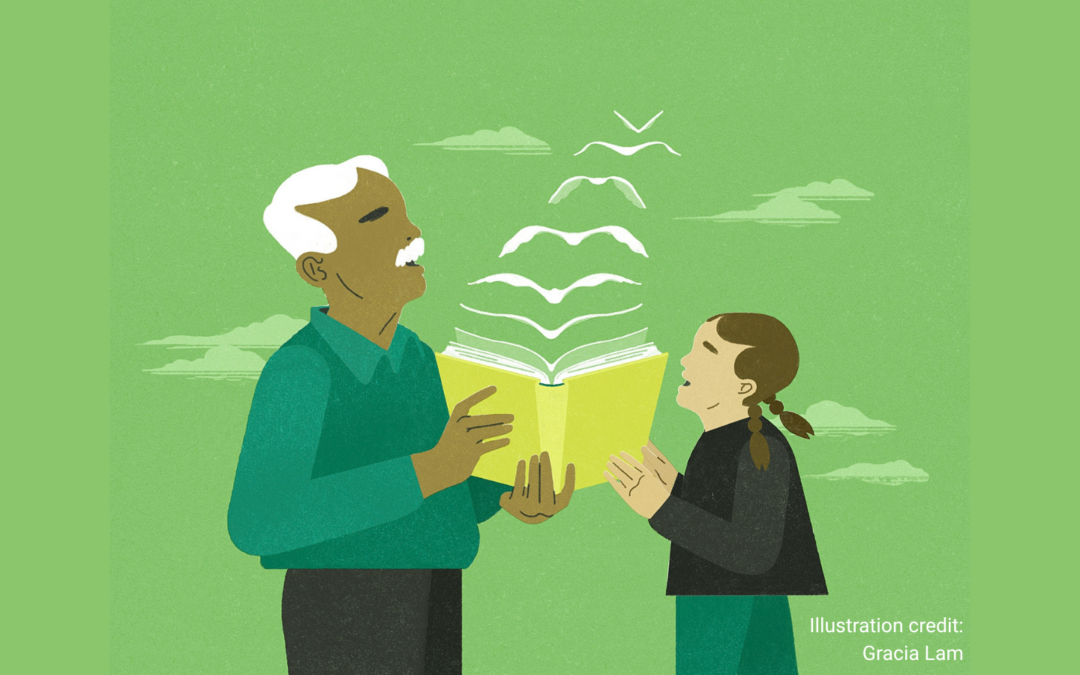
Intergenerational collaboration starts with our ability to be in genuine dialogue with one another. Use these questions to have a meaningful conversation with someone you’re just getting to know or someone you’d like to know better. Listen well and be vulnerable.The...
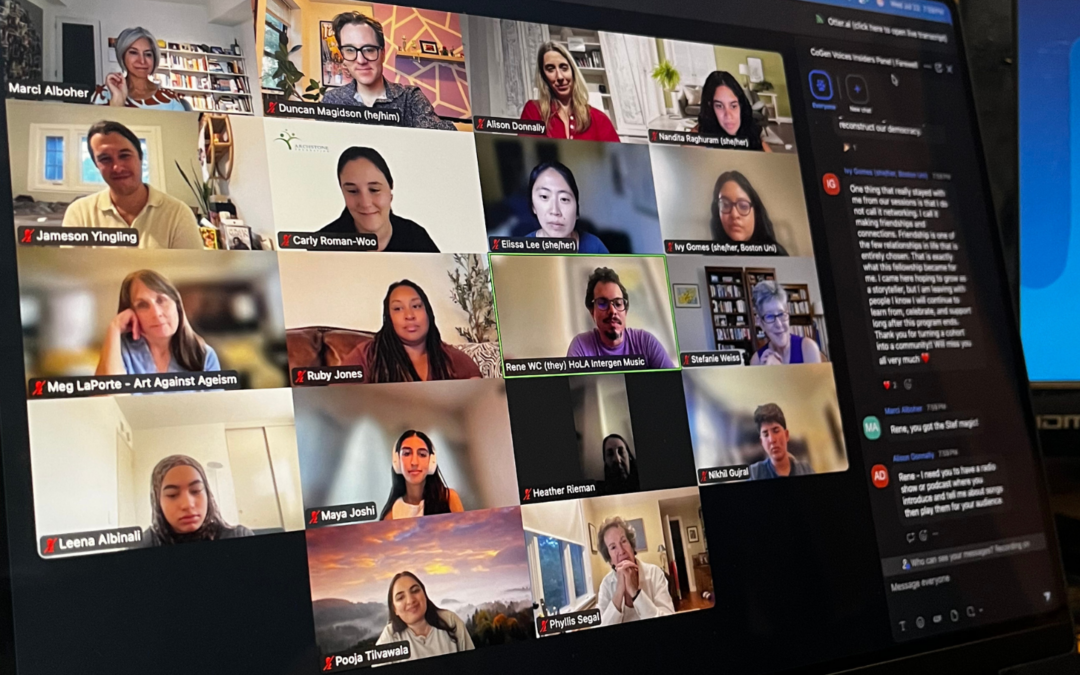
When we first began planning the CoGen Voices Fellowship, we knew we'd face a few challenges. The group of 21 community changemakers was intentionally diverse — by age (15 to 81!), race, location, work, experience, and more. We'd have to meet many different needs and...
At CoGenerate, we believe in the power of cogeneration: a strategy to bring older and younger people together to forge bonds across differences, combat polarization and ageism, and help solve today’s toughest problems. If you’re involved or interested in cogeneration,...
https://youtu.be/OedAsZVTm9U?si=q20TIH8zuwPEhE0a Today in the US, more than 2.4 million children whose parents are unable to care for them live in grandfamilies, where they are raised by grandparents or other loved ones. Until recently, their experiences have been all...
Event Recording: The Multigenerational Campus: Six Big Ideas Changing Higher Ed
Turned unused campus space into hubs for intergenerational innovation?
Sent two generations in one family to college at the same time, debt-free?
Redefined who holds knowledge and how it is shared?
Moved classrooms into communities?
Leveraged the arts to build intergenerational connection?Redesigned campuses to serve 100-year lives?
Meet the innovators who are asking “what if?” and reimagining higher education for all ages.
This virtual showcase featuring the winners of CoGenerate’s Big Ideas Challenge. Their six groundbreaking ideas are shaping the future of higher ed by bringing generations together to foster economic opportunity, lifelong learning, and institutional sustainability.
See what’s possible — and find out how you can bring it to your institution or community.
Khan, welcome everyone and thank you for joining us today. As you’re coming in, please share your location in the chat. It’s always fun to see how far this conversation is reaching. My name is Cristina Rodriguez, and I am the Director of Innovation at CoGenerate, and I’ll be co moderating today’s conversation together with my colleague Simon Chan, who you will be meeting very soon. CoGenerate is a national nonprofit that’s reimagining how generations can work together to solve society’s biggest challenges. We believe in the power of intergenerational collaboration, or what we call cogeneration, and today’s showcase is part of campus CoGenerate initiative, which is developed in partnership with Campus Compact and supported by the MetLife foundation. Campus CoGenerate explores how colleges and universities can become places where older and younger people learn, live and solve problems together, and the big ideas challenge was created to surface and amplify bold innovations that are reimagining higher education for all ages, so the most promising ideas can spread and expand our imaginations of what’s possible. We’re especially grateful to our partners at the Stanford Center for longevity for collaborating with us on the big ideas challenge, and in a moment, you’re going to hear directly from six winners of the big ideas challenge. But before we introduce you to the people behind them, I want to welcome you with a look of what they have been building.
Laura Walker
Colleges are kind of frozen in time. They’re designed for 18 to 22 year olds. What if we designed a campus, a college that was really meant from the beginning to be multi-generational?
Aaron Kuecker
I think the CO Gen Big Ideas challenge is about reminding us of the richness of intergenerational work in America, and to help us see that older adults have immense gifts that can be unlocked by higher education to the benefit of all of us. There are six of us inside of this cohort, and each person brings to the table an innovative idea for the way that we can harness the power of multigenerational education.
Hollee Freeman
My big idea is a way for us to elevate, appreciate and unpack the stories of various generations here on campus as a way of sparking curiosity.
Nancy Giunta
This project really transforms an empty residence hall on a college campus where there is dwindling enrollment into a thriving, interactive living community.
Jane Rohde
The whole idea is to make it a destination, so that someone who’s living in the community at large wants to participate.
Marius Boboc
The big idea that I’ve been working on is called community learning labs that are intended to be hubs for intergenerational learning. Lifelong learning has to become a critical component in how we establish flourishing communities.
Brynn Rousselin
I would describe our big idea as a moment to create meaningful conversation between generations, using art as the vehicle.
Laura Walker
What if people could learn alongside people who’d lived through history, where experience would meet innovation, where generations would not just coexist, they would CoGenerate. It’s time to reimagine what’s possible.
Grace Hampton
We won’t be able to fix the world completely, but we’ll put a dent in it.
Cristina Rodriguez
So what you just saw is a glimpse of what’s possible, and to help us zoom out and understand why this moment matters so much. I’m excited to bring in my colleague, Simon Chan. Welcome Simon.
Simon Chan
Thanks, Cristina. Hi everyone. My name is Simon Chan. I serve as a senior impact fellow with CoGenerate and a global ambassador with the center Stanford, Center on Longevity. In my work, I advise boards, institutions leaders on how demographic change and longevity are reshaping the economy our society and higher ed is at the center of that shift. We’re now living in the most age diverse society in human history. Multiple generations are learning, working and living alongside one another, and at the same time, people are living longer. They’re increasingly looking for opportunities to learn, contribute, stay engaged throughout their full lifetime. And yet, there’s a growing mismatch between how people are living and the structures designed to support them. Much of our social infrastructure, from education to work to retire were built for much shorter and linear lives. Higher education is one of those structures now under pressure to evolve. So really, the question becomes, what if higher education reflected that reality of longer lives and age diversity?
Cristina Rodriguez
Thank you. So. Timing for grounding us in that context, and we’re going to come back to you in a little bit later in the conversation. So we’ll see you soon. And today, we’re going to explore just that question, what if, through the six winners of the big ideas challenge, through this work, we’re seeing three big areas of innovation beginning to emerge from expanding access to more generations, to helping people build connection and belonging, and to rethinking where and how learning happens. So each of the winners that you’ll hear from today are thinking boldly about how higher education evolves to meet today’s challenges and reimagine what’s possible. So we’ll start with a powerful question of what if, and in each segment and over the next hour, you’ll hear from these innovators. We’ll also leave time towards the end for audience questions, so feel free to drop those in the Q and A box at any time. And we’re going to start and and get started here with our first innovator, who’s exploring a very powerful question around access and economic mobility. So what if higher education didn’t just lift one student? What if it lifted an entire family? Hope Chicago is sending two generations in the same family to college at the same time and debt free. The nonprofit helps 1900 students and 300 older adults attend more than 30 higher education institutions. And I’m excited to welcome both Erin keeker, CEO of Hope Chicago, and also Michelle Howard, Chief program officer, to help us dive into this question. So welcome, Erin. Thank you so much. All right, Erin, so I would love to start with you. Your model is not just supporting one student, but it could be a parent, a guardian, a family member who gets to go to college alongside them. So can you paint a picture for us of what does that actually look like in practice?
Aaron Kuecker
Yeah, sure thing. Thanks so much. Cristina. And hi everyone. We feel so honored and excited to be here with you today. What does that look like in practice? It looks like Sharon, a grandmother who’s retired after 31 years in the US Postal Service, enrolling in a two year institution in person here in this city to study early childhood development, and her grandson, a son who is a student in a four year State University here in Illinois. For us, it looks like Brian, a father who’s had actually a long career, but has sort of seen himself capped out because he doesn’t have a higher degree, stepping back into a four year institution, and his son standing on stage together saying, We are soon going to be a whole household full of college graduates. What we do Cristina, is we partner with five high schools from Chicago, south and west side, and we send every graduate from those high schools to one of our 29 in the state of Illinois, university partners or a workforce partner. And we also send one of their parents or guardians on a workforce or higher ed pathway debt free. So for us, it’s about elevating an entire family simultaneously at the same time, and setting those folks on journeys that simply show what we all know folks can do when constraints are lifted. And I’ll just say that what we’re seeing is that when barriers are removed across generations, talent and determination, they rise so our parents, scholars, you know, the national rate for year over year persistence for adult learners is around 45% our parent scholars, which is what we call our older learners, are retaining at almost 80% actually, and our traditional age scholars, our hope scholars, are retaining at above national averages. When two generations do this together, it serves our institutions well, with enrollment, with the students they long to serve. It serves employers well. And my goodness, do these families show what they are made of?
Cristina Rodriguez
Oh, I got goosebumps. It’s so powerful and transformational what you’re doing. I mean, 80% persistence rate, that is really high. And thank you for bringing it to life and showing us like what it could look like and feel like. And Michelle, I would love to dig a little bit deeper into that. What is the secret sauce like? Why is it that bringing two generations together versus just, you know, them separately, going in their own path, pursuing a similar opportunity or dream makes this possible.
Michele Howard
Thanks, Cristina, and I am a Chicago and I saw that shot town. We know how we get down. I saw that in the chat. So I just want to acknowledge, and I think it’s important to acknowledge that I am from Chicago, I am homegrown, and that makes this that much. Much more an easy investment from my perspective, but what I think is is incredible. And I have on a little bit of our shameless plug. We call our students goal getters, and we help them recognize that building belief is important. So our investment in making the promise to offer this opportunity to them is the it’s the baseline them actually getting into college. That’s the baseline. We didn’t change anything about that process, but what we did was we, we’ve helped build the belief among the school teams, amongst the families, that this opportunity is for you, and not only is it for you, we’re going to help you navigate through it. So what I think is been incredible is seeing the partnership, the partnership of a family pursuing higher education, the partnership of a family going after economic, economic mobility, in their own goals, together, the dinner table. Change has changed. The conversation has changed. Our students are calling their parents out, what are your grades? What’s your GPA? But imagine how different that is when you’re looking to complete a financial aid document, and your parent doesn’t understand what this is really intended for. So now we’ve said, Not only is this intended for you scholar, but this is also intended for one of your parents, and now parents are at the bargaining table. They are now trying to navigate who’s going to take advantage of this, because we can do this together as a family. The other thing that I think that’s crucial to the secret sauce is we made a promise. We’ve made a promise. We’ve built a belief to say, like, Hey, you’re worthy investment, and we’re going to help you get to the other side, and not just hope, but hope. And our partners, so our institutional partners. We have 28 institutional partners across the state. We have five high school partners. We partner with Chicago Public School District. We partner with noble schools. We are serious about partnership, because this won’t work if we do it by ourselves. We’ve seen that for decades, right? So innovation for us is true partnership that continues to build on what we know is important, which is investment economic mobility and helping families navigate that together.
Cristina Rodriguez
Wow. Thank you, Michelle. That was so powerful. What we’re hearing is when education lives two generations at once, it doesn’t just change one life, but it changes the trajectory of the entire life of the entire family, which is so important. And it reminds us that access is not just about admissions, it’s about the belief. It’s about and this cross-generational belief, which is so critical support and shared possibility across generations. So thank you both for giving us a snippet of what is hope Chicago doing, and access is only the beginning. So I would love to now bring on Simon to ask our next big question.
Simon Chan
Thanks, Cristina and wow, that’s a that’s a powerful beginning to talk about access. So I wanted to touch a little bit on from we go from access to social capital. We know that social capital plays a big role in the possibilities of cogeneration or intergenerational relationships. So the question we’re going to explore in this section is, what if relationships if relationships students build across generations were just as important as the classes they take? There’s a growing body of research that shows that belonging and relationships are some of the strongest predictors of college completion, as you heard from from the story from Hope, Chicago, we noted that our workforce is also multi-generational, so learning to work across generations has a practical application. It’s essential for students to be ready for the future of work. And one of the most powerful and overlooked resources on campus are the people that are already on campus, the people around the students. These are traditional age students, older adults, campus employees, community members. So I’d like to invite the innovators of our next big three ideas, three big ideas we’re exploring how campuses can activate that social capital and turn relationships across generations into powerful learning assets. So I’m going to invite our our group, up onto the platform here. And first I’m going to start off with Dr Holly Freedman. So Holly, going to ask you to join us up on stage here. I’m coming. How you doing? Holly? Good to see you again, this time, not on the West Coast. Good to see you as well. Oh, so I’m gonna get you to go on camera there. Holly, awesome. Oh yeah, come you’re back. I’m back. All right, Holly, nice to see you. We’re joined by Dr Holly Freedman. She’s the Dean of the School of Art and Sciences at Virginia Union University and the creator of humans at UVU. Conversations across generations. So through humans of Vu, students sit down with older people on campus and in their community to capture stories of resilience, activism and their lived history. So Holly, you’re kind of like flipping the script a little bit on who holds knowledge and how that gets shared. It. So can you share a story that shows how intergenerational connection changes the student experience?
Hollee Freeman
Absolutely. Thank you, Simon here, as in many universities, the work is transactional. You have your professor, you have the student, and the work just kind of happens. You know, I do a paper, I get a grade and I leave. So what I wanted to do was I wanted the professors and the staff to actually get to know each other, so they could have hard conversations. They could talk about their life experiences and use that knowledge to move each person forward. One particular story that has really stuck with me was a young student. He’s a sophomore, he’s from the Caribbean, and he’s interested in physics. He wants to be a, you know, astronaut or a physicist and a grounds keeper. So I’m using the whole campus, not just professors, but the whole campus. So the student and the grounds keeper, we’re talking in a greenhouse that we are bringing online and and they both talked about their similarities and their experiences. And at one point, the groundskeeper Rahim, turns to Donato, the student. He says, Man, I’m really proud of you. And the students said, and I’m proud of you also, because they both have been talking about their lived experiences and how that they bring that to bear on how they are navigating the world now. And I just thought, wow, this is a situation where the student could be off going to school, the groundskeeper is doing his thing, and never the two shall meet. But now they see each other. They have a connection, and it’s not about academics, it’s about themselves and what they value and who they are as people, and I see them on campus now talking to each other, and I I’m exploring that, like, how do we re conceptualize what what power looks like and what community looks like? And that’s what we’re doing here at Virginia Union University.
Simon Chan
That’s an amazing story, Holly. And really what it reminds me of that, like you’re talking about just social capital that’s kind of an institutional asset that’s just hiding in plain sight, and just, how do we kind of find ways to design that into it, right? And what I also love is your your your thinking about, how do you build you mentioned it in the video, with curiosity, right? How do you build curiosity across generations and offer them the opportunity to learn, not just in the classroom, but they’re through lived experience, and you’re deepening that relationship so that help that helps with building resilience and perspective across ages, and you’re unlocking wisdom on campus, which is really cool. So thank you so much. I really applaud your your innovative mindset to think about what are the some of the things that are already hiding in plain sight in an institution of higher ed that we can re leverage and redesign into that learning experience. So thank you, Holly for sharing, and I look forward to seeing how your program evolves. Thank you. All right, so next I’d love to bring up to the stage grace and Bryn from Penn State University. So what I’d like to explore with the two of you, and I’d just like to welcome you up to this to the platform here the virtual platform. Grace, I know you, you. I saw you before, so I’m gonna get you to come up onto stage as well.
Simon Chan
It is disabled by the host, but you’re enabled now, because I see you. This is great. All right, so the question I’d like to explore with both of you is, what if lifelong learners already on campus weren’t separate from students student life, but part of it so both grace and Bryn, grace is grace. Hampton is the professor emeritus at Penn State University, embrace Bryn Russell Lin is the executive director of Olli at Penn State University, and co founders of art speaks, and I’m welcoming you both to this conversation. I’m just going to talk a little bit about art speaks and how it integrates lifelong learning from Osher Lifelong Learning Institutes, Olli, for short, with students through creative collaboration. So for those who don’t know ollie or the acronym, it’s just an amazing, wonderful asset. Already on campuses, there’s more than 120 Ali programs across the country, in most of the states, serving 180,000 seasoned adults age 50 to 100 and this represents a massive and huge opportunity for campuses to bring generations together in a meaningful way. So Grace. I want to start with you. Many universities have older adults, as we said, on campus already, but often they’re in separate spaces. So talk about how the importance of bringing together generations across generations, but using the arts as a mechanism to do that.
Grace Hampton
Thank you so very much for this wonderful introduction and opportunity to talk about the arts, and I’m deeply grateful because I believe in the power of the arts as a. Vehicle for connecting people across generations, across cultures and across every kind of lived experience it is. Let me start by saying this Penn State is poised and ready to shine a light on intergenerational communication. We are fortunate to have a rich array of arts venues and programs to draw upon that invite families and communities to come together in a meaningful way through the arts. For example, we have the Palmer Museum of Art, the wascob community Gallery and the School of Visual Arts, which host exhibitions that spark conversations between people of all ages, the concerts, dance productions and musical productions presented by the Eisenhower Performing Arts Center, along with the powerful plays staged by our School of Theater, offer, literally and figuratively, a place for creating shared experiences that inspire dialog and deepen understanding and communication between generations and communities. These venues and performances aren’t just calendars event calendar events, they are gathering places where stories meet, where perspectives are exchanged, and where generations can learn from one another in a way that feels Natural and joyful at its heart. This project is about honoring the wisdom that comes with age, celebrating the creativity of younger generations, and recognizing that the arts give us a common language, one that transcends time background and beliefs, we are especially fortunate to have a strong partner in our Olli program that you’ve already described. Their commitment to lifelong learning aligns beautifully with the mission of art speaks together. We have an exciting opportunity to design and implement innovative approaches that encourage conversations among people who may not otherwise have the chance to connect. I am thrilled that we have the opportunity to explore, to create and to grow as we bring generations together, while we continue to build community where every voice is heard, where every story matters, and where the arts serve as a bridge that brings us all together.
Simon Chan
That’s wonderful grace. You had me at a hello, and I love your passion for this program, and what I also love is the idea that you’re as we talked about. You’re bringing institutional assets already existing, community partners that already exist. So thank you for that. So Brenda, I’m going to turn it over to you, because I think the student and our traditional age students is super important as well. Right? How do we make sure that these programs are benefiting all generations, including our traditional age students? So from your perspective, from the student perspective, what does it mean to learn, to collaborate across generations, and how does this prepare students for that real world that they’re going to enter.
Brynn Rousselin
Sure, first, no one can match Grace’s passion, but I am right there with her, and so looking forward to our work on this project together. But like most other institutions, Penn State is placing a significant focus on preparing students for success, and that success is in the classroom, their personal lives and their future workplaces. And as Simon you even mentioned earlier, we now have five soon to be, really six generations in in the workplace, and we know that there is a divide amongst our generations, yet there are so many similarities. And art speaks offers us an opportunity to expose our students to intergenerational conversations, specifically bringing in our Olli members, pairing them with the students. And our goal is that through meaningful and deep conversation, you. Using arts as the starting point will expose our students and Olli members to the ideas and concepts and thinking patterns of the other generation. And our hope there is that we’re creating at least understanding and at best, potentially long term relationships we know both of those generations struggle with feelings of isolation and loneliness, and so bringing them together and giving them the opportunity to have conversation can be really impactful in the moment, but also hopefully long term. You know, ultimately, we’ll we’ll be breaking down stereotypes, misconceptions of the other generation and building bridges to future conversation or communication in their personal lives, but also once they reach the workplace
Simon Chan
Well, and that’s so important. And what I love about the example or the idea that you have is it really shows that belonging in those relationships can be intentionally designed right into a program with arts acting. And there’s, in your case, arts acting as a catalyst, but also a common purpose. And you’re finding ways to create proximity between students and older, older adults that can lead to, like you said, partnerships and build skills in terms to prepare students for the workforce after graduation. And it really reminds me of the framework that we we often espouse here at CoGenerate, around common purpose, proximity and partnerships, and your program just has an eloquent and beautiful way of bringing that to life. So thank you both. Thank you all right, so next we’re going to bring our next idea up here around community learning labs. So the question that we’re going to explore with Dr Marius Bobak is, what if learning doesn’t always happen on campus? So welcome Marius. Marius is the Dean of the College of Education at the University of Missouri, St Louis, and the leader of community learning labs. So Community Learning Labs at the University of Missouri, St Louis will bring educational and social services such as job training, degree granting, programs, counseling, tutoring, even child care, to existing community spaces. The lab will become off campus hubs where community members of all ages can learn, teach and train together, Marist, you’ve got this amazing vision to move education into neighborhoods using unexpected kind of community venues, like hospitals, child care sites, rather than expecting people to always come to campus. So what’s unique, what’s unique about the cogenerational role that you see in your campuses playing here and like describe a little bit about what might look like if a parent or a grandparent showed up at a local Y to take their child to say, swimming class.
Marius Boboc
Thank you, Simon. Thank you Cristina and the entire CoGenerate team, and thank you my colleagues from across the country who are here today to help us bring to life these distinct visions that are intended to redefine how higher ed can engage the communities it serves. So you’re right. Simon, the learning labs, they may be called something totally different in the end, because the communities would take ownership of the concept, and they would be engaged in the design and implementation phases of the project. So Community Learning Lab is a trusted site defined by proximity and purpose. And that that I would take the origin story back to when I was growing up, you know, tightly knit community, where I realized early on, the importance of having older adults who can share with with me, from their wisdom and life experiences. There, you cannot put a price on that. So back to the to this concept, a learning lab is built on the premise lab that learning happens anywhere structured or semi structured or even unstructured learning. So the answer to Cristina’s her initial question, but it could be built on, well, learning happens. So let’s see how we answered that question. And in a way, we’re bringing education back to the community through this concept. So picture this, as you said. Simon Tamika, grandmother goes to a swimming class because she wants to invest more time and resources in healthy living, and at the same time, granddaughter goes to the same way to get some tutoring. While Tamika is waiting for Jill to finish her tutoring session, she may have access to a workshop on healthy dieting and how to connect what we eat with how we move to. To the swimming lesson presented by a faculty member in our College of Education at umsel who specializes in exercise science. At the same time, the instructor can talk about smart technology that we’re also connected to right now to help us navigate the complexities of life. Once that’s done and then the tutoring session is done. Maybe the two of them, Tamika and Janet, can go attend a session set up by a pre service teacher from the College of Education at Amsel, who’s interested in designing a community asset map so that they can understand how the school in that community is a microcosm of what happens in that community, and there’s a mutual synergy right there. At the same time, Jill, she’s very she’s a complete could teach herself some computer skills to older adults. So you can see the parents between what one younger generation representative or representative can bring to the the older are community assets. So sharing life and work experience, they would enrich the the future, stuff that young, younger generation would be able to design collaboratively. So to wrap this up, the learning lab concept is intended to strengthen communities built on a sense of pride, a sense of identity. And out of all of this, I envision that a future story could be co created by bringing together community leaders, business leaders, community members, nonprofit organizations, the College of Ed um, so maybe the entire university, so we can think of how to make sense of the world around us by tapping into each other assets.
Simon Chan
Well, it’s incredible, because I think one of the things I love about your model is it recognizes that learning can happen everywhere. Right? Oftentimes, we think learning only happens on the campus or in the classroom, and this is really looking at different ways of bringing learning to people and meeting them where they are, in particular in trusted community spaces, like you said, the why and infusing learning into the daily part of their lives. So that reduces some of that friction, sometimes, of having to, you know, leave your life and actually go to go to the campus. It’s wonderful. So thank you for that, Marius and and look forward to seeing the Community Learning Labs, or whatever name it ends up being, evolve. So with that we’ve talked about, you know, we’ve talked about as access. We’ve talked about kind of social capital and economic mobility, and the importance of fostering cross general relationships to build those deeper relationships. So I think we want to explore one more question, and this one’s really exciting. So I’m going to pass it back over to Cristina talk a little bit about some of the assets we already have on campuses.
Cristina Rodriguez
Thanks, Simon, and we just started exploring that. Right? What can we do with spaces? So we’re going to dive a little bit deeper into that in this segment. And our big question is, what if the spaces and structures of higher education were redesigned for a multigenerational society. So we have two innovations in this segment, in the big ideas challenge that are exploring this big question. And first, I want to invite Jane Rody, founder of Live together, to join us here on camera, and also Nancy Jutta from Frostburg State University into the conversation. Welcome. Okay, so Jane, I know that when the interim president of Frostburg State University in rural Maryland asked you to tour an empty residence hall in 2023 he posed this question that many rural campuses across the country are facing. And it was, you know, what? What do I do with this building that I no longer need? And that kind of lit a light bulb moment in your head, and it raised a different kind of question for you, which is, what have we turned this unused campus space into a hub for intergenerational connection and innovation. So today, you and Nancy are both co leading a project called the Cambridge residences, and I would love to hear what is it that you’re hoping to take advantage of from this empty building space to turn it into something new, and how are you doing it?
Nancy Giunta
So I think I can start answering from here. Thanks so much everyone for joining. It’s such an honor to be a part of this group. So what we’re doing is really using a grassroots model of organizing. How do we bring together the social capital that has already been taught? Talked about, along with the the talents and the skills and the knowledge and the history in Appalachia, together to to to create an idea, right? So, so, how do we do this? We do this one person at a time. We do this by building relationships, and we do this by building inter general intergenerational relationships that help us imagine and utilize the strengths that we have and the assets that we have. So in Western Maryland and probably in many other Appalachian towns, much of our social fabric and daily life is already intergenerational, right? You go to the local art opening, you go to musical performance, you go to exercise classes, and you already see a range of ages gathering. So really, what we’re doing together is naming what our strengths are and naming what our needs are so helping people imagine this is really what this looks like when we were talking about this before. You know one way we do that is find our people who are going to say yes, and this is how we do it, and not the people that will say yes. But this is not going to work because so and really, just like establishing a vision and what this could physically look like.
Cristina Rodriguez
Yeah, thanks for starting us off there. And Nancy and then Jane, I’d love to to hear your perspective too. You know, we’re seeing this trend across the country with, you know, university retirement communities, and you’re taking a little bit of a different approach by kind of bridging the affordable housing, the workforce training, the wellness programming, and also it’s a revenue strategy for the university. So I would love for you to walk us through what that looks like and how it’s a little bit different than the traditional university retirement models, and then, like, once Cambridge residence is up and running like, and imagine we were all able to just transport there from this zoom call and walk through the building. Can you help us see like, can you help us be your eyes and ears and just walk us through that, that building?
Jane Rohde
I would love to do that. And thank you so much. I do love this group of people so much. Thanks for being here today too to hear us and all of our big ideas. So the idea of where Nancy started with us, in terms of creating this environment, the other piece is that a lot of the ubrc world kind of has the seniors and the older adults are still somewhat co located, more so than integrated with one another, and we think that that is an advantage to actually mix the different ages, mix the different incomes, mix the different needs. Because from our perspective, anyone can be vulnerable at any point in time. Doesn’t matter if you’re an older person or a younger person, or a family, or with a sick child, or whatever it might be. So allowing the modeling to be able to encompass what the needs are through wellness coordination is part of the idea. So as we’re working through that process, you look at it differently, because the Housing Strategy is actually to look at it from a cooperative perspective, so those who have assets can also participate and be part of the Co Op, and we’re also looking at partnering with a local housing authority, and then we can hold 10 units out, so 40 units total, that gives us an opportunity to be able to provide inexpensive housing or rental housing as part of that 10. So that’s our mixed unit category in terms of trying to make the financials work, and then adding that Nancy’s department, the social work department at Frostburg, we want that to be in the building, so that gives us all kinds of opportunities to work with nursing students and kinesiology students and psychology students to create the interdisciplinary team, and that then translates to our five bed residential assisted living. That’s like, think of a large home with five bedrooms and bathrooms that where the residents will be living, allows the student groups to work and get their practicum, perhaps live in the building while they’re doing that, or after graduation and continuing to work with us, as well as the wellness coordination program. So I think there’s a good balance between programmed opportunity and what we call natural neighboring. So it’s that opportunity where you actually get to get to know your neighbor a little bit. It’s kind of programmed to kind of make those engagements happen. But then also, oh, then you find the commonalities and become friends. I think that’s sort of the natural part of the natural neighboring part. And if you’ll indulge me, I’ll ask people who need to visualize and close your eyes, please close your eyes for just a minute and let me walk you through where I think the community will shine. So I want you to walk through. And start in the quad, and the quads typically are kind of empty, not really much there. All of a sudden, there’s gardens and there’s playgrounds and there’s children playing, and you can hear the cheerfulness, and you can hear kids laughing as they’re tossing balls back and forth, and they’re walking through and you smell the fragrances of the garden and the flowers, and you can hear the bees and the and all the beautiful things that are outside. As you approach the front of the building, you come into the entrance. Inside the entrance, it’s been transformed from this very cold kind of open space into this warm, welcoming space that has tables and chairs and, oh, there’s a new art display to see. And there’s an older couple, and they’re walking through the front doors, and, oh, they see their neighbors, the young graduate students who just moved in upstairs. They sit and have a conversation. They’re able to smell the new food that’s being prepared for lunch. And they’re like, oh, we should have lunch together, and then we can discuss it. And so they went and did that, and then they are talking about the new performance that’s happening across campus. So this is an opportunity to embrace life and the experiences of natural neighboring and natural life and the normalcy of life by also bringing in the community at large. So the idea is not to be separate, it’s to be together and to pull those opportunities of experience for all ages, and people who are living on the campus as well as those are living in the city of Frostburg. So that’s our big idea.
Cristina Rodriguez
What a beautiful description and imagery. I could feel like I was there, and I’m like looking outside of this gloomy weather that I have, and I’m in a different place now, but Jane and Nancy, I think what you’re showing us is that when generation shares space and connection becomes part of everyday life, campuses can really transform these underused buildings into models for housing, for learning, for community, and even new ways of generating revenue. So thank you for for giving us a glimpse into into your big idea for our next conversation, our final guest, I’d like to invite Laura Walker, former president of Bennington College and one of the driving forces behind The cogeneration lab. So Laura, welcome and our big question, my big question for you, is, what if campuses were redesigned for 100 year lives? So can you walk us through that?
Laura Walker
Sure first, thank you, Cristina and I am so inspired by all these big ideas. You know, that is kind of a question that we asked theoretically and creatively at Bennington, but I just want to go back, because this idea for me started in childhood. So when my mother was about 40, and I was about 10, she decided to go back to school, and she already had a college degree, but she wanted to figure out what to do with her life, and she took a bunch of classes with a range of different people, and she fell in love with the class on gerontology, and that changed her life. So for the next 40 years, she spent her life devoted to helping older people age well, to helping them never stop, to never stop learning, to learn all the time, to love and to share passion across generations, and our dinner tables were just filled with that joy and stories of these amazing people. So I tell that story because I thought of that. Fast forward more than 50 years. I’m a college president myself, and I am feeling some of that same energy my mother felt every single day as I interact with the extraordinary students at Bennington College and the faculty and in this incredible space where learning is centered and at Bennington, we have very much some we’re very committed to student centered learning and learning by doing, and learning in in with creativity And it, it is, I think, the foundation of so much of what older people also need to do as they’re planning their own transition. So I had decided that it was I was looking to shape my own next chapter. So while I was still president of Bennington, I enrolled in a class at Yale and I, it was called the experience Leaders Initiative, and we talked a lot about longevity. I remember this, this report by Stanford University that said, the 100 year life is here and we’re not ready. And so that just stopped me in my strap tracks and came back to Ben. Washington, and started thinking about the question you raise, not that we are going to redesign the campus, but if you think that way, if you think, Okay, what would we do so that it so that we could welcome a range of different people into the campus? What would we do? How would we do it differently, and we how would we do it in a way that’s really founded in the values of Bennington? So we had a retreat, and we brought lots of people together. My board was really, really excited about this. We had board members, we had faculty, we had students, we had alums, we had staff. Everyone came together in this retreat, and we got grounded in kind of what the reality of the demographics in this country were, and saw this great opportunity as 18 to 22 year olds are shrinking as a population 50 plus are are growing. So we we had a great day. It was led by the CoGenerate team, and we came out with some very specific kind of next steps that form now the foundation of a cogeneration lab, and the cogeneration Lab is a place to do pilots and to think about ways to bring living onto campus. Faculty members had suggested that at a retreat last year, and building on that idea, building an idea of how we can take the classes that we’re doing that do involve people from various parts of the community, like saving democracy. How do we bring generations together to solve these intractable problems that we have, because they’re not going to be solved by one generation or another? If we’re going to think about the future of our democracy. If we’re going to think about the future of climate, of civil discussion, we’re going to need to do this across the generations. And that’s the power of the idea. So we are piloting and looking at kind of next summer as a way, as a blank canvas to paint on to create some programs this summer, piloting a few. And it’s all grounded in bennington’s, you know, values of self direction and learning by doing.
Cristina Rodriguez
Yeah, thank you for painting that journey of how your passion was, like, reignited again, you know, like as you were thinking about your next chapter, and then also how you were able to bring everybody else along too. Because I’m sure it takes a lot of buy in to get others at your institution to see, hey, by the way, we’re going to rethink this, how we’re doing some things here. And I love that you’re you’re focusing on the small pilots that you can generate stories and data from and better understand what’s working or not working as you tackle this really big question. So thanks for sharing a little bit of your experience. We are now going to invite everybody to come back on camera, and we’re going to do a quick Q and A slash lightning round that Simon will guide us through.
Simon Chan
Great thanks, Cristina. I mean, wow, amazing and inspiring innovations across different types of institutions, across different parts of the innovation ecosystem, within a higher end institution. I’m struck by Laura’s comment about I spent a lot of time talking to kind of university leaders and presidents about this. And one of the very and it’s a very early space, as we know, and one of the very first questions that they ask is always like, I want to be innovative, but who else is doing this right? And that was really part of the the the origin story around the big ideas, challenge was to start elevating stories of innovations that are already happening on our campuses. So you are all trailblazers, and I’d love to hear from each of you, from the people that I know that work in this space, they can often say that this work is very isolating. You feel like you’re almost one of the only people that is trying something new. But as you can see today, that this is part of a broader movement that’s happening in higher education. So my lightning round question for each of you, and feel free to just kind of jump in and get in there, is like, what is one thing you’ve learned as part of this experience, and one piece of advice you’d offer to others who are just getting started in this journey, and I’ll just kind of open it up and we’ll go back and forth.
Jane Rohde
This is Jane I would say that being called a unicorn is a good thing, because we’ve been called a unicorn several times, and almost everyone will say, what does it mean intergenerational living, or multi-generational living? So explaining it and talking to people on your community level is the best way to do it. I have a young friend who’s in upstate New York, who exactly is doing that she is like the lone voice in her community, and she’s talked with every community association that will have, you know, have her come to speak people who have aging issues, people who have youth issues, all the way around. And I think that you just need to start and start talking about your ideas. And then start writing your ideas down, and then just keep, keep reinforcing it and making those community based relationships are key on the grassroots level, absolutely.
Simon Chan
I mean, I love, you know, innovation starts with hand to hand combat oftentimes, and it’s great to be able to get that story down and start telling it. What else do other people’s have in terms of just advice or your experiences?
Hollee Freeman
Yeah, I’ll jump in. I’ll jump in. What was affirmed for me was that students want to be seen. They just, they don’t want to just be students or just known as, I don’t know, Mr. Sophomore or miss whatever, right? They want to be seen. And to that end, we had a Dean’s reception for students who made the Dean’s list, and I actually asked them to talk, and they shared these stories of of struggle to get into university and struggle to stay in university. And I think that was a light bulb moment for the faculty, because they know that students are here, you know they might know that some of them struggle, some of them don’t, but to actually hear the stories that students told, I think, is helping them to think about how they will conduct their classes differently now so they can be more interactive and not so transactional. And that’s what people are telling me. They’re saying, like, that was such a good experience to actually, like, get to know people on a different level. And again, the students are just were excited that you know that it wasn’t just the typical transaction where you get your little Dean’s diploma and you’re like, Yeah, I got it, but they wanted to bring families the diploma. Wasn’t that the diploma, the certificate, wasn’t the important thing, that someone actually listened to what they had to say. And I think that’s going to move us, you know, we have a history of social justice here at Virginia Union University. I think that’s going to move us in that social justice way, in a different way, but still on the same kind of like social justice path. So that’s what I learned, and that was what was affirmed. Thank you, Ollie.
Simon Chan
And I think that is a theme that kind of cut across all of the ideas that was really around that that that importance of building relationships. And oftentimes we’ve talked about, you know, in an age segregated society, if we think about the fact that we often don’t interact with people of different ages other than our kind of direct family members, etc, that you know higher ed is a real opportunity to to re infuse and reintegrate the ages across the bands. Marius,thank you.
Marius Boboc
I echo what you said, Simon, and I will add to that the fact that we have to be deliberate, discerning and transparent. We have to be our authentic selves and go in prepared to listen carefully, go in with humility, so that in the end, the community members that we become part of trust us. Because trust building is a critical first component, and then all of this work is intended to empower the communities to take ownership of this concept so that they can create a future state for themselves. And the other partners that we’re bringing together in a wrap around services model are there just to support bring to life that vision.
Simon Chan
Sorry, go ahead, Laura, I was just gonna say the community piece of it is such an important part, right as higher ed gets challenged on on relevance and value. How do you become, how do you continue to build on those, those models of being an anchor institution and community? So Laura, I’m gonna go to you really quick, and then Michelle,
Laura Walker
so, so building on that point, I think it is really important and powerful to bring different members of the community together. So when we brought together board members and students and alums to think about this together, it also grounded everyone in a common kind of set of facts and perspectives, but also to listen to the the challenges. What are the challenges for the students and envisioning something like this for the faculty, who may have had not so great experiences in the in the classroom, and to really hit those, try to really think about those head on, but mostly to plant some seeds and just see what happens, because people will take the ideas and make them so much better and create new, powerful things.
Simon Chan
Yeah, I love that idea of bringing everybody along, particularly we were at a panel Laura at Arizona State a couple weeks ago, and it was a panel that brought the perspective of faculty, the perspective of the experienced learner and the student. Was really interesting to see where the intersections were and where are some of the areas that are friction right that we need to make sure that we’re we’re building trust and managing.
Michele Howard
Michelle over to you. I’ll say two quick things. One thing that I think is a theme here is that true partnership has mutual benefit. I’ll pause there, and then the other thing is the. That I’ve learned that Rede finding the goal is really crucial. So no one who is in the sphere of Hope thinks that a degree or a piece of paper does anything. We know that people do things. And so people have to understand what that space, what that environment is supposed to yield for them. And so working together mutually to benefit not just the students success, but really economic mobility, that’s for our society, something that we all need. And so really leveraging that playing field, again, goes back to recognizing that our institutional partners and all of our partners. We all have a mutual benefit here. We need everybody to win.
Simon Chan
Yeah, I love that, and also that idea of bridging right, that it’s bridging for that mutual benefit. Others, anybody else want to chime in on, on what they’ve learned, or what the advice they’d give to people getting started, Erin went on to go over to you,
Aaron Kuecker
sure, yeah, just at a very basic level, the reminder that the people that we serve are the heroes of the stories, and as we as you, lead forward in your communities with ideas that you know are transformational, the reminder to bring folks to intersect with the heroes of those stories. It’s not just about your pitch. It’s actually about letting people experience the goodness of the human beings that you’re working with. So get people engaged that way.
Simon Chan
I love that. I love that. Well, what I mean? Well, you know, we didn’t have time for, you know, Q and A, but what I would do is encourage all of you who are listening, if you want to learn more about the programs, reach out to these, these innovators and these individuals, hear about these stories, learn about the models, right? It’s not that you’re going to copy these models. These are models to inspire you to think about what are the different innovations that makes sense for your own campus community, for your own community itself. So with that, I’d really like to thank all of our big ideas winners and for all your energy, your enthusiasm, and most importantly, for being trailblazers in this space. And I’m really excited to see where, how all of this evolves, and how this plugs into the broader movement that’s already happening in higher ed so I hand it over to Cristina to close us off. But thank you, everybody.
Cristina Rodriguez
Yes, big thank you. What a fantastic conversation. And before you all head out, we’re going to launch a quick poll. So take a few moments to share your thoughts with us there and I, as we’re closing, I want to return to the question that brought us together today, which it was, what if higher education reflected the multi-generational society we’re already living in, and today, we explored six innovations that began to answer that question. We saw how expanding access across generations can transform the trajectory of an entire family. We saw how activating relationships and social capital can strengthen belonging, persistence and workforce readiness. And we also saw how reimagining physical assets on campus can create new models for housing, for learning and for building community. So each of you started with that, what if question? And we’re hope that the audience today may be leaving with some inspiring thoughts or even their own. What if? Question? If these ideas resonated with you today, there are a few next steps you can take. You can bring a cogenerational session onto your campus to dig deeper into this question. You can join the community campus CoGenerate affinity network, which is a growing community of over 100 leaders exploring how to embed cogeneration strategies in higher education, and for students that are interested in leading this work on their campus, I recommend that you check out the CoGenerate student ambassador program. We’ll drop a form in the chat, but we’ll also be sending it after the webinar, so don’t worry if you’re not able to capture it, along with any questions that came up, and a recording of today’s conversation. So thank you again, to our innovators, to our partners and to everybody who tuned in today. We’re grateful for you being part of this conversation, and until next time, thank you. Thank you. Bye.
To provide the best experiences, we use technologies like cookies to store and/or access device information. Consenting to these technologies will allow us to process data such as browsing behavior or unique IDs on this site. Not consenting or withdrawing consent, may adversely affect certain features and functions.
Functional
Always active
The technical storage or access is strictly necessary for the legitimate purpose of enabling the use of a specific service explicitly requested by the subscriber or user, or for the sole purpose of carrying out the transmission of a communication over an electronic communications network.
Preferences
The technical storage or access is necessary for the legitimate purpose of storing preferences that are not requested by the subscriber or user.
Statistics
The technical storage or access that is used exclusively for statistical purposes.The technical storage or access that is used exclusively for anonymous statistical purposes. Without a subpoena, voluntary compliance on the part of your Internet Service Provider, or additional records from a third party, information stored or retrieved for this purpose alone cannot usually be used to identify you.
Marketing
The technical storage or access is required to create user profiles to send advertising, or to track the user on a website or across several websites for similar marketing purposes.
To provide the best experiences, we use technologies like cookies to store and/or access device information. Consenting to these technologies will allow us to process data such as browsing behavior or unique IDs on this site. Not consenting or withdrawing consent, may adversely affect certain features and functions.
Functional
Always active
The technical storage or access is strictly necessary for the legitimate purpose of enabling the use of a specific service explicitly requested by the subscriber or user, or for the sole purpose of carrying out the transmission of a communication over an electronic communications network.
Preferences
The technical storage or access is necessary for the legitimate purpose of storing preferences that are not requested by the subscriber or user.
Statistics
The technical storage or access that is used exclusively for statistical purposes.The technical storage or access that is used exclusively for anonymous statistical purposes. Without a subpoena, voluntary compliance on the part of your Internet Service Provider, or additional records from a third party, information stored or retrieved for this purpose alone cannot usually be used to identify you.
Marketing
The technical storage or access is required to create user profiles to send advertising, or to track the user on a website or across several websites for similar marketing purposes.