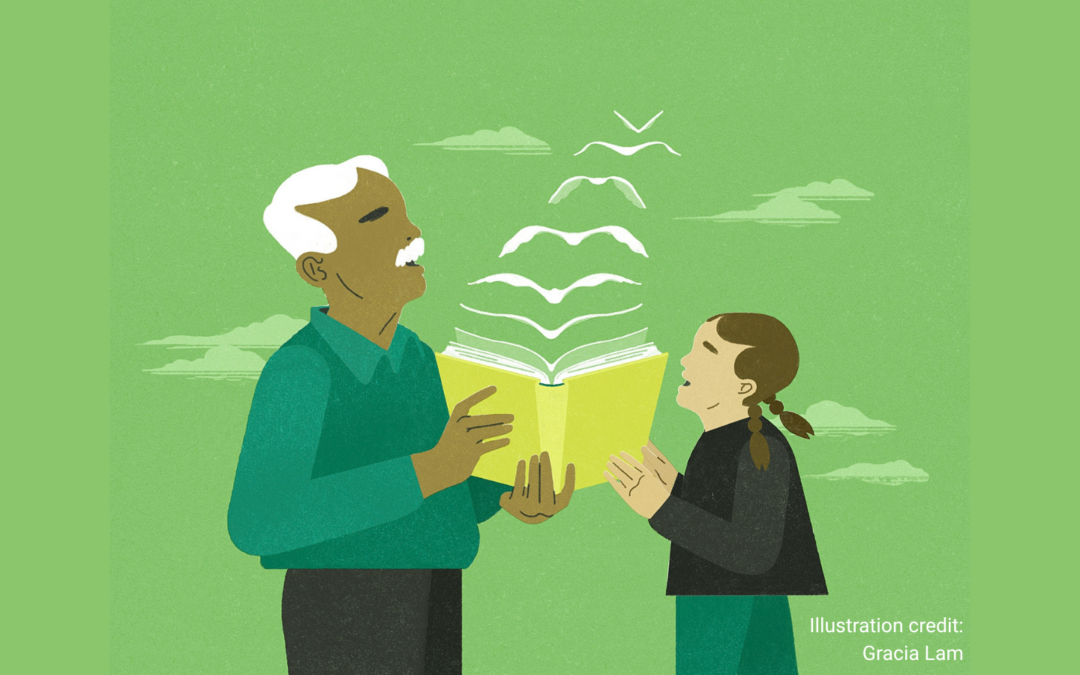
Intergenerational collaboration starts with our ability to be in genuine dialogue with one another. Use these questions to have a meaningful conversation with someone you’re just getting to know or someone you’d like to know better. Listen well and be vulnerable.The...
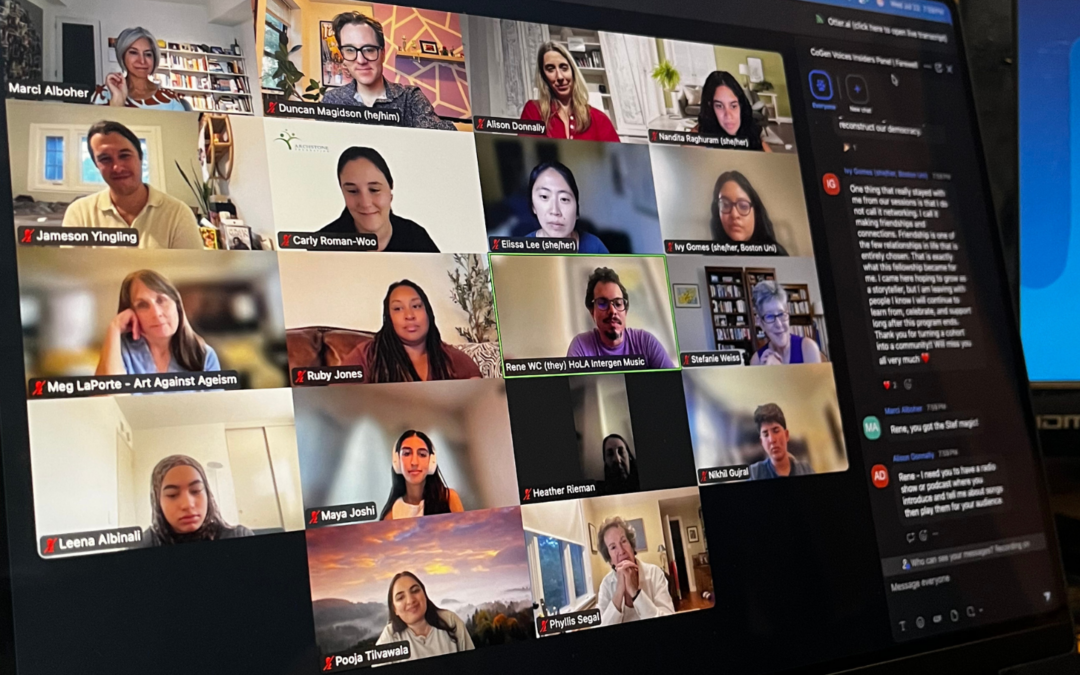
When we first began planning the CoGen Voices Fellowship, we knew we'd face a few challenges. The group of 21 community changemakers was intentionally diverse — by age (15 to 81!), race, location, work, experience, and more. We'd have to meet many different needs and...
At CoGenerate, we believe in the power of cogeneration: a strategy to bring older and younger people together to forge bonds across differences, combat polarization and ageism, and help solve today’s toughest problems. If you’re involved or interested in cogeneration,...
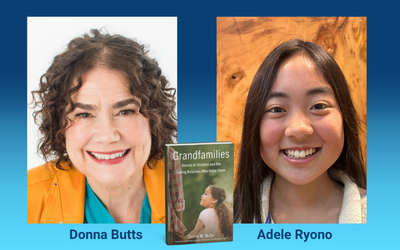
https://youtu.be/OedAsZVTm9U?si=q20TIH8zuwPEhE0a Today in the US, more than 2.4 million children whose parents are unable to care for them live in grandfamilies, where they are raised by grandparents or other loved ones. Until recently, their experiences have been all...
Event Recording: What Older Leaders Want — And Don’t Want — From Younger Allies
What exactly do older leaders want from younger leaders, allies and colleagues? And how do they believe intergenerational collaboration — or cogeneration — can be improved?
On July 22, we published What Older Leaders Want — And Don’t Want — From Younger Allies, a report from CoGenerate and 30 older leaders who are committed to working across generations for change. This report is the companion to “What Young Leaders Want – And Don’t Want – From Older Allies,” released to significant fanfare in 2024.
Join us for a special briefing on the findings!
Speakers include:
Marci Alboher (59) and Cristina Rodriguez (32) from CoGenerate
Tanzina Vega, journalist/educator and author of the report.
You’ll also hear from 3 of the leaders who participated in the study:
Tony Brown, CEO, Heart of Los Angeles
Donna Butts, Executive Director, Generations United
Dr. Imani Woody, Founder and CEO, Mary’s House for Older Adults
Note: This research was supported by AARP, The Eisner Foundation and the Wallis Annenberg Legacy Foundation
Welcome. Really excited about today’s conversation about allyship across generations. I know so many of you that I see through the chat. I’m Marci, Chief Engagement Officer of CoGenerate. I’m 59 right now, and the topic of what older leaders want and need from younger allies. It feels quite personal to me. The real hallmark of this stage of work and life for me is about working alongside and learning from younger people, younger colleagues. Which brings me to my dear host, Cristina. One of my personal practices these days as I advance in my own career, has been to co present as often as possible with younger leaders in our space and on our team, Cristina, who is 32 and I do this kind of thing fairly often together, influencing each other, both with our individual styles, habits and by we are bringing the perspectives of where we are in our own lives and in our own professional journeys. And on that note, Cristina.
Cristina Rodriguez
Thanks, Marci. I am Cristina. I’m on the Innovation Team at CoGenerate, and like Marci said, I am 32. I’ve been working across generations since I got out of college, and so for a long time, I was often the youngest person in the room, and that’s why I think Marci’s practice is so powerful, because she’s not just talking about power sharing, she’s she intentionally, and I’ve seen her do this many times. Looks for moments to elevate and support younger leaders, and I really admire that, especially as I think about how I want to show up for younger people as I gradually grow into my older seat. So with that spirit in mind, we want to provide some background on how this project unfolded, and this study we’re digging into today is the third step of a project that began a few years ago in in March of 2022 we commissioned NORC at the University of Chicago to find out what Americans think about cogeneration and that’s a strategy to bring older and younger people together to solve problems and bridge divides. And the findings showed us that there is a really deep interest from people of all ages, with 81% of those that were surveyed said that they wanted to work across generations to improve the world, and there was really, really high interest amongst younger people, especially Gen Z, showing the highest level of interest, and we wanted to know more. I’ve also seen this like firsthand in my own life. I recently just wrote a piece about how to rebuild an intergenerational safety net, especially as a new mom and living far away from family.
Marci Alboher
So after that initial research in 2024 we researched a widely read report called What young leaders want and don’t want from older allies. We went really deep with a diverse group of 31 young leaders. Then we brought 18 of them to a roundtable conversation in DC, Washington, DC, hosted by AARP. There were some olders in the room, and our job was to listen. So as I said, we released the results of that report in 2024, which brings us to today. Nearly 90% of those who read that young leaders report said that they wanted to hear from the older leaders. So we listened. We identified a group of leaders older, over the age of 50, across a wide range of identities, fields, disciplines, sectors, we interviewed 30 of them, deep dive interviews, well actually 10, Zena, Vega, who you’re going to meet in a few minutes, interviewed them, and then we invited a smaller group to a round table, a live round table conversation in Los Angeles, along with several of the younger leaders from that original report, and last week, we released the bookend to the young leaders studied, called, not surprisingly, “What older leaders want and don’t want from younger allies.” So right now, before we go further, I want to thank the 60 plus leaders of all ages who participated in this many part project, our designers at Felicidad for making these studies look so good, and our funders, the Wallace Annenberg Legacy Foundation, the Eisner foundation and AARP, we would especially like to honor Wallace Annenberg today, who recently passed away. She was a visionary supporter of all things related to aging well.
Cristina Rodriguez
Thanks, Marci. And before we dive into the meat of this conversation, we want to take you behind the scenes to that round table and share with you a video clip that was created by our partners at Brief But Spectacular, which really captures what happened when older and younger leaders came together earlier this year in Los Angeles, so we will show that clip.
(Video Presentation)
Welcome everybody. We’re here in Koreatown in Los Angeles meeting today with a group of older leaders and younger leaders to have a conversation about how we create cogenerational allyship. This is a moment where we across generations need each other. It’s really clear that if we don’t have all ages in the boat rowing, we’re not going to make headway. What are the new models for shared leadership in this multigenerational world, we know that cross-generational allyship is going to be crucial to solving the key issues in our society. What made you say yes to this conversation? As a millennial, I see myself as an intermediary between younger generations and older generations, just because I feel like I can connect very well and adapt, I literally live in a multigenerational family where I take care of my mom and dad and my younger kids, who are adults, also live in the same house with us. So multi Gen is something I’m such a big believer in. One of the things that comes up and has come up in my conversations with older leaders is often about power. Oftentimes, when you’re working with youth and you’ve got a board of directors, sometimes the paradigm is you have these older adults who can fund the thing, but you oftentimes are missing the voices of the young people you aim to serve. I have done a lot of work to establish positions and boards and advisory councils where young people are not only given a voice, but given the power to make their own decisions, those of us who are our age also need to acknowledge, when young people talk about the impacts of gerontocracy in our government, the failure and refusal of aging leaders to make space for young people that that is oftentimes a really serious problem. We are in a moment where we need each other. 60% of older leaders and younger leaders say that they do believe working together is the way to create change. The thing that concerns me most is the lack of financial security for both olders and youngers. Bringing both together is so powerful. I would love to see older adults and younger come together and collectively go to the Hill and advocate for policies that support all of us. We have equal numbers of people living at almost every age, from your 20s to your 70s and beyond. But that’s actually going to change in the coming decades, we’re actually going to become a much older society if things go well, we have longer periods to contribute, and we don’t have good models for what does that look like? My community really values elders and the cultural knowledge that they share. I know that myself and most of the youngers at this table run our own nonprofits and organizations, and we have no money, we have no operational support, and that is something we’d be so excited if someone was like, Oh, I know how to do taxes. There’s an appetite for intergenerational work from young people like I think if we can align around what is a shared vision for all of us, I think that is our through line between the work. We all have a lot more in common than we think. You know, if we want our communities to thrive, then we do have to worry about every single thing that does affect our communities. I think it’s so valuable that older generations know the past, but that does not mean you know the future, but I still want to learn from you about the past. You all shared a lot about like, how you want to support youth, but I’d love to hear more around specifically, what do you want from us? There’s not a successful track team in the world who shows up at the meet to pass the baton for the first time they practice, and what I would like is more folks who are willing to prepare to pass the baton before asking to receive it. We travel all the time for funerals. We go for sad reasons. We always focus on the sad. I’ll go anywhere if somebody invites me to a wedding, a baby shower, and if they don’t, I’ll throw it myself. I’d like you know, if I leave my keys, I forget my keys. It’s not because I’m old. I’m gonna ask, what makes you hopeful about the future of cogenerational allyship, or what makes you worried young people are so fixated on the doom and gloom of what’s happening and all these issues. How do we find joy and happiness and hope when there is so much to have despair on one of my responsibilities as a baby boomer and elder is to bring hope to the younger cohorts. You have 20,30, 40,50, 60, 70, years to reshape the kind of government that you might want, regardless of what happens now. So the same thing concerns me and gives me hope, and it is the social political critical economic climate, because people are suffering, people are hurting, but it gives me hope, because I believe that it will speed up the point at which younger and older folks will realize that we are battling the same realities, and it’s better if we do it together.
Cristina Rodriguez
So we just heard a lot of what’s on people’s minds, and we also want to hear what’s on your mind throughout this conversation, we’ll have time for audience Q and A’s. We see there’s already some chatter in the chat box, so feel free to put your comments and questions throughout the chat. Marci is an expert multi tasker, so she’s known for scanning the comments and weaving them in along and the conversations we’re going to be having today are not just about age, they’re about Power Partnership and how we move forward together. And from my seat, part of this means younger leaders showing up to listen. Throughout this project on leadership across generations, we’ve tried to be really intentional about listening, and it’s fitting for me now to kick things off this conversation with three of the leaders who participated in this report, along with Tanzina Vega, the lead interviewer and writer on the report. So let’s start with Tanzina. I’d love to invite you to join us. Good to see you. Tanzina,
Tanzina Vega
Hi, thanks for having me.
Cristina Rodriguez
Yes, it’s so much work and dedication went into finding like doing all these interviews and synthesizing it and coming with these great findings that we are going to dive in much later in today’s
conversation. But I want to start with with what drew you to do this, and just actually, for you to say yes to take this project on, because you are a writer, right? You also, um, come from this work, as, in your 50s, as a journalist, as a media personality, and in fact, you also have a podcast that’s called The New Middle where you often talk about the intersection between middle age and this new middle class. So I’d love to hear why you were drawn to this project.
Tanzina Vega
Thanks so much, Cristina, and thanks Marci for having me. First of all, when Marci calls to ask you to do something, you stop and listen, because we’ve had a long term editorial, you know, relationship and professional collaboration. So this was exciting to me for that purpose alone. But as a journalist, when you tell you have the opportunity to sit down with folks, you take it. And this was an opportunity that extended, you know, lasted six months across 30 interviews in two states. This is an issue that’s affecting all of us, younger, middle class, you know, middle aged and older folks. We heard in the video, which was so much fun actually, to be in LA and meet some of our leaders face to face, both younger and older. We heard about some of the issues that are most pressing, right, financial security, how people view aging. But this, as you mentioned, I turned 50 during this project, and so that is the sort of cut off right that we were looking at, to talk to leaders who were 50 and older, and then younger leaders who were under that so I felt like at that midpoint in my life, this was a really interesting opportunity to also sort of look down, look ahead and and see, you know, some of the strategies, some of the ways that older leaders have also paved, you know, these roads for themselves and at the same time, really trying to represent what the younger leaders were looking for in their report, without falling in and here’s the key, without falling into generational stereotypes, right? A lot of my work often focuses on inequality and how we tend to, you know, rely on certain stereotypes, and I think this work is really meant to challenge that, while also allowing people from different generations to also be honest and candid about what is really in the way and how we can get better so and then, you know, having the opportunity to go back to my editorial research roots and start this project from beginning to end, thinking about the questions that we wanted to ask, you know, and really design this from the beginning all the way to the end. It was just a wonderful opportunity that I couldn’t say no to as as a journalist who loves this kind of work. So so that was my both personal and professional interest in taking this on, and I’m thrilled, but you know, if I do say so myself, how it came out?
Cristina Rodriguez
Yeah, thank you so much for walking us through that process and how you were balancing basically all of those decisions right and not to fall into the stereotypical way of, how do we talk about generations working to develop to solve problems, especially in this time, when it’s. Critical, and also you’re in a really interesting point where you said you’re at 50 and you’re looking backwards and you’re looking forward, and it sounds like you’re also living this in your life day to day. And then there’s also a project that kind of embodies all of it in one beautiful report. So thank you for sharing that. Tanzina, I’d love to invite Donna butts to join us. Welcome Donna.
Donna Butts
Good to see you. Thanks for having me. Yes, and you are the long term executive director of nonprofit, of the nonprofit generations united, and your name is pretty much synonymous with intergenerational work. You’re very kind,
Cristina Rodriguez
Yes, and you are the long term executive director of nonprofit, of the nonprofit Generations United, and your name is pretty much synonymous with intergenerational work.
And you joined this project at a really interesting point, this transitional moment in your own leadership. So tell us why you wanted to be part of this work at this time.
Donna Butts
Thanks. Cristina, well, I’d echo a little bit of what Tanzina said in that CoGenerate is a wonderful organization and great people to work with, and all of us at Generations United love the partnership and the opportunities that we have together as we advance this really important work. So I was really drawn to it because of all the intergenerational programs and practices and ways of approaching the one that’s always been the strongest. And I think the most important and powerful are young and old, serving together, young and old, working and creating together. And for a lot of reasons, I think that’s important. They’re the book in generations that are usually left out on the sidelines. You know, they both experience ageism. They’re sort of waiting to be or waiting to die. And in fact, they’re such incredibly powerful and important generations. And when you put generations together, it’s not a one plus one, it’s a one plus one plus one plus one. I mean, it really resonates. And I was fortunate, because I did my first intergenerational program when I was in my early 20s. I was a teen director at the sale of Morgan, my YWCA, and having always been focused on teens, and I inherited this intergenerational program, and I thought, well, you know, what does that matter? You know, why would anybody, you know? Why do you want to spend time, you know, with somebody of another generation? And I went out on my very first visit, it was high school sociology students with low income, older adults still in their own apartments, and they developed a relationship over a semester. So I went out on my first visit, and what I found were teenagers that skipped school except for the day that they were going to visit their older friend, and older adults didn’t get out of bed or open their curtains, except for the day that their younger friend was coming, coming. So it was that reciprocity. It was that purpose, and knowing that together, they were doing service. And then fast forward in my 40s, this little coalition called Generations United had incorporated and was looking for an executive director. And I was so fortunate to to be named as the executive director with, you know, $100,000 and 2 people. And, you know, it’s just been an incredible almost 28 years. So now, as I’m looking at 70, it’s a it’s a transition time again, and I’m just very excited about what lays in the future for me, but also what lays in the future for Generations United and the incredible team there.
Cristina Rodriguez
Wow. Thank you for sharing that as a founder myself, I can also relate to that in those early moments when you first connect with someone from a different generation and see the magic and the power that it has on people, right? I love how you mentioned that bookend analogy. It’s so visual, and you can, like, really see it and feel it, and also just the additive effects of of bringing youngers and older together, Tanzina and Donna. Thank you for opening up here with us. I’m going to hand it to Marci to bring on our other two guests.
Marci Alboher
Thanks. Donna ,Tanzina, Cristina, okay, I wanna, I wanna bring Tony into the zoom here, Tony Brown as the CEO and co-founder of an Intergenerational Orchestra, Hola LA, you are obviously living and breathing these issues day in and day out. And people saw you in the video. I know a lot of you know how you feel about this, but when we approached you to get involved, what intrigued you?
Tony Brown
You know, I think for me, I was drawn to this topic, because especially now, I feel like there’s, there’s still a need for many stronger communities across the country and probably throughout the world, it could be said, and I believe that now is the time that we need to create, you know, a much brighter future for everyone. And I think core to just how I live my life is that, you know, in my heart of hearts, I believe that we all have gifts to share, you know, and that our purpose as humans is to share those gifts and find out you know, where and who we can share them with, you know, and truly, regardless of what generation or neighborhood, you know, we were born into. And so, you know, when I think about some of the challenges that I faced, you know, as an as an older throughout my life, I remember when I was younger, I thought I could do everything on my own. I wanted to control so much, and I realized pretty quickly that if I was trying to accomplish, you know, bigger and better things for folks, you know, it would take a team to do that good work, and so I’m super intrigued and super grateful to be a part of this conversation, because I’ve learned so much from those who you know are older and younger than me both.
Marci Alboher
Thanks Tony. Dr Imani, come on in. So Dr. Imani, you have been advocating around issues related to aging and specifically the LGBTQ plus community for quite some time. In fact, you were awarded the AARP purpose prize for your work around Mary’s House for Elders, which you created to raise awareness about housing needs for members of your community who face housing insecurity as they age and as you advance in your own leadership journey. Why is this topic speaking to you now.
Dr. Imani Woody
Thanks, Marci. I am so happy to be part of this project and be part of the CoGenerate family. I love, love, love the idea the concept of intergenerational leadership issues when I was young, you know, we included making sure that we had childcare for people who participated. You want to have childcare. And as I grow older, the issues have switched just a little and making sure that things are accessible, right? Some issues remain the same, like women still trying to crack the glass ceiling for President, for example, right? And my working as a leader, I found that many people had working as a leader in the LGBTQ plus SGL, same gender loving feel. Lots of folks hadn’t seen old people, right? And during the AIDS epidemic, people didn’t, lots of folks didn’t get old. And because of the stigma, people didn’t see gay people, because we were in the closet, right? So old, gay, older, gay people you never saw. So in doing this work, intergenerational work, so now we’re available. We can see it. We you know older folks. So you know that you can be a grandparent. I’m a grandparent. So people know, oh, I can grow older and be a grandparent. I don’t have to necessarily, necessarily be struck by having a lobotomy or being whatever happens to gay people back in the past. And so we need all of us right to make sense of what we’re going through now, right? And having intergenerational leadership really does that.
Marci Alboher
Thank you. Thank you. I’ve watched you live it and do it, so gonna pass it over to Cristina to actually dig into the findings. Yeah, I’d like to get to the meat of the findings with you all. And as you heard tanzina,
Cristina Rodriguez
Yeah, I’d like to get to the meat of the findings with you all. And as you heard Tanzina,
who is here with us, she was right of the report and from her conversations with older leaders, there were six main themes that surface, so we’re going to share those with you. The first one was, it starts with admiration. So older leaders mentioned they admire young people’s courage or their creativity and their sense of urgency. They respect how younger leaders move throughout the world and how they step up to solve problems, even in the face of chaos. The second finding was, conflict happens. Let’s deal with it. Generational differences can lead to conflict or make it harder to resolve, but older leaders have a reminder for us, one. It’s not personal, it’s often a conflict of ideas. Two, neither group has all the answers, especially now we’re all learning together. Three, let’s normalize the hard conversation, stay in them and sprinkle some humor while we’re while we’re there, and remember that it starts with respect on both sides. The third finding was not everyone is ready to pass the baton. So older leaders shared that they had mixed feelings about when and how to step aside. Some feel pressure to make the most of the time they have left, and others worry about whether younger leaders are ready. As one put it, and we saw in the video as. And in order for me to pass the baton, we need to be clear that we’re running the same race. The fourth one is sharing power, sure, but how and more on that in a few moments, because that one really stuck with me. The fifth finding was get comfortable being uncomfortable. Older leaders admitted that growth means getting uncomfortable, and whether it’s rethinking long held beliefs or navigating new dynamics at work, the stretch is necessary. And as one of our leaders put it, I am uncomfortable 30% of the time, and I’ve learned to embrace and appreciate that, but not everyone’s willing to go there. And the last finding was it’s never just about age. The desire to understand each other across generations can mean bridging multiple divides. Age is never the only thing in the room. It often intersects with race, gender, class, and other parts of our identity. So I want to circle back to that fourth finding, which is sharing power, but how? And the reason for that, I want to just provide a little context, is I started a nonprofit when I was 21 so Donna, very like just like you very early on, I was introduced to this intergenerational work, and I was working in long term care, often a field where you don’t see a lot of younger people in leadership roles, and I was usually the youngest person in that room, and I had to knock a lot of doors. I heard a lot of nos and before I heard any yeses. And that experience really has made me think about power and what it means to be excluded from it, and also what it means to share it well. So I want to open this with this question to the group about think of a time when you shared power, or maybe you tried to, and when it worked well, or when it didn’t? So I’d just love to open it to whoever feels like they want to share their story.
Donna Butts
I’ll start, you know, I think sometimes people really confuse power and control, and a lot of times folks talk a lot because they take up the space, and what’s really important is to listen, and the power in listening and somebody knowing that they’re being heard, they’re going to be acknowledged, whether you’re younger or older, I think, is incredibly powerful. So the listening and respect are very important. We’ve always had an intergenerational workforce here at Generations United. We’ve always walked our talk. And I think one of the things that I learned early on was that as being the leader of the organization as sort of like teaching somebody to swim, it’s having your hands under them, but not touching them, knowing they’re going to suck a little water in. You’re not going to let them drown, but you’re going to let them have the experience and the room that they need to own what they’re doing to be the leaders that they are. So those are a couple of things that I think about when I think about about sharing power. It’s not leaving somebody on their own, but it’s not forcing them along the way you want them to go.
Dr. Imani Woody
For me, it’s being intentional. Thanks, Dawn, I so agree 100% on that. We I think you have to be intentional. You know, you can just lead and just do your thing. But if you want to have intergenerational participation, you have to think about it. You have to plan for it. You have to do it. And for us at Mary’s House for Older Adults, organization that I founded, we our board has said, in the next five years, we want to have folks under the age of 45 35% of our people members of our board under the age of 45 even when our demographic we serve people over 60, because we just think that’s important, and we also want, we also partner with organizations that are led by younger people that just, it just works, right? They it just works. And so we those how we intentionally incorporate into intergenerational leadership into our work.
Tony Brown
Yeah, and I guess for me, you know, running Heart of Los Angeles, I I’ve tried to delegate, I think, a lot of the same responsibilities that our founder gave to me many, many years ago. And so what that looks like is for me to step back sometimes, in a way in which I provide as much background context as I can, but I empower, you know, I try to empower my staff, you know, to plan and envision as though the skies are the limit. And that’s something we oftentimes try to say at our organization, you know, go for it. And. Yeah, and it’s a lot like being a parent, which I am, you know, where you know, our role isn’t to, you know, tell kids what to do always. It’s to, you know, pick them up when they fall and dust them off, right, and get them back in there, and again, high five them when they do a great job. And I’ll always remember that, that lesson. And then I have sort of a funny personal story, you know, my I’m horrible at social media, and my son, 13 years old, will tell me so and so much so that he came to me and he gave me like five things he needed to do. So I said, Well, son, you know, would you mind taking over my social media? Now, don’t, don’t go out there looking at my social media yet. Okay, this is a work in progress, but I loved his initiative. And he came up with such great ideas on how I should present content, you know. And it was one of these, you know, never do an ad, never show an ad, or, you know, make sure you use emojis and just things like that. That when I think about the future, this is the kind of guidance see that I need. And he’s going to be, he’s a leader now. He’ll be a leader tomorrow. And I think that’s a lot of what I try to remember in this sort of intergenerational, you know, journey, and then at our organization on the board level, you know, and you saw it in the video, you know, we’ve, we’ve actually brought our young alumni onto our board and into our boardroom, because it’s been, it’s been extraordinarily powerful, and from those board meetings, it’s been great to have, again, a young alumni reach out to me and say, I was thinking about the board meeting last night. You know, you should really do this, this and this, and I love it, you know? And that’s the kind of power sharing that makes the organization stronger, makes me feel a little more relevant, and I think probably ends up serving community better than had I not had them into the room for all of us in the boardroom.
Cristina Rodriguez
Yeah, yeah. I like, I want to lift some of the things that we’ve heard, because these are really practical ways when we talk about how to share power, like steal these tips, because they I wish I would have had those when I was in my early journey in working with older adults. And Donna, you mentioned this real important nuance between power versus control, and I think that is really, really strong and a really great reminder of and a reflection of when we think about, you know, is, am I coming in place from power or control? Also your your water analogy, right? Of like, we’re not going to let you drown, but we’re going to be there to catch you. Dr Imani, you have to be really intentional. You said you have to be really intentional. You have to plan for it. It’s it’s a process. And also, Tony, you mentioned this amazing story with your CEO son, 13, and really the importance of delegating. So thank you all for sharing those, those practical tips on on how we can share power and train to to run that race together.
Marci Alboher
I’m gonna jump in to bring Tanzina into the conversation. And feel free, Tanzina, if you have a power sharing story that you want to start with, go there. But there is something that I think you brought into this report, and I know it’s it’s something we’ve talked about that feels like a bit of an elephant in the room, which is, I’m interested in that finding three of just because a leader is older or it appears to be at a mid or later point of their career, they may not be ready to pass the baton. And I think something that we’re seeing a lot those of us in the middle years is that a lot of people haven’t reached their own kind of place of leadership yet, even though they may be on the older end of things, and I think you’ve voiced a lot of that. So what does it mean when people might think of you as a seasoned or older leader and yet you’re still kind of achieving and have this kind of ambition? Maybe I think you can speak to that both for yourself, and I think you clued into that a lot as it came up in the report.34:25Tanzina VegaAbsolutely, and thanks for the question. And I did, I did want to share just briefly. As far as leadership is concerned, my my work with younger folks is mostly as a professor and journalism, and I teach undergrads and graduate students, and one thing I’ve started to do more of is, you know, take students very seriously, and I create syllabi that are considered what I call living documents, right? So we have the broad strokes of what we’re going to cover that semester. Obviously we have to get through certain required things that we all have to do, but the how we get there and the how I focus on individuals versus the sort of like. Like automated teaching model, I think is starting to show lots of results. And I think part of that is a real, genuine interest in, sort of across generational interest rate, and understanding where my students are coming from, the realities that they’re dealing with, which are different than what I’ve dealt with. You know, when I was their age in college, making room for that, understanding that this is a different world, but still maintaining the standards, right? Like you don’t have to throw away the standards, because we’re, you know, making room for the fact that people are dealing more with natural disasters, for example, or political instability, right? So there’s a way to do this, and I think there’s a genuine when you show genuine interest in people out of different generations, that interest is often reciprocated, right? And shout out to my NYU student who taught me who Chapel Roan was really appreciate that, for sure. And so to get back to your question, I think this was one of the findings that I agree was most interesting to me the in the conversations that I was having, because there is a lot of tension, right? There’s this assumption that, well, once you’re a certain age, move over, you’re taking up space, right? And it’s one of those things that I started to notice as I spoke to people from different generations, there were different approaches to that. Folks who were, say, in their early 50s, who were feeling like, Hey, I’ve still got a lot to go. I’ve still got things I want to do, right? I’m not ready to hand a baton over or to step aside necessarily, right? And there was almost an urgency with one of our panelists, Mariela, who said, you know, If not now When, you know, paraphrasing here, but it was really that sense of urgency, of, I’ve got to do this now, right? My life is, you know, there’s something pretty intense happens when you turn 50, for the better and for worse, right? You start realizing, Oh, my God, life is precious. And, wow, it’s, it’s not forever. And so there is this urgency, I think, that people have at the same time. There are people who are also grappling with, you know, I want a better quality of life. Maybe I don’t want to be at that level anymore, right? That’s a very, you know, it’s a very punishing, you know, job and existence to have some of these big leadership positions, right? If, especially if you’re not supported, etc, etc. So I think that there’s a push and pull to the understanding young people should have a clear understanding, or attempt to understand who you’re working with, like, what are their ambitions as well, right? Because, you know, older folks are also today, like Gen Xers are doing things that younger folks are doing at one point. So we see older people becoming parents, right? Like we see older people doing career pivots, you know, twice or three times. And so that level of ambition the need to also this came up in the video and also in our research, but the need to remain financially and economically solvent, right? We have to get real about that too. Not everybody can just pack it in at 55 and say, you know, I’m going to live off retirement. So there are real needs that older workers and leaders have, and I think they can be balanced with this sort of understanding that I spoke about earlier, right? The sort of intergenerational exchange of saying, you know, I’m willing to bring you and train you and teach you all the things, but please understand I still have to live, right? And so I thought that that was one of the most interesting findings to me. It wasn’t saying we’re not interested in passing the baton, but it’s saying, you know, leadership is more complicated than that, you know, and ambition is much more complicated than that. Yeah, I love that. I mean that gets to the staying away from stereotypes, right?
Marci Alboher
Yeah, I love that. I mean that gets to the staying away from stereotypes, right? I mean, your age your stage do not always correlate. Many of us, many, many of us have taken breaks or made career pivots that maybe you look like you’ve been in the workplace for a while, but maybe you’re new to that field, maybe you’re new to that role. Maybe there’s just things you want to achieve. So I think being clear about what people want in their leadership is going to help us kind of all around and I love that part of that idea of like teaching as a partnership with your students, that I just think there is a way that, if you stay in the game long enough, your leadership changes, because the world changes like higher ed has changed, that is not the way those of us over 50 experienced educate. You know, college education, if we add college education, it wasn’t a joint project. And I think education is much more collaborative. I want to weave in a question that came in the chat, because it’s an important one. And then I do have specifics for the others of you. Does someone want to talk a little bit about co mentorship? Because that is something we talk about all the time at cogeneration, that it’s not just leadership. It’s like, how? How do we design environments where we can teach each other what we need to learn and honor lived experience and honor the two wayness of this. So I think all of all of the leaders that we talked to for this report would say it wasn’t the older person pouring into the younger person all the time. Does somebody want to kind of jump in on that?
Tony Brown
Well, you know, I would maybe just offer that, you know, I don’t, I don’t know that we have necessarily a formal mentoring program as much as we have listening sessions, and I think that’s really important for the organization. Because, you know, I think, I think that’s where everyone’s wisdom has room or the space to be contributed, right, towards solving a problem, if that’s what we’re trying to do in that particular listening session. And so I value that greatly. You know, it’s I learned. I that’s how I keep learning, right? It’s how I keep growing as an older is through that process now at the same time, it’s also where I get to do some storytelling around, you know, sort of why we may have come to previous decisions in the way that we did. And it’s my hope that, as I’m doing some listening, you know, the youngers are also doing the listening as well. And then comes the, you know, there’s some vulnerability to that, and I think that’s really great. I think it’s great for my staff to see me in those vulnerable moments, and then state intention, and then we just sort of go for a solution, right together. And I think that’s, that’s probably the best informal way, or formal way we have organizationally that I’ve learned has been effective as a leader.
Marci Alboher
I want to bring in Dr Imani or Donna for one more question. Before going back to Cristina. Donna, you said something in the video, and I was there when you said this that I think resonated with a lot of people, which was, when dealing with younger people, invite us to the party. Can you just talk about like, why that doesn’t happen and why you want to see it happen more?
Donna Butts
As far as you know, invite us to the party when we’re depending on just different generations. I think it’s up to all of us to make sure that we are open to intergenerational spaces and that we look for those opportunities. You know, we don’t try to segment people and just say this is for our older workers or older neighbors or for our youngers, but it really is not expecting that somebody is not going to want to do something, but give them the opportunity to say yes or no, I think is really important. I belong to a book club at art at my condo, and one of the reasons I belong to the book club at my condo is because I’m the oldest person in that book club, and it’s a diverse group, and it’s age diverse, and rather than a book club that I grew old with, it’s, it’s finding those new opportunities. I, you know, I could do that, but I could also jump into the middle of a situation that it can be a little bit risky. I’ve talked with other people who the their favorite way to connect across generations and feel that invitation is their local coffee shop. But it’s that, it’s that you know, being willing to ask a question, to say hello and again, to listen and not think that you know what somebody else wants or doesn’t want.
Marci Alboher
Yeah. Dr Imani, I have two things I want to put to you that because I was there in LA and you were very powerful. You talk a lot about the intersectionality of all of this, and that when we connect across age, it’s never just age. And you you talk a little bit about respect and why that could be particularly important for people, for example, of your generation. And I want to, I want to hear, I want you to bring that to life for us.43:48Dr. Imani WoodyOkay, thanks, Marci, so that’s dear to my heart. Folks, you are hearing Marci called me Dr Imani. I’ve asked her to we’re dear friends. So when we’re friends, she calls me Imani, but publicly I am, professionally, I ask for Dr Imani because being the intersectionality of being black, being old, being female, just kind of drags you out. And folks don’t think often. And this is my perception, that I’m relevant, that I come to the table prepared, that I have the expertise, and so when I ask that doctor is on the front of my name, that’s the that’s a respect, that’s kind of people kind of come to you correct. And I and I encourage young people, especially women, to get a graduate degree if they can, because it is or has been, I don’t, the world is changing so, but it has been important. So there’s, there’s that part, Marci,
Marci Alboher
Appreciate that, and it’s important to say it,
Cristina Rodriguez
Yes, thank you for sharing that. Think respect is important, and also how you want to be, you know, seen, and also how younger generations can lean into that, you know, like I started my intro with the CoGenerate team, and I think younger generations sometimes are like, Oh, titles like, why do we need them? But it’s important to recognize that if it’s something that matters, especially to an older person or younger like that, we honor that and that we can vocalize that. So I really appreciate that Dr Imani for sharing that, and the importance,45:35Dr. Imani WoodyCan I add one more thing and just something? So in my generation, right? I’m 73 and so in my generation, we would call elders, older people grown ups by their foot Miss or Mrs. or our Mr. In front of their name, or in communal and I grew up in kind of communal atmosphere where everybody knew everybody on the block and everything. So that was my aunt Mary, my uncle John. And you know, you put a title as respect on front of, I see people nodding so on for on the front of their name, because that’s just what you do. You don’t just, you know, it’s just like you stand up when an older person comes in the room, gets all that kind of stuff. So it’s generational. And for lots of people. Me, old girls included, it is important that I show that respect, and if you grew up in that generation, you may be expecting that. So as a younger person, just have that in the back of your head. And I teach our folks and we share that we ask what you want to be called. It’s just like LGBTQ plus SGL kinds of stuff, right? Who are you and how shall I refer to you? Because it’s about you and not about me when we’re talking about how and who to call you, right?
Cristina Rodriguez
Absolutely. Thank you. So I have one final rapid question for you all, and I would love to know, and we already are diving a little bit into that, what do you want from younger people when you’re working across generations?
Tanzina Vega
I asked this question to 30 people, and I’m one. Did I ever ask it to myself? I actually think, I think it kind of, you know, goes back to the exchange that I was talking about at the university level, the openness, the curiosity to not just want to hear from us, but also want to share with us, right? I want to know who you’re listening to. I want to know who you’re watching. I want to know what TikTok, you know, account, is most interesting to you. I want to know what you feel about, what’s happening right now, right? I start my classes with that. I just say, okay, beside, before we talk about your reporting, can we just do a check in, like a human check in, right? Like people are all over the world. I teach no one in person. Everyone is online. I teach people in every state and every country, literally. And I’m just like, hey, can we just check in? Let’s just take five minutes. Doesn’t have to be about journalism. Doesn’t have to be about anything. But I need to know everybody’s okay, and that level of interest and care. I would love that to be, you know, mutual, because I think we’re all in need of that right now. And I guess that’s the one thing I but I but I just realized I asked everybody that question, and I was like, What have I thought about? So thanks for asking all of us. I appreciate it.
Donna Butts
One of the things I was thinking of is one of my favorite sayings is, anyone can buy you a hat, but only you can give you permission to wear it. And when I think about, you know, working across the generations in a workplace, or doing a project or doing something with with other generations, it’s to challenge me and to challenge them, and to feel okay taking the risk. I might one of my favorite examples here is that as our we had a staff team that was looking at what we wanted to propose to a funder, and should we create more materials and documents and reports and this and that. And finally, one of the younger people on staff just looked at me and said, the way you folks create materials is so ageist. And I just went, Whoa. And instead of, like, you know, having some sort of confrontation, or what do you mean? And, oh, that’s terrible, I didn’t realize what. I just said, What do you want to do? And they said, well, we want to do video, and we want to do this, and we want to do that. I said, Okay, go for it. So we now have what we call our dream team, which is our youngest staff people. They have permission to block an hour a week, to do their planning, to do their taping, all that sort of thing. And you know, it’s not unusual to walk past the conference room and they’re laughing and they’re giggling. They’re all on their computers or whatever. But they’re just interacting with each other, and they’re creating this great content, content that appeals to their generation. But they were willing to take the risk, you know, I opened the door, but they had to make the decision. They could walk through that door.
Tony Brown
I love that. Gosh, you know, Donna, thank you for that. I, you know, I was, I was going to start by saying, you know, I’d like some grace before cancelation, please. The same way, you know, I provide context and background to my youngers, you know, I’m hopeful that, you know, they’ll give me some grace and do the same for me, you know, I might be an older but you know, I do still consider myself a lifelong learner, and I still want to get better, right? And so, yeah, it’s got as good as for grace, but I love some of the solutions and ways that you found Donna to harvest that without feeling so, oh my gosh. You know, I’m out of my generation. Oh no. So anyways, I love that.51:07Dr. Imani WoodyOh my. So I would jump on what Tony just said. I was going to say something Tony like, I just like, like Grace I was, I didn’t. I hadn’t articulated that way. I had said I just like them to be reminded that I used to be one of the sharpest tax in the box, right? And I may know how to impart some knowledge that. So they don’t have to start at zero. They can start at 40 or 50, right at in you know, they don’t have to start from zero. I’ve got something, yeah. So I like that grace before cancelation, that. I’ll say it like that.
Donna Butts
I love that too, especially as I’m getting ready to transition from my position, because I’ve been calling it my I’m not dead tour.I still have more. I still intend to be very involved. I’m still going to be out there, you know, kicking ass as long as I can. But the grace, and Dr Imani, what you’ve been talking about is just really, really special. It’s realizing that we still have so much more. I said once that I’m as excited. I was excited looking at 17, I’m as excited looking at 70.52:15
Dr. Imani Woody
Yeah, well, I am in my 70 73, and I can tell you, it just gets better the way we can pivot the way. We don’t care about a lot of things that used to tear your hair out at 32 Cristina, oh yeah. It really gets better.
Cristina Rodriguez
I believe it. I believe it. It’s something I’m I love hearing all of these amazing nuggets. And I actually want to ask Marci the same question, because I’ve never asked her.52:50Marci AlboherWell, Cristina and I, we do a lot of co mentoring, and I love how patient you are when and even when, when the stuff I need falls into the stereotype. And Duncan and I, who’s in the background, talk about this all the time, but sometimes the stereotype is true, like I’m really slow at making slides and using Canva and these new tools, like Cristina is like, endlessly patient with me and never makes me feel ridiculous asking a dumb question. And so that’s what I want. I just want to always feel safe to ask a really dumb question.
Dr. Imani Woody
Awesome.
Cristina Rodriguez
I love that grace and patience. Good, good combos. Well, thank you all for this fantastic conversation. We are going to launch a quick little poll before we head out, and after today, we hope that everybody who’s joining us have it has a chance to dive into the report, and we’d love your help in spreading the word. We have a toolkit that makes it easy for you to do that, and you’ll find that link in the chat as well as in the follow up email and use. There’s a conversation guide in there that you can use to start dialogs with youngers and olders in your community, and we want to hear how those conversations go. So please feel free to reach out and tell us how it went. Also, if you need presenters like we are here for you. We’re actively sharing these insights from younger and older leaders at team gatherings, at conferences, libraries and even in higher ed environments. So we’re happy to help you spread that work and connect youngers and olders in your community. So feel free to share your questions, ideas, feedback with us at [email protected] and thank you to all of our amazing guests today and see you next time.
To provide the best experiences, we use technologies like cookies to store and/or access device information. Consenting to these technologies will allow us to process data such as browsing behavior or unique IDs on this site. Not consenting or withdrawing consent, may adversely affect certain features and functions.
Functional
Always active
The technical storage or access is strictly necessary for the legitimate purpose of enabling the use of a specific service explicitly requested by the subscriber or user, or for the sole purpose of carrying out the transmission of a communication over an electronic communications network.
Preferences
The technical storage or access is necessary for the legitimate purpose of storing preferences that are not requested by the subscriber or user.
Statistics
The technical storage or access that is used exclusively for statistical purposes.The technical storage or access that is used exclusively for anonymous statistical purposes. Without a subpoena, voluntary compliance on the part of your Internet Service Provider, or additional records from a third party, information stored or retrieved for this purpose alone cannot usually be used to identify you.
Marketing
The technical storage or access is required to create user profiles to send advertising, or to track the user on a website or across several websites for similar marketing purposes.
To provide the best experiences, we use technologies like cookies to store and/or access device information. Consenting to these technologies will allow us to process data such as browsing behavior or unique IDs on this site. Not consenting or withdrawing consent, may adversely affect certain features and functions.
Functional
Always active
The technical storage or access is strictly necessary for the legitimate purpose of enabling the use of a specific service explicitly requested by the subscriber or user, or for the sole purpose of carrying out the transmission of a communication over an electronic communications network.
Preferences
The technical storage or access is necessary for the legitimate purpose of storing preferences that are not requested by the subscriber or user.
Statistics
The technical storage or access that is used exclusively for statistical purposes.The technical storage or access that is used exclusively for anonymous statistical purposes. Without a subpoena, voluntary compliance on the part of your Internet Service Provider, or additional records from a third party, information stored or retrieved for this purpose alone cannot usually be used to identify you.
Marketing
The technical storage or access is required to create user profiles to send advertising, or to track the user on a website or across several websites for similar marketing purposes.