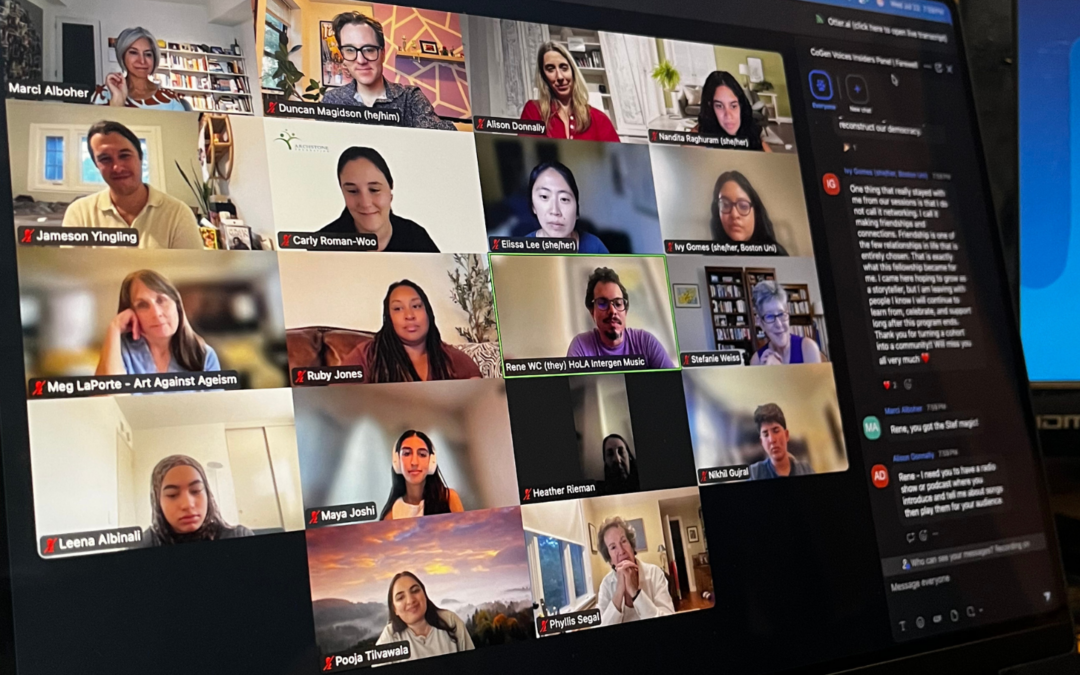
As colleagues from different generations (x and millennial), Marci Alboher and Duncan Magidson have been leading talks and workshops sharing their insights about working across generations. As they plan, they usually text furiously, sharing ideas and reflections. In this edition of Overheard, they unpack the age dynamics missing from most AI debates — and why a workforce designed around one overextended age band is a long-term liability.
Duncan Magidson (Director, Digital Communications & Engagement): I know everyone already has a take on AI right now, but I have an age-specific concern! We’ve seen so much talk of how this tech can replace junior-level employees, and big technology shifts are also an excuse to push older employees out of the workforce. Beyond the general disruptions, I think a workforce where all of the responsibility is left to the sandwich generation is a really bad outcome. Do you think other people have this in mind when they think about AI disruption?
Marci Alboher (Chief Engagement Officer): Oooh that’s intriguing. And disturbing. I just came from The Century Summit, a major gathering on reshaping learning and work for longer lives and the multigenerational world, and no one expressed that exact concern. That’s why I love hanging with you—not to mention the endless movie & vegan restaurant recommendations. I’ve jokingly been saying that between ageism and AI, the only desirable workers are those between the ages of 32-47 (which reminds me of the “Last F-able Day” skit featuring Tina Fey and Amy Schumer). But it’s no joke that the very people who are often caring for both kids & elders are also likely the hardest driving at work. How might we try to shift that tide? (How’s that for a light lift on a Friday morning!)
Duncan: It’s already such a put-upon age group and now they’re being asked to do everything at work, too. I think it’s a really terrible long-term strategy for that reason AND because I honestly think the cart is way out in front of the horse in terms of what AI can actually do right now (outside of innovating new and innovative ways to get across less information using more words). So, we’re taking this already stressed group of people, giving them management of machines that can’t properly replicate the work of the people they’re meant to replace. Now they’re doing two jobs, without the support and fresh ideas of young colleagues, and, increasingly without the mentorship of older colleagues.
And if nobody is thinking/talking about age-diversity at work, they’re not going to realize that problem. So I think shifting that tide is all about raising awareness that there’s so much more to employees than their on-paper productivity.
Marci: I know a speaking duo who can help employers shift their mindsets in just the way you’re talking about…Hmmm.🤔
Read our previous installments of Overheard on Text.