In five years, Walker envisions campuses around the country with hundreds of older adults enrolled in on- and off-campus programs alongside hundreds of undergraduate and graduate students. Some students would attend mixed-age classes while others would join same-age cohorts. But with so many generations on campus and with many students living in intergenerational housing units, interaction between age groups will be the norm, she hopes.
Key college metrics – retention, graduation rates, post-graduate success, older-adult satisfaction, faculty engagement, and financial performance – would all improve. Civic engagement would increase; ageism and loneliness would decline. And higher education leaders across the country would study Bennington before launching intergenerational initiatives of their own.
It’s a big dream for a small, liberal arts college with 700 students, in a town in rural Vermont with a population of 15,000. But Walker, with support from Bennington’s board, believes it’s not just do-able, but necessary.

Institutions built for shorter lives no longer fit. The Cogeneration Lab is how higher education adapts.
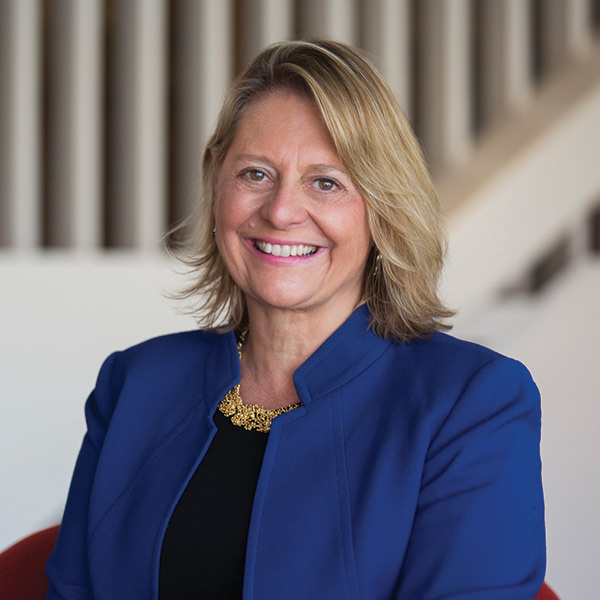
Laura Walker
11th President, Bennington College
She points to a 2018 report from the Stanford Center on Longevity called The New Map of Life. The headline – “The 100-year life is here. We’re not ready” – stopped her in her tracks. The report explains that an increasing number of people will live to 100 and beyond, yet the country’s institutions, norms, and policies were established when lives were half as long. For Walker, the report crystallized something profound: “We need to catch up.”
Most universities, especially private liberal arts colleges like Bennington, are set up to serve 18- to 22-year-olds. But that population is shrinking. So, too, are the number of international students, which spells further money troubles for already financially-strapped institutions.
The silver lining? There are increasing numbers of older adults eager to learn, and increasing numbers who want to do so not in classes just for older adults but in intergenerational environments.
The solution, developed with others on campus: The Cogeneration Lab, a research and development hub housed in Bennington College’s Center for the Advancement of Public Action where new models for intergenerational learning will be developed, piloted, and scaled. Through arts- and democracy-based classes and residential spaces, the Lab will connect young and old learners. In doing so, Bennington hopes to fight loneliness, grow enrollment, bring in new revenue, and serve the growing number of older adults in the U.S. “Institutions built for shorter lives no longer fit,” Walker says. “The Lab is how higher education adapts.”
It’s important to Walker that Bennington be open to all older adults, not just a select few with time and resources. Currently, over half of Bennington’s undergraduates are lower and middle-income, and the Lab reinforces and broadens this commitment to inclusivity. To meet the needs of low- and middle-income elders, the college will offer scholarships, sliding-scale pricing, and flexible class scheduling to accommodate both working caregivers and retirees.
The Cogeneration Lab will pilot a wide range of ideas and concepts, like Democracy Labs, in which older and younger students learn together about civic engagement and action. Creative Intensives could bring together students of all ages to collaborate on writing, visual arts, theater, and music projects.
Cogeneration will happen outside the classroom, too. Walker hopes to create intergenerational living-learning communities in which traditional students, low-residency older learners, and elders could share housing, meals, classes, and conversations.
“The magic isn’t only in programs,” Walker says. “It’s in the studio, the coffee line, the rehearsal – the informal exchanges where cross-age relationships take root.”
The Lab is just that – a lab of ideas, Walker emphasizes. It’s not a blueprint for intergenerational education, and Bennington doesn’t have all the answers. But it is a place to test projects, learn from successes and failures, and evolve. It also builds on a crucial Bennington ethos: learning by doing. As such, everything will be open-source: case studies, governance toolkits, financial models, housing feasibility frameworks, and policy briefs.
As concepts become projects that succeed, “Bennington thrives,” Walker says, “and the sector reimagines its purpose for a multigenerational era.”
Early Evidence
The Lab builds on the success of past programs. In the fall of 2024, the college ran a small pilot with a couple, Howard Schwartz and Charlene Solow Schwartz, both in their 90s. For a week, Charlene, a trustee and alum of the school, attended several different classes at the college, while Howard attended sculpture classes.
Students were thrilled to attend classes with Charlene, a successful entrepreneur, Walker says. Charlene says it was a great learning experience and an opportunity to see how Bennington functions today, more than 70 years after she graduated. “I didn’t have any sense that I’m old and they’re young,” she explains.
Howard similarly formed a deep bond with his younger classmates. The students loved hearing his World War II stories and seeing what he created, says Walker. And Howard enjoyed both the class and the students. “He became the elder statesman in the class,” Charlene says.
Also in 2024, students, alumni and community members of all ages enrolled in “Saving Democracy,” a seven-week course on democracy’s past and future. At the end of each class, some students shared their own experience with civic action. International students from Venezuela, Bangladesh and Ukraine spoke about losing democracy in their home countries, while older adults discussed protecting democracy in the U.S.
The intergenerational dialogue proved inspiring. A student told Walker that they didn’t think protests could work, but hearing from people who protested in the ‘60s and ‘70s changed her mind. Another classmate said it was a highlight of her four years at Bennington. Older community members left the class hungry for more intergenerational discussions.
In August 2025, Walker convened a productive meeting of 22 Bennington stakeholders – board members, faculty, students, alum, and administrators. They discussed research on longevity, brainstormed ideas, and left with established goals, structures, and next steps for three areas: summer programs, year-round programs, and multigenerational living. A senior administrator now leads each area and the board has provided input.
What’s next?
Over the next year and a half, Bennington will run additional pilot programs, refining their design, pricing, marketing, and use of space. It will share the results with other higher education leaders.
Ultimately, Walker envisions the Labs as a model that “can remake Bennington and guide peer institutions while advancing equity and local prosperity. Older and younger together – cogenerationally – lighting the way for others.”
CoGenerate and the Stanford Center on Longevity recently named The Cogeneration Lab at Bennington College as one of six winners of the Big Ideas Challenge to Reimagine Higher Education. All winners have the potential to transform campuses into thriving centers for intergenerational collaboration and learning, while fostering economic opportunity, lifelong learning, and institutional sustainability. Learn more about the other winners.