The plan: Older adults will join undergraduates and K-12 students to attend the huge variety of galleries, museums, plays, dance performances, and concerts that regularly occur on Penn State’s campus and in the surrounding community. Then they’ll discuss what they saw and, at times, co-create art projects together.
Hampton and Rousselin are sure the conversations will enhance the education and lives of both generations. But more than that, they believe Art Speaks will build understanding and empathy, fight loneliness, reduce ageism, and prepare younger students for the five-generation workplace.
“Even a discussion over a piece of music and what it brings back in terms of memories will be a vehicle to get people to really talk to each other, to hear each other, to see each other,” Hampton says.
“I believe in the arts as a form of communication, that it tells us more about ourselves, our society, and who we are,” Hampton adds. “I really believe in the notion that one picture is worth a thousand words.“
Art Speaks, in part, addresses an issue Rousselin’s noticed with OLLI. Older students in OLLI courses, Rousselin says, “would like to have conversations that allow them to grow and learn alongside people from multiple generations.” So when Hampton approached Rousselin with the idea for Art Speaks, it felt like a lightbulb moment. “This is what everybody’s been waiting for,” Rousselin says.
Rather than starting from scratch, Rousselin and Hampton are repurposing existing infrastructure, partnerships and programs. They’ll bring the intergenerational aspect to the forefront by curating a mixed-age group of people to attend existing art and cultural events on campus.

I believe in the arts as a form of communication, that it tells us more about ourselves, our society, and who we are. I really believe in the notion that one picture is worth a thousand words.
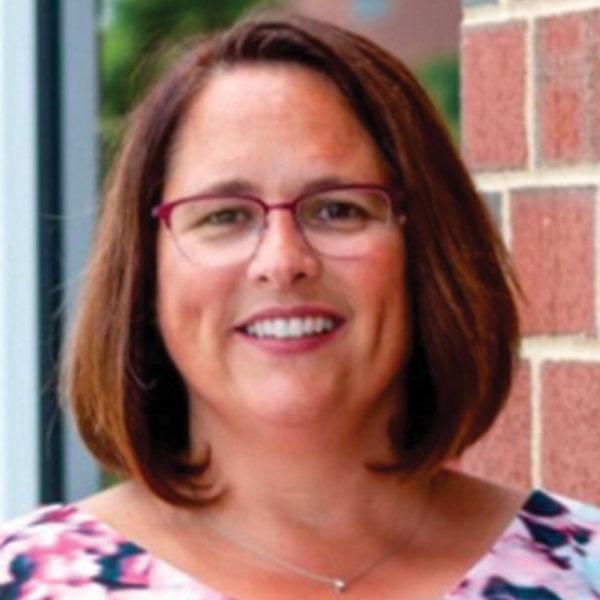
Grace Hampton
Visual artist and retired Penn State professor
We hope Art Speaks will provide learning that will be transferable to future communications across generations, within the family, in the community, and in the workplace.
Brynn Rousselin
Executive Director, Osher Lifelong Learning Institute (OLLI) at Penn State
To find participants, they’ll promote the programming to OLLI’s nearly 1,000 local members who already have access to over 250 classes per year at Penn State. They’ll also tap the thousands of College of Arts and Architecture undergraduate and graduate students, as well as the K-12 students who attend Penn State’s Saturday Art School.
Since the foundation doesn’t need to be built from the ground up, Hampton and Rousselin envision Art Speaks eventually expanding to any of Penn State’s colleges and campuses. Hampton and Rousselin also plan to share the model through conferences and with other members of the Big 10.
Two other networks could help spread Art Speaks across the country: OLLI programs exist on more than 100 campuses across the country. And 140 universities, including Penn State, have earned Age-Friendly University designations. Both could be receptive audiences.
Given that the bones already exist, it’s not surprising that Art Speaks will launch soon. In February, at a test run, a group of older and younger people attended a performance of Cirque Kalabantaé at the Penn State Center for the Performing Arts. After the show, Hampton talked to an intergenerational pair about their reactions. “We often look to older adults as informing younger people,” she says. But “in this case, it was the younger who was helping the elder better understand the music and how it related to her life as a young musician.”
In the near future, older and younger participants could see an exhibit at Penn State’s Palmer Museum of Art, then co-create a piece of art based on what they saw. Or they could visit the campus Arboretum then discuss what they felt.
Ultimately, Rousselin and Hampton want participants to leave with a framework for empathetic listening and communicating that they can apply to future conversations with people from different generations, a skill many young people lack.
Students, Rousselin notes, often arrive for their freshman year having barely interacted with older adults outside their families. The conversations they’ll have through Art Speaks can improve their intergenerational communication skills and reduce age-based stereotypes. Students may come away with a sense that older adults aren’t scary or strict. They’re human. Older adults, on the other hand, may stop saying “these kids today….” And both generations may feel less lonely.
Rousselin and Hampton also hope these interactions teach people of all ages how to talk to others in an open, safe way. Participants can learn what questions to ask, how to effectively listen to each other, and what to pay attention to when talking to people of different generations.
Doing so can “provide learning that will be transferable to future communications across generations, within the family, in the community, and in the workplace,” Rousselin says.
The whole world, not just higher education, needs the communication skills Art Speaks promotes, Hampton says. “This world is in a social, economic, and spiritual quagmire. If we don’t learn to communicate openly and honestly with each other, we’re not going to make it.”
CoGenerate and the Stanford Center on Longevity recently named Art Speaks at Penn State as one of six winners of the Big Ideas Challenge to Reimagine Higher Education. All winners have the potential to transform campuses into thriving centers for intergenerational collaboration and learning, while fostering economic opportunity, lifelong learning, and institutional sustainability. Learn more about the other winners.