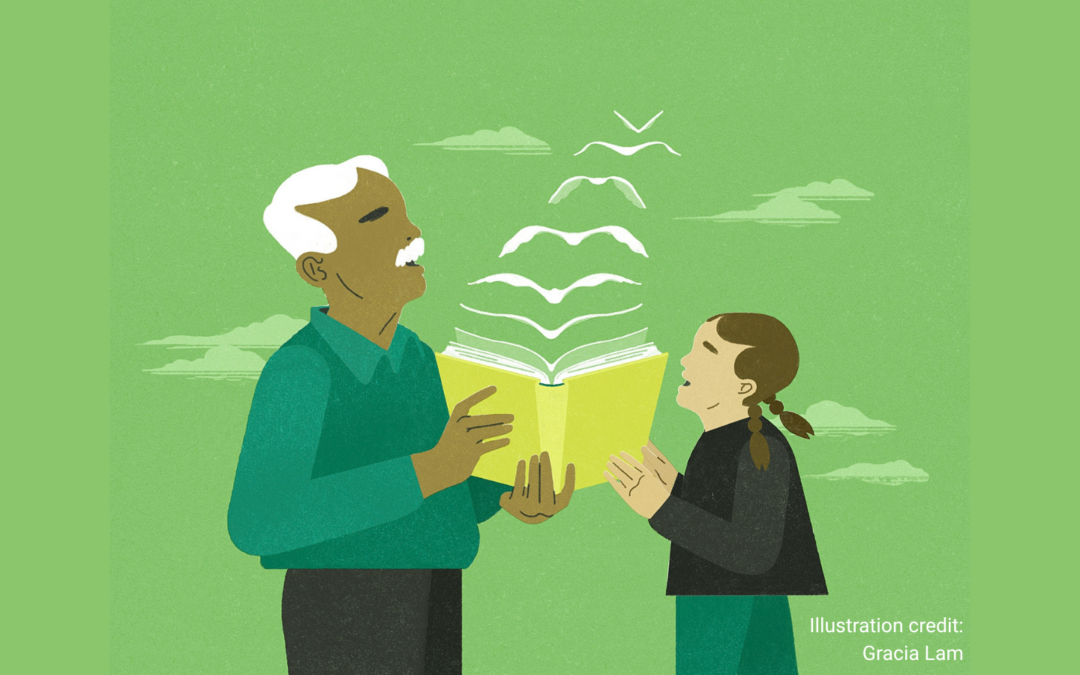
Intergenerational collaboration starts with our ability to be in genuine dialogue with one another. Use these questions to have a meaningful conversation with someone you’re just getting to know or someone you’d like to know better. Listen well and be vulnerable.The...
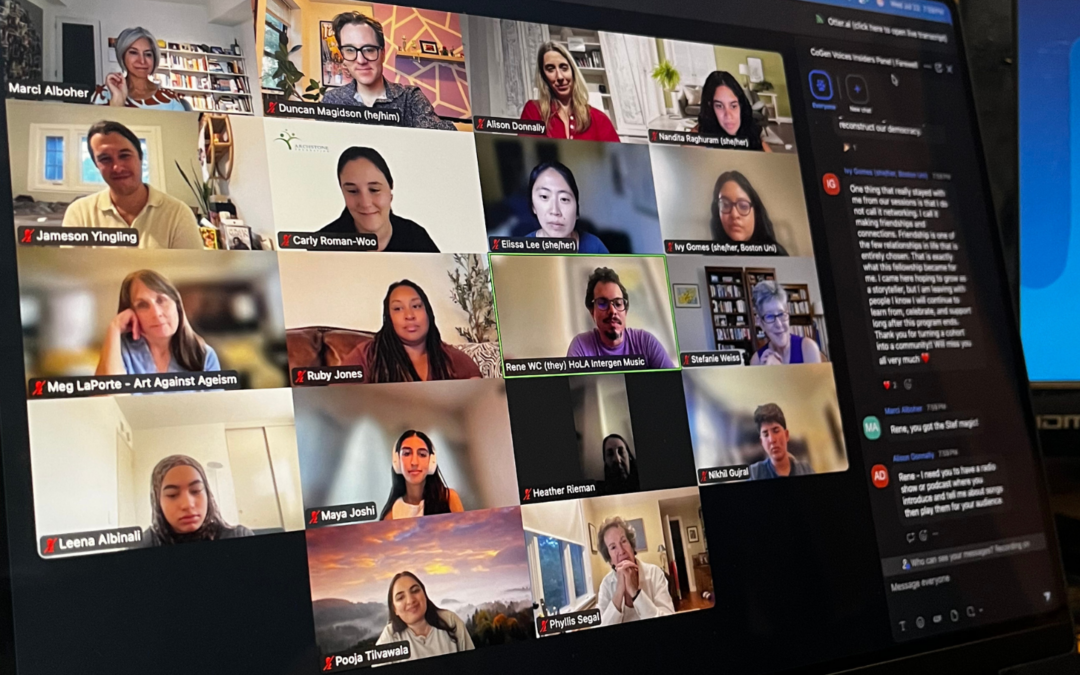
When we first began planning the CoGen Voices Fellowship, we knew we'd face a few challenges. The group of 21 community changemakers was intentionally diverse — by age (15 to 81!), race, location, work, experience, and more. We'd have to meet many different needs and...
At CoGenerate, we believe in the power of cogeneration: a strategy to bring older and younger people together to forge bonds across differences, combat polarization and ageism, and help solve today’s toughest problems. If you’re involved or interested in cogeneration,...
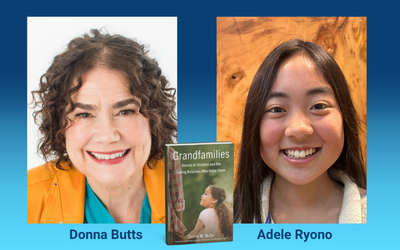
https://youtu.be/OedAsZVTm9U?si=q20TIH8zuwPEhE0a Today in the US, more than 2.4 million children whose parents are unable to care for them live in grandfamilies, where they are raised by grandparents or other loved ones. Until recently, their experiences have been all...
Event Recording: Aging While Black: A Cogenerational Conversation with Raymond A. Jetson
Join us for a powerful, intergenerational conversation inspired by Aging While Black: A Radical Reimagining of Aging and Race in America, the groundbreaking new book by activist, author and CoGenerate board member Raymond A. Jetson.
Now entering its fourth week as Amazon’s #1 best-seller in gerontology, Aging While Black shares a vision for building a future where Black elders are not just surviving, but thriving—driven by the power of community and intergenerational engagement.
Moderated by CoGen Impact Fellow Arielle Galinsky and Indigo Hill Strategies Founder and CEO Ryann Hill, this 45-minute conversation will explore storytelling, advocacy, and tangible ways to uplift Black elders and build cogenerational collaboration in your community.
Hello, everyone. My name is Arielle Galinsky. I serve as a CoGenerate Impact Fellow here at CoGenerate, where I have the absolute privilege of working on initiatives that bridge intergenerational divides, which is something I care about very deeply.
Ryann Hill
Hi, as well, everyone. My name is Ryann Hill. I’m the founder and CEO of Indigo Hill Strategies. We are a boutique government affairs and policy firm with significant expertise in healthcare, aging and disability policy,
Arielle Galinsky
So we’re going to jump into the conversation very shortly. But I do have to start by saying that this is a pinch me moment conversation. As someone who is hoping to go into the aging policy space and who has been in the space over these past few years, it’s just so meaningful for me to share this conversation, this moment, with two people, Ryann and Raymond, who I’ve looked up to for years in this space, to chat about Raymond’s new book “Aging While Black’.
Ryann Hill
Thanks Arielle, it has been such a journey, such an awesome journey, to watch you grow and really thrive in this space, and really an awesome moment to share the stage with you one of my mentees, whom I care so much about. It’s been wonderful to watch. I have the honor of introducing our fantastic guest today, Raymond Jetson. Raymond Jetson is the founder of Aging While Clack, which is both a groundbreaking book and a national movement. He’s also CEO of the social enterprise Metromorphosis, a former Louisiana legislator, a state health official, long time pastor. He is the leading voice on equity, intergenerational connection and community led change. Before I hand it off to Raymond, I’ll just say you guys are in for such a treat tonight. I first had the pleasure of hearing Raymond speak in 2000 in 2022 I think it was at the American Society on Aging conference in Louisiana, and it was just such a joy that I ran up to him right after, I mean, hasn’t been able to shake me since I I’d like to pass it the mic over to Raymond for an overview of Aging While Black, and the inspiration behind the book, Raymond.
Raymond Jetson
And thank you so much. And as I post regularly on social media, I am a card carrying member of the Ryan Hill fan club. And Arielle, it has just been a joy to to watch you blossom into just such such a potent and thoughtful force in this space, and it gives me hope that the future is bright for aging and aging policy. I have to name just a special moment for me. My entry into the aging space began with Encore, now CoGenerate and an Encore, public voices fellowship. I had a wonderful interview conversation with Marci Alboher, who has become a very dear friend, but that started this whole notion of being mindful about aging in America in a very different way. And so this book is it’s grounded in my relationships in the CoGenerate family. I’m proud to be a member of the board. I count Marc Freedman, Stef Weiss, Paul Erving, and a long list of other people in this universe as some of my dearest friends and people who have sown into me so that I might be in the place to try to give voice to some important issues, which is what I hope the book does for probably two decades now, dear friends of mine have always said you need to write a book. You need to write a book. But it never resonated with me until this moment in life, an Aging While Black, a radical reimagination of aging and race, is deeply personal. It’s deeply professional. It is a really important moment for me in life, and it is an examination of how growing older in America is fundamentally shaped by race, by history and by enduring inequality. The headline from the book, Aging in America is not a racial true experience, and one of the challenges that we often talk about aging in America as if it is a universally shared experience, and the reality is that the intersections do make a difference, and when we consider race, black elders have this cumulative weight of systemic disadvantage. Life, health, wealth, community, access to resources. But this book is not a missive about what has been done wrong and wallowing in a mere focusing on decline and crisis. This is ultimately a celebration of Black elders and the critical role that they have played, continue to play and will play in shaping families and communities. The book is a radical call to change. We can’t just adjust around the margins. The future has to be radically reimagined through innovation, policy change and just an aggressive community building. The book is also a blueprint for action. It’s not enough to lament or even to pontificate about the realities we face. So what we what can we do about them, and so we try to offer concrete prompts and recommendations for individuals, organizations, faith groups, policy makers, as much as a guide for social transformation as it is a critique my inspiration, Ryan and Arielle, this is a part of my own personal journey, my personal aging journey. Aging really became a thing for me at age 55. My father died at age 55 and I didn’t realize how young he was until my 55th birthday, and at that point, I became keenly sensitive to every year, and at some point, it became a matter of a combination of survivor’s guilt and a sense of obligation. What do I owe to my father’s legacy, to my family, to my community, to people who look like me, to have been blessed to be within a few months of my 70th birthday, and so that’s the inspiration for the book for me.
Arielle Galinsky
Thank you so much, Raymond for sharing that I absolutely love the book. As I was reading through it, I was writing down my favorite quote, some of which we’ll we’ll talk about in today’s conversation. And I welcome anyone in the audience as well who’s read the book to share their favorite quotes when they when they ask questions. So we’re going to start off the conversation with, I think, something that’s, it’s really grounding in the work here at CoGenerate. So when it comes to intergenerational programming, there’s often this misconception that the benefits are for one of the parties participating, right? It’s either for the olders, who are, you know, sharing their wisdom to younger adults or younger adults who are, you know, sometimes doing service work for high school or for college. And here at CoGenerate, we believe really in the bi directional benefit and power that comes when youngers and olders come together. And in the book, you really echo the sentiments, I think so beautifully. There was one of my favorite quotes was elders pour into younger people and younger people into elders. Now, can you please elaborate on the concept of reciprocal wisdom sharing and why it’s so important in today’s day and age?
Raymond Jetson
Thank you so much, and for so effectively capturing the incompleteness of the typical elder, younger, older, younger, dynamic, this, this whole notion of wisdom sharing that is so frequently cast as this unidirectional experience, and nothing could be or should be further from the truth. I hope we coined the phrase reciprocal wisdom sharing in the book. I had not heard it before, and nobody’s accused me of plagiarism at this point, but the notion is that the wisdom sharing goes in both ways, hopefully, the elders are positioned to offer valuable story and context for the realities that we find ourselves facing. Are lessons that have been forged through lived experience, particularly in terms of from the context of the book the black experience, this cultural continuity and this values that are rooted in history, so that there is an understanding of why certain things are or have been the way they are or have been. It is a perspective that I believe tempers urgency with long term vision both. Both are important. We certainly face a number of circumstances and situations today that feel and are, in fact, urgent, but understanding them in the context of a longer term vision is either. Leave an important contribution that elders can make in this reciprocal wisdom sharing younger generations offer fresh perspectives and new skills, and those are absolutely invaluable because the devices, the tools, the strategies of my youth and of my forbearers are not necessarily equipped for today’s world and the realities that we face, and so the perspectives and the skills that younger people can bring to the engagements are invaluable, also an energy that that that provokes experimentation and adaptation, that that are the absolute mother’s milk of true innovation. And also insight into emerging realities and identities and tools, this recognition that things are changing, and so what is most powerful is this reality that each side receives as much as they give, and that changes the dynamics of the engagement. I think it is so important, Arielle, because it disrupts deficit thinking. It robs the elder of the perspective that this younger person needs me, and it deprives the younger person of I am doing some benevolent good for this older person. It also sparks this collective ingenuity when it happens appropriately, because both sides lean into what is it that the other person can add so that we might collectively impact the world in whatever way we are discussing and then in the world that We live in today, I think importantly, it builds interdependence, not isolation. Too very often we try to fight these important battles as rugged individuals, when working together in independence is something that really is important.
Arielle Galinsky
I couldn’t agree more. I think in this moment of polarization, this interdependence across age divides, is a way to bridge other divides. So that was beautiful. I’ll pass it off to Ryann
Ryann Hill
Much like Arielle, I will share one of my favorite quotes from the book, which is very simple yet profound, and I think that is really a key throughout the entire book, as the message is so profound and easy to understand and very translatable. So one of my favorite quotes is “the intersection of race, age, and politics is a perilous one in 2025,” and you lay that out so beautifully, just in chapter one. I think throughout the book, you masterfully explain this intersectionality between aging, race and gender roles in America; the challenges of aging, as you note, are often compounded by racism and sexism. How do you suggest readers, policymakers and social impact leaders think about the disadvantages that black older adults face as they age, not just in terms of understanding the challenges, but in understanding and presenting solutions.
Raymond Jetson
Thank you. Repeat earlier statement, aging doesn’t happen in a vacuum. The intersections matter. Wise thinkers, far before my time in examining this notion of black aging in America, coined the term triple Jeopardy and it is to be female, black and aging in America, my dear friend Elizabeth White, in her book, 55 unemployed and faking normal, writes about she was used to dealing with sexism and racism, but now ageism began to creep into the conversation. And so it’s important to understand that for black older adults, especially black women, there has been this lifelong exposure to both racism and sexism that results in these heightened disparities across a number of domains that I talk about too frequently in the book, but are the lived experience of people. I think it requires us to look at the whole picture. We have to reject these cookie cutter approaches to addressing the realities that people face. The compounded disadvantages that aging black people, particularly black women, face, for example, many of whom have to leave the workforce early because of caregiving duties, or they have intermittent work experiences because of caregiving because of a number of other issues which leads to lower retirement benefits or Social Security benefits or other things. It’s really important that we are conscious of these realities in terms of solutions, whichever lane you occupy in the aging ecosystem, I believe the starting point is always begin with assets, not deficits. And so, you know, older black women are not something that’s broken and need to be fixed. They are amazing examples of fortitude. They have been the driving forces in black families, black communities, black institutions, from the very beginning. And so it’s important to highlight that capacity, that self determination and that sense of cultural and familiar continuity, to recognize their leadership and community building that has been essential for generations, and so that must be manifested in the space, in the approach and in the strategies that that we bring to bear, in addition addressing these issues that are rooted in systems and structures require structural and systems redesign, and so there has to be policies that address economic stability, health equity, housing, care giving, All while accounting for the race and gender dynamics that black people, black elders, black women especially, face and involve black elders, especially women, as leaders and co creators in policy development. One of my favorite chapters in the book is the one where I talk about the shift from advocacy to activism and actually positioning black elders to speak on their own behalf within the DNA of black people, is the activism that is required in this season. And then lastly, we have to directly confront racism and sexism, and allow me to make the editorial comment. I do realize it’s 2025, in America, and I do realize that there are some folks who would rather not have these conversations. I apologize. Really, I don’t they have to happen, and we have to directly continue to confront racism and sexism, particularly as it shows up in the aging experiences of people in America.
Arielle Galinsky
I couldn’t agree with you more. I think, how are we going to move forward on any of these policies without bringing forward a spot at the table for everyone who’s affected. So that’s incredibly profound. And something that I also that I found really compelling in your book is your focus on storytelling. You spend significant time in the book on the importance of storytelling across familial generations, which, as we know, if you’ve spoken to your own family members, this often can come with a lot of heavy emotions and even intergenerational tensions. There’s one line in the book, going back to my favorite quotes list, that says “it’s a great disservice to understand the ancestral guidance of the elders as the recounting of tales from the past they are guiding us for the future.” How might you advise individuals listening today on approaching these conversations with their own loved ones and essentially practicing this ideal of Sankofa, which maybe you can explain a little bit about as well.
Raymond Jetson
So thank you, Arielle, I center often in the book my great grandparents. I grew up great next door to my great grandparents the first 11 and a half years of my life, and some of my fondest memories are sitting on their front porch listening to my great grandmother and great grandfather talk about their experiences and and just the stories that they would tell, and I found in them I share with people that the older I get, the wiser my great grandparents become, because there were things that they shared in those stories that actually have allowed me to navigate life in 2045. Sankofa is this, this West African concept of making benevolent use of the past in order to shape the future. It is the Sankofa bird that you see on the cover of the book who is moving in one direction while its head is turned back with an egg, a point of origin, the source of our life being brought into the future. I am a big Sankofa fan. I have Sankofa statues and paintings everywhere, and I even write in the book that for my 66th birthday, I got a Sankofa tattoo, and if I had on short sleeve shirt, I’d show it at this point. So storytelling is really important, but it’s not just telling stories. It’s building bridges, not just reminiscing, and so it’s really important that we frame storytelling is not just nostalgia. But what are the actionable guide posts for navigating the future? One of the things that we do as we try to foster this notion, is encouraging both olders and youngers to frame the questions and responses around the question, what does this teach us about the road ahead? What does this teach us? And so it’s not just storytelling, it’s grid building and guideposts for the future and then really grounding it in Sankofa, which is honor the past to shape the future. And so this Spirit calls for us to go back and fetch which is what some translate the term Sankofa most directly. And so what is valuable from our history to inform our present and future? And I think where we find ourselves today, there are really some important mile post that are in the lived experience of aging black people that could truly inform and empower how we respond to the world we live in and how we build a world of better world. And so with each conversation, look for ancestral connections between the experiences of our ancestors and today’s realities. How do we make them fit? I do want to lean into something that you said, Ariel, and it is this notion of vulnerability and tension. Not every story is one that you know has violins playing in the background or or rises to a, to a to a climatic crescendo. Some are rooted in trauma, family trauma, intergenerational trauma. Some of them are rooted in a sense of loss or a sense of mistreatment, and so it’s important to ground them in compassionate listening, being patient, but also being honest. And we have the freedom to say what we believe needs to be said. And then the last thing that I will say is that it needs to be normalized. And so how do we create these regular spaces to where it becomes a ritual that there is this story sharing, and then you know what? What is so good that we should memorialize it as a part of family lore in some formal way.
Ryann Hill
I absolutely love that I as someone who recently discovered the beauty of ancestry.com and think that a, you know, tracing my own family lineage, it’s it’s so important to think about all the stories that were memorialized or were not memorialized. And I just think the concept of Sankofa is just so important as we think about our past present, but also building upon the future and designing a future that we want to see in the world. So I have the honor of asking the final formal question before we look to Q and A from our thoughtful and insightful audience here, at the end of each chapter, you provide the readers with three specific ways in which the reader can initiate action in their own communities can dig deeper into understanding their own set of values and to boldly reimagine the ways in which things are done. With that in mind, what would you say are the three key takeaways from this conversation today that people can act on right now?
Raymond Jetson
And thank you so much, Ryan. Kind of behind the scenes. You know, I finished the manuscript, I was in the editing process, and as I read through it, I felt as though there needed to be something at the end that didn’t serve as a summary, but serve to prompt people in some ways. And so I ended up with the reimagine, which is the point of reflection, but then act in shared some points. But from, from the book, from, from the conversation, and I just love talking with you and Arielle, and thank you for making this such a joyful experience. None of the three takeaways for me is one foster this notion of reciprocal wisdom sharing across generations. CoGenerate does an absolutely amazing job of cultivating and curating this mindset of older and younger working together to tackle the challenges of the world. We need to apply that to broaden the adoption of that. And so how do we create spaces in our families, in our communities, in our organizations, in our businesses, where elders and younger generations can openly exchange knowledge, stories, skills and vision with intentionality, not just anecdotally over a cup of coffee, but how do we create these intentional spaces? You know this by bi directional flow that that Arielle and I talked about at the open of this conversation is really critical to deepening this mutual understanding that is vital and the sparking of these creative solutions. And so the first, for me, is intentionally fostering reciprocal wisdom, sharing in all of the settings that we can the second is become an advocate, champion and participate in restoring and modernizing the village, the first pillar of Aging while Black is recalibrate the village. The village is a deeply embedded concept in African culture and in black life, it is that community around people. My great grandmother and great grandfather were both able to die in their homes, in their bed. My great grandmother at 98 my great grandfather a bit earlier, but they were able to stay in their home and die in their beds because of the village that surrounded them and and there was this sense of a culturally grounded, interdependent network that supported people, and we have to appropriate that concept to aging in America, too often aging people broadly, but because of my lived experience, I focus on black aging. Too many black elders are viewed as an isolated individual who shows up for health care or service or financial advice or day health services, they are part of a village, and so how do we mobilize families to understand that they are the drivers of the village? How do we help the providers of Aging Services to understand that while I might be providing day services, there’s somebody else working with technology and somebody else working with health. And how do we create this interconnected community that becomes the antidote to isolation and systemic neglect that too many aging people in America of all races are experiencing, but black people are experiencing on steroids. How do we address that? And then last news, we have to mobilize for activism and structural change. I was reading somebody’s post on social media who said earlier that silence is consent. We don’t have the luxury of being okay with the systems that have failed, and while there is a tearing down of much, I think we can’t make the mistake of running too quickly to rebuild what didn’t serve so many well. And so part of the notion of adaptive leadership, or the adaptive process is, what is it that we have that has served us well, that we need to keep? What is it that we have that has not served us well, that we need to discard? And then what is the new thing that needs to become a part of our ecosystem in order for everybody to age and thrive in America? So those are my three takeaways.
Arielle Galinsky
Thank you so much, Raymond, and I know we have like, 12 minutes left of this conversation formally, but I just want to say that there will be a follow up email that goes out, and please feel free to respond, continue asking questions. To that email, we can connect you with Raymond. You have a few fans that want book signings, which I’m not surprised about, but you might be contacted to go do some travel after this, Raymond, but there have been a plethora of different questions put into the chat. We will try to get to as many as possible in the next 10 minutes. There was one that asked Pamela asked about how cognitive health is included in this movement. I think their work specifically focuses on dementia related issues. I’m wondering if you can speak to that, Raymond, if you have any thoughts on how?
Raymond Jetson
Yes, from two perspectives. First of all, one of the things that we point out in the book is that black people in America are twice as likely to be impacted by dementia and brain health as any other population. And so it is a major issue that needs to be thought, to be considered. It is also correlated with a number of other co morbidities that black people face. And so it’s while it’s important to focusing in on the cognitive challenges that people face, we also need to look at diabetes, hypertension, nutrition and a number of other things. And so what we posit in the book is this, note, this notion of Holistic Health, that not looking at things in silos, but looking at the total health, including mental health, of aging black people, is critical. But doubtlessly, this notion of dementia and brain health and cognitive health is critical, and we talk about it in a number of different perspectives in the book.
Arielle Galinsky
Absolutely, do you want to ask the next one? Right?
Ryann Hill
I’m happy to ask the next question. So we have actually two similar questions on next steps. We have one from our friend Ashton Applewhite, whose book I also have in my bookshelf in the office. Yes, and one from Kianna Moore, and they’re a little bit similar as Ashton’s first what’s the most helpful thing an individual could do to support this work, besides buying the book? And then I’ll add Kiana question here as well, which is, what are tangible steps we can take within our community to begin this work. I know in our final question, we touched on this a little bit, but wondering if you can dive a little bit deeper to answer the questions from Ashton and Kianna.
Raymond Jetson
So thank you and absolutely love Ashton. She was one of the first people that I reached out to talk to when I started writing this book, and just her insight on the writing process, and I absolutely love I have to share. I asked them a series of questions about race and aging, and her loving response was, I don’t know, that’s you know that that’s not my reality, and that’s why it’s important for people like you to speak up. And so she’s been a dear friend and supporter. And I love Kianna’s question also. I’ll respond in this way, one of the things that we’re trying to do this book, I didn’t write a book to sell books. Books, or to be a world acclaim author, I wrote the book to expand the movement that is aging while black. And so people can go to aging while black.co. they can connect with us. We are also building out the aging while black network, which is this online platform where we are connecting people across this country that are focused on this important issue, connecting people by areas of interest, affinity, size of organization, geography, and so people can become a part of the Aging While Black network in terms of practical steps: I go back to the reimagine act, and so at the end of each chapter, there are actions that people can take. But I also call attention to chapter 12, I think, which is the one that’s different from every other chapter, because it’s not a narrative. And it says, here are things for stakeholders, here are things for families, here are things for aging services, you know, larger and it it’s not all of the information, but it’s a starting point to think. And so if there’s something there that captures attention. We have workshops, trainings that Aging While Black, is available to do for individuals, institutions and organizations.
Arielle Galinsky
Thank you, Raymond. There’s been a few questions in the chat, and one I think about quite frequently is, how do you talk about aging when often aging is associated with scary topics like mortality or it’s not the most attractive thing. You see this large anti aging movement that’s happening within the media space and beauty space. And so a question for you, I’m combining a few questions that have come in the chat is, how do you talk? How do you broach this conversation about aging with the with the knowledge that a lot of the times it’s associated with these negative topic areas?
Raymond Jetson
I think one of the most important things that we can do is disabuse the people of the notion that aging means old. A wonderfully brilliant woman in Atlanta said to me, aging is a verb, and it’s happening to all of us at some point I actually had a one of my aging well, a WB live podcast early on was with a dear friend of mine who just turned 40. And the subject of the conversation was, why does 40 hit so hard? And the reality is that aging well requires preparing early, and so it’s not a conversation that I wait to focus on later in life. I need to begin to think about it earlier. In the last chapter of the book, I talk about this connection between generations that is absolutely critical. You know from the silent generation that, as a baby boomer, we don’t talk about much, but they’re still my mom’s 92 today. As a matter of fact, you know the silent generation who lived in a world of Jim Crow, free civil rights, baby boomers, the first gen xers, are turning 60 this year. And then you go through the millennials, you know, I talk about how all of these generations can benefit from one another, and how the realities of aging. For my generation, it is inadequate social security, etc, etc. For the gen xers and millennials, it’s going to be the lack of pensions and the financial collapse of 2008 and 09. For the other folks, it’s going to be student loan debt and a number of other things, the lack of pensions and so while the names of the systems and structures change, the realities is that we all face the same system and structural challenges when it comes to aging, particularly aging while black in America.
Arielle Galinsky
I could not agree with you more on everything you just said. The conversations on aging must start early, and I think we’ve talked about that a lot, all three of us. So realizing that we have three minutes left and there’s still a lot more questions, we’ve been taking down all the questions. And again, encourage any remaining lingering ones to respond to the follow up email, and we’ll make sure to pass it on to Raymond.
Raymond Jetson
I have to, I have to say, Happy Birthday to LaTonya Clark’s mom, who is 91 today.
Yes, and she has a birthday with my mom. I have to name it up.
Arielle Galinsky
Of course. Well, Raymond, thank you so much today for joining Ryann and I in this conversation, aging while black. Can we’ll make sure it goes up in the follow up email. I think the link has also been sent in the chat, but it’s a wonderful read. A lot of tangible action steps and certainly a lot of food for thought, for you to for everyone to take away before everyone heads out. You probably just got a poll that popped up on your screen, if you could just put your answer. Are you inspired to include more older and younger people into your life after this conversation, wonderful, and I’m very, very appreciative that I got to share the stage here with Ryan and Raymond today. Thank you both.
Raymond Jetson
It has been such a joy to share. It’s been a joy to share with you guys. And I do want to name the amazing the amazing Duncan who makes it all happen.
To provide the best experiences, we use technologies like cookies to store and/or access device information. Consenting to these technologies will allow us to process data such as browsing behavior or unique IDs on this site. Not consenting or withdrawing consent, may adversely affect certain features and functions.
Functional
Always active
The technical storage or access is strictly necessary for the legitimate purpose of enabling the use of a specific service explicitly requested by the subscriber or user, or for the sole purpose of carrying out the transmission of a communication over an electronic communications network.
Preferences
The technical storage or access is necessary for the legitimate purpose of storing preferences that are not requested by the subscriber or user.
Statistics
The technical storage or access that is used exclusively for statistical purposes.The technical storage or access that is used exclusively for anonymous statistical purposes. Without a subpoena, voluntary compliance on the part of your Internet Service Provider, or additional records from a third party, information stored or retrieved for this purpose alone cannot usually be used to identify you.
Marketing
The technical storage or access is required to create user profiles to send advertising, or to track the user on a website or across several websites for similar marketing purposes.
To provide the best experiences, we use technologies like cookies to store and/or access device information. Consenting to these technologies will allow us to process data such as browsing behavior or unique IDs on this site. Not consenting or withdrawing consent, may adversely affect certain features and functions.
Functional
Always active
The technical storage or access is strictly necessary for the legitimate purpose of enabling the use of a specific service explicitly requested by the subscriber or user, or for the sole purpose of carrying out the transmission of a communication over an electronic communications network.
Preferences
The technical storage or access is necessary for the legitimate purpose of storing preferences that are not requested by the subscriber or user.
Statistics
The technical storage or access that is used exclusively for statistical purposes.The technical storage or access that is used exclusively for anonymous statistical purposes. Without a subpoena, voluntary compliance on the part of your Internet Service Provider, or additional records from a third party, information stored or retrieved for this purpose alone cannot usually be used to identify you.
Marketing
The technical storage or access is required to create user profiles to send advertising, or to track the user on a website or across several websites for similar marketing purposes.