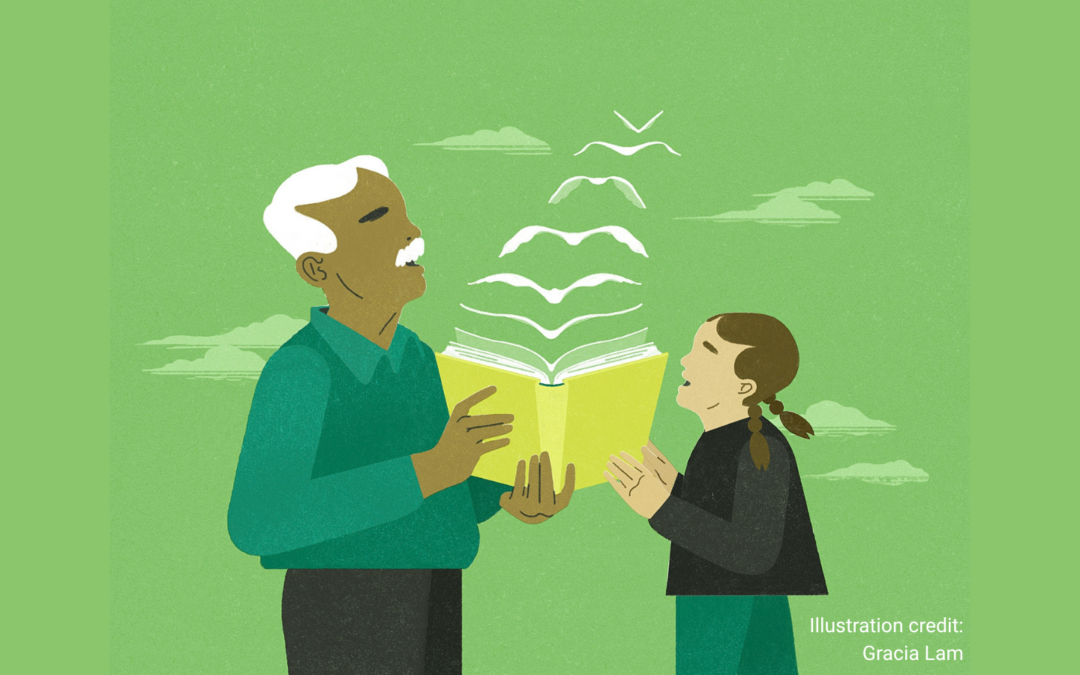
Intergenerational collaboration starts with our ability to be in genuine dialogue with one another. Use these questions to have a meaningful conversation with someone you’re just getting to know or someone you’d like to know better. Listen well and be vulnerable.The...
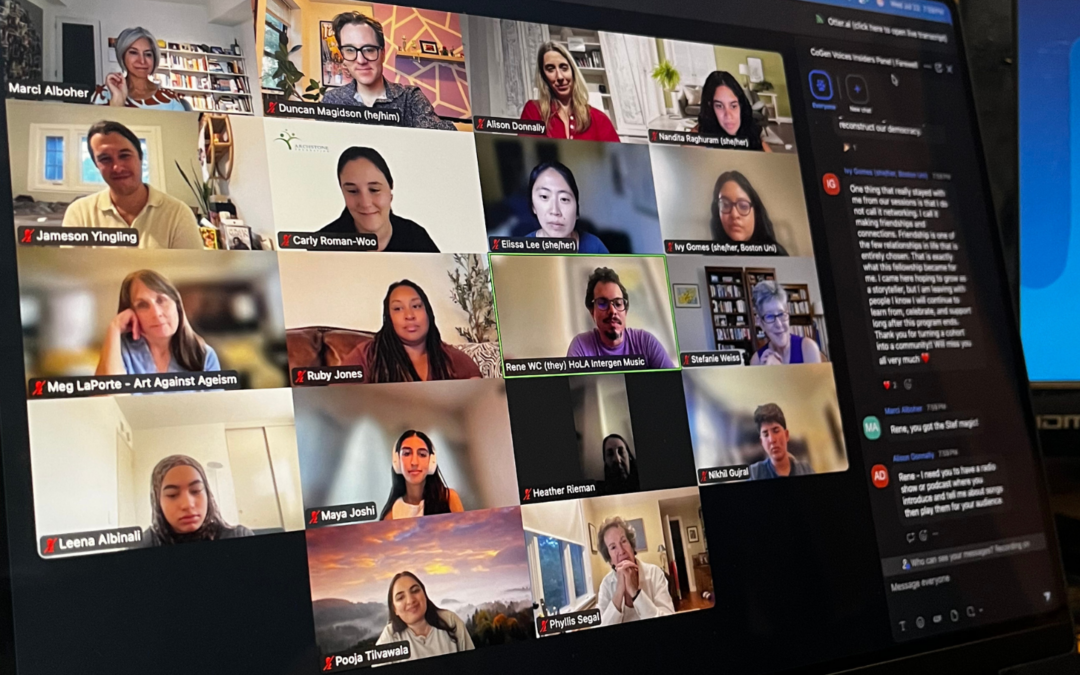
When we first began planning the CoGen Voices Fellowship, we knew we'd face a few challenges. The group of 21 community changemakers was intentionally diverse — by age (15 to 81!), race, location, work, experience, and more. We'd have to meet many different needs and...
At CoGenerate, we believe in the power of cogeneration: a strategy to bring older and younger people together to forge bonds across differences, combat polarization and ageism, and help solve today’s toughest problems. If you’re involved or interested in cogeneration,...
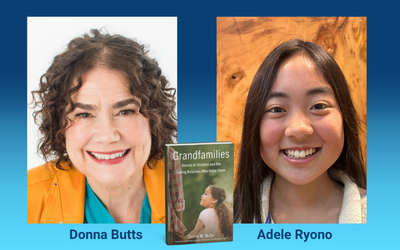
https://youtu.be/OedAsZVTm9U?si=q20TIH8zuwPEhE0a Today in the US, more than 2.4 million children whose parents are unable to care for them live in grandfamilies, where they are raised by grandparents or other loved ones. Until recently, their experiences have been all...
Event Recording: America at 250 – Cogenerational Conversation About Our Nation’s Future
As we celebrate our nation’s 250th anniversary, we are the most age-diverse society in human history — and the most age-segregated. Our next chapter will depend on our ability to work across generations.In commemoration of the United States’ semiquincentennial, this 60-minute conversation will explore how older and younger people can work side by side to strengthen communities, renew civic life, and tackle the challenges no generation can solve alone.
Panelists include
Arielle Galinsky, CoGenerate Board Member and Founder of The Legacy Project
Ram Hernandez, Ed.M, Youth250 Bureau Member and Strategy & Impact Manager at Voces Unidas RGV
Hello, everyone. It’s so nice to to be in conversation and community with you all. Five days ago, our country commemorated the 250th anniversary since the signing of the Declaration of Independence, and this moment we are living in is in a is a particularly unique one. In the United States today, people are living longer than they ever have before. We are the most age diverse society the U.S. has ever known in its history, with six generations living amongst one another. At the same time, we are incredibly age segregated. Meaningful opportunities for generations to interact and collaborate with with others are not yet the societal norm. My name is Arielle Galinsky. I’m 24 years old, and my work for the past eight years has deeply focused on connecting generations, primarily through storytelling with my work with The Legacy Project. As of recently, I’ve also dived into the world of reshaping the future of democracy alongside a council of eight other incredible young leaders through Civics Unplugged and the Bridge Alliance’s Democracy Architects. I’ve become totally enthralled in how we can apply the intergenerational lens when considering how we will approach America’s future. This moment of the 250th is more than a cultural milestone. It’s an opportunity, an invitation, and an imperative for us all to consider the future of this country and the challenges we face both now and in the coming years through the lens of intergenerational connection and collaboration as a tool for good. A few housekeeping points before we get started: the conversation is being recorded and will be shared afterwards. We’d love to know who’s here, so if you could drop your name and location in the chat that would be wonderful. We’ll save time at the end for your questions as well, so please add them to the Q and A box at any point during the show. For some context on the conversation today, we’re thinking of this as a bit of an unpanel, so slightly unconventional in how you might normally conceptualize this type of conversation, rather than having one moderator feeding questions to a row of experts, this will be an open conversation with everyone asking questions of everyone else. We’re hoping this format helps model the kind of conversations that we want to see in this world: curious, equal dialog between older and younger about important topics. We each bring a very different perspective to this work, and you’ll hear a little bit about what brings each of them to the table as they join the conversation. So I’d love if my fellow conversationalists could join me. Beautiful. I’m going to kick us off with the first question: What could America achieve over the next 250 years if we designed our communities, institutions, and democratic infrastructure for generations to work together rather than apart. And what promising models already exist?
Eunice Lin Nichols
It is such a great question, Arielle, and I’m going to lay in briefly and and then throw out an adjacent question because I love this one so much. Briefly, hi everyone. I’m Eunice Lin Nichols. I’m the co CEO of CoGenerate. I’m one of the hosts of this conversations. I actually turned 51 this Saturday, 7/11 So as the daughter of immigrants from Taiwan. I grew up in a multi-generational household, and I’ve been kind of obsessed with all things intergenerational ever since. And today, I have the privilege of running this national organization that focuses on bridging generational divides and bringing older and younger people together to solve problems no generation really can or should solve alone. And I think that’s part of this question you asked Arielle around what can we envision for the next 250 I think is the most mobilizable force of people of all ages that can come to the table to solve these problems that are really too big, and yet we’re all in siloed corners trying to solve it ourselves. But I might like narrow this for a second to it’s hard for me to picture 250 years from now, frankly, and so I wanted to briefly have us focus on something more tangible, which is the next 10 years, because the unfinished business of our next decade is the fact that we will not just be the most age diverse society, but by 2034 will also be a more old than young society for the first time, I think it’s hard for us to imagine what that looks like. But we’ll have more old than young people by 2050. About one in four Americans will be over the age of 65. We’ll have half a million people celebrating their 100th birthday and beyond. So the need for us to figure out how to have young people and older people live not just next to each other, but deeply in community with other with each other. I think is the biggest question to solve for the next decade, and therefore for the 200 and 50th. And how we age into the 250 will depend on the things we build right now. I think a lot about the missing infrastructure that we have that can bring older and younger together, and the spaces that we’re paying attention to here at CoGenerate are the places that where old and young are already there, but they’re age siloed, and they’re wanting to be together, but the structures still continue to keep them apart, or people don’t know how to be together, let alone solve problems in those spaces. So we’re looking at places like faith institutions, higher ed, music, and the arts. Places where, when you think about it, you’re like, oh yeah, those should be multi-generational communities working in lockstep, but they’re not yet. So I’m going to pile on another question to throw out there, which is as we do that work, I think it’s so important to do it in culturally diverse ways. In part because I think there’s a lot we need to learn from cultural communities who have been embedded in intergenerational wisdom from the get go. And so I’d love to know where you all are turning to for insights on how to navigate this as a country through that culturally diverse lens.
Anatola Araba
Thank you, Eunice, for that amazing question, and also Arielle for kicking us off so beautifully. And I’m really excited to be here with you all on this now 51st year of America that we’re officially in. It’s like when you cross a new decade or something like that. For a brief intro, I’m Anatola and I am 27 but soon to be 28 in exactly 12 days. I think 12 is a lucky number.
Eunice Lin Nichols
Another July birthday!
Anatola Araba
Cancers unite! Yeah. So I work across emerging technology, new media, and education to explore what people want the future to look like working through my studio, Reimagined Story Lab, that you can explore a lot of digital resources and games and environments about innovation and society. And I was also a proud member of the Youth 250 Bureau that spent a year consulting organizations from the Obama Foundation and Harvard Kennedy Center around the 2/50 and young people’s perspectives in that, and about your question around how we’re going to build for a more diverse society, it makes me think about diversity in terms of age too. Considering this is an intergenerational panel, and bringing it even farther out from us, I suppose being a younger generation and other like older being the older generation, but even having a farther horizon, looking back into 250 years ago in the past, as well as in the future, and for me, when I imagine, well, take a moment to imagine your who your ancestors might have been 250 years ago, if you’re like me and a part of a. Bunch of different kinds of cultures or communities that have come together. Think about all of those places to 50 years ago, and they’re all at a table like your dining table right now, and what they would think about this world here today on july 9. I think they would have a lot of things to work through in their mind, and I also think we have a lot to learn from all of those diversity of perspectives that they would have, along with what perspectives we want to leave those people that are coming ahead of us. And so I’m excited to talk more about what some of those strategies are today.
Ram Hernández
Yeah, I’m really sitting with just the the powerhouses that are in this room today. I’m kind of fangirling a little bit about who I’m in conversation with today. But hi everyone, my name is Ram Hernández. I use he/him pronouns. I’m 25 years old. I’m also part of the Youth250 Bureau with Anatola, and I work as a strategy and impact manager with Vices Unidas RGV in the Rodriguez Valley of South Texas. And I think for me, I love Anatola that you brought up ancestors because I think that’s such a central thing that I think about for me in my work. So a little bit about my background. I’m, I guess, I mentioned I’m from the Rio Grande Valley. I grew up on both sides of the border, and I think for me, I really ground myself in the wisdom, right, in the knowledge of of my people throughout all of the work that I do, right. And one thing that I’ve really learned is that we, particularly here in the in South Texas, right? Like we really do exist at kind of like that intersection, right? Because so many of us exist not just in one world; we exist in multiple worlds, right? We come and go across the border. We speak multiple languages, and so one of the things that your question Eunice brought up for me as I was thinking about that, right? It made me think about when I think about my ancestors, right? I think about you know directly the lineage of people that came before me, but also the people you know the scholars, the thinkers, the doers, and the the mentors that I’ve had, and the wisdoms that I have learned from them, and also our younger selves. And I also think that like thinking about even people who are still here with us as ancestors, right? It’s a mind shift, right? And I think when you think about, or at least for me, when I think about that, it makes me also think about myself as a future ancestor, and it changes how I show up in the present moment, how I think about the work that I’m doing and the conversations that I want to have. And I say all of this because I think that you know we when we think about democracy, right? We think about our country. I think there is this-I don’t want to call it maybe an obsession, but I think there’s a yearning oftentimes to like have only one truth, right? To be like, oh, like any answer we think about democracy or our country, it’s like there’s only one truth out there, and that’s it. But you know, I’ve learned from my people and where I come from that actually, that’s not true, right? There are multiple truths that exist at once, multiple histories, multiple cultures, and so I think that like when we think about you know our the future of our country, when we think about what we envision our future democracy, I think part of that, at least for me, right, part of my practice is also thinking about all of the different histories and the multiple histories of people that have existed in this country, right? And and I think that when we are envisioning democracy for the next 250 is I think that we also have to really honor that not everyone’s truths are pretty, right? Some people’s histories and experiences with our country and with our democracy have been harmful, and I think like we need to not shy away from having those difficult conversations, but actually ground that and center that in order for us to really sit with, yeah, like how do we actually create a democracy that allows everyone to participate across ages, across cultures, across experiences? And so for me, I think that like that practice of thinking about our ancestors, both in terms of lineage, but also in terms of like the the people that we’re in community with, right, and recognizing that not all of us have the same truths, and that’s okay.
Ram Hernández
And really sitting with that tension, and not wanting to have just a one size fits all answer, but sitting with like we need to like actually sit with the multiple truths, the multiple histories and the multiple realities that are here in our country and and and on our democracy, and so yeah, I could yap forever, but I know we’re also on a tight time, so I think for me, right, as I’m thinking about those questions, that history, those ancestors, and what that means. For us in practice, I’m also curious to ask from folks here. Right, we are also at a moment where you know across generations, but I think also particularly for young people, trust in our institutions are at an all-time low. Right, there’s a lot of stuff happening across our country, from the federal level down to the local level, and it also varies depending on where, what state you are in, and so I’m curious, right? Like now that like we trust in institutions is at an all-time low, and oftentimes there’s kind of like this like almost a competition being cast between generations. It seems like I’m curious to hear from other folks. What do y’all think it would take to move from really that like generational blame to actual power shifting, right? To actual yeah, like what what would it take to actually get people across generations together to be able to make decisions together and to honor this those different truths and different wisdoms? I’m curious to hear what folks have in mind on that.
Marci Alboher
Yeah, I will. I will jump in, Ram. Thank you for really provoking us. I think in in a lot of really good ways that I think we’re going to be circling back to. It’s just a joy to be in community with some of my faves over here. So I’m 60 and I wear my silver hair proud, and I am the chief engagement officer here at CoGenerate, which means I get to run around and talk to people, which is one of my favorite things to do, and try to bring more people into the fold of cogeneration. And you know, I I came to this work after quite a long time as a journalist, and as a journalist, I was writing about the future of work and careers, and I still think about that lens a lot because we talk a lot about the five generation workplace, right? This place where you could be working alongside someone enough old enough to be your grandparent or young enough to be your grandchild, and we don’t really have those skills to work side by side. And when I think about the 2/50 I think a lot about what would it be like to build structures and systems, including workplaces that work for all of us at every phase and every stage of what have become these like longer lives with many many chapters. But to answer Ram’s question specifically, working side by side can help. I do think you know anything that flexes the muscles of having kind of cross-generational skills is helpful. We did a series of studies, which some of you may have seen, about what older and younger leaders want from each other. What would real allyship look like? And I think something that really stayed with me from our first report, which is the Young Leaders Report, is this finding that that a lot of young people are saying the idea of paying your dues may not exist anymore in the same way that people of my generation came up and expected, like you just wait and wait and wait, and then it’s your turn, and a seat opens up, and suddenly you can have a voice and you can have agency and decision making. And I’m sitting here looking at you know three people in their 20s who have already accomplished so much and led initiatives, and you know, led big conversations, and I think you know many of us at CoGenerator are like, we you do not need to wait for your turn at the mic, and I think we need to build systems that that honor that and honor the leadership happens when you know at different points on the journey for different people. For years before that, our organization was working with older change makers, and we realized that a lot of people may not have found their voice until their later years, and we don’t want to silence those people either. So I think there is a real recognition that’s needed of how we evolve across the life course, and so I’m really into the idea that we’re we’re playing with new structures. So, as Arielle well knows, we are making our board more of an intergenerational place, and we are working with some other nonprofits who are really committed to doing that. Those are power structures that are traditionally kind of populated only by older people, people who have proven that they have a certain level of gravitas and networks, and we feel that lived experience and voices of younger people are really vital in places like that. But then we have to practice: what does it look like to make sure that the people invited into these new settings are not just shown the door, but welcomed with a with a full sense of what it means to belong and to have have voice. So it’s a little where my head is.
Anatola Araba
That’s amazing. Thanks for sharing those thoughts and ideas. And also for your question around trust, because I think it’s so key and important when we talk about democracy. And I started to realize this recently, actually, when I was at TED, the TED conference, and I hosted a little brain date that was on topic of AI and democracy, which is two things that have a bit of a trust problem these days, and we dove into that, and it led to some interesting research, which is that currently through a poll, only around 30% of Americans would say that they trust the news media, and I think we can relate in feeling almost attacked, or our nervous system being stress when we look in the news, but also how different sources are either just totally denied by certain people because of their brand, and vice versa, the other platforms aren’t trusted by the other people for political reasons, and but even less, almost half, only 16% of Americans trust their government to do what’s right. And additionally, around 30-1% trust businesses to use AI responsibly. Yet, thinking of trust is all about you having faith in someone to make the right decision on your behalf if you’re not there. Essentially, boiling it down, even though other people wrote a whole book about it, and similar to democracy, democracy is all about making decisions for that nation or for the governance, the city, the country, the community, school, whatever, about making that for the future. So they’re really similar things, and how we can start to instill to me local trust being a key thing. So many people want more in-person experiences and gatherings, and and taught for a long time to prioritize the more global, wider scale initiatives when today it seems more smaller. Local scale initiatives actually drive the most impact, and I believe can scale trusts you know larger. And so, but there’s a lot of work to do, and one of those things I think, is to change some of the narratives behind. This is my segue. My narratives that we have about some of these systems, because I do a lot of work in storytelling and also storytelling of the future and world building using emerging technologies or game design, and when you think of the story of America and of democracy in this country, like Ram mentioned, there can be hard parts about that story, or parts of the story that make us angry, rightfully so, or other kinds of stories that are triumph for like we want different different things are activated. And something I’ve been really toying with is what if we’re going to write a new story of America, what would that be, and what would that story look like? And I honestly don’t know the answer, but would genuinely of even what that brings up for the panelists here and the people watching from across the world and nation. Of you know, a lot of people can’t imagine another 250 years. Like you said, it’s maybe easier to start with 10, but to try to start, what is a new American story that we can tell, and how does that include an intergenerational conversation of people of all ages participating in our democracy and trust systems?
Arielle Galinsky
I’ll hop in here. I really appreciate that question, Anatola, and I think it’s something that we’ve had the pleasure to think about together by being a part of the Democracy Architects and considering what can an intergenerational lens to the future of America’s democracy really look like. I I think about this in a few different ways. You know, a lot of my work has focused on storytelling. The inter the the the way in which I have engaged generations over the work over the past eight years is through this what I think can be a convener, which is sharing stories in a bi directional way, where younger and older adults are finding areas of commonality by sharing their perspectives for the future. And I think a lot of what has surfaced from these conversations is that there’s more commonalities than what divides, despite the common rhetoric that we see in this, you know, especially as of recent months, this this ever kind of growing rhetoric of generations, you know, pitted against each other, whereas really we have more more in common than what we what we might think, and so when I think about what the future of the American story is, I hope it’s one where we see generations working collectively. A lot of this has kind of fueled a project that I worked on this past year called the Intergenerational Civic Change Makers. The whole impetus behind this project is that if we really want to generate positive solutions in communities as it relates to civic engagement work, the best way to do that is by bringing together younger adults who have this vision and this energy and and this willingness to want to work on these issues with older adults who also bring that same energy and excitement, but who’ve also done this work for many years and who bring kind of a perspective of what has worked and what hasn’t. And this is a project we we we did over six cities throughout the country as a pilot, and what will be continuing in the future. And what came from it was just beautiful. Younger and older adults who found areas of passion as it relates to civil rights or climate or food food justice working collectively, and I don’t think really that’s the norm, and I think a lot of the work that CoGenerate does is showing like how age siloed we currently are, and yet how much more powerful we can be if we all work collectively across generations. And my hope is through the work of the civic change makers, but also through all of the wonderful work that kind of our whole intergenerational network is is is activating, is that we can show that we can solve these issues, whether it’s climate, whether it’s health policy, whether it’s food insecurity, we can solve that in a way that’s intergenerational versus trying to do it in an age siloed way. And so that’s the future of the American story for me, or at least the vision I hope is embodying the next 50, 1050, 250 years. And I think we’re really planting the seeds to make that happen. But I would love, I would love to hear what your thoughts are on that question as well.
Ram Hernández
Yeah, I’m just I’m sitting with all of the little seeds of wisdom everyone’s dropping. I think for me, when I hear right, like what’s the new story of America? I think for me, the first thing that actually comes up is actually what are the stories that have not been told, right? Or what are the stories, and who are the voices that have been kind of like hidden, right, by the mainstream story? And I actually think that I think I don’t know. I think like when I think about the next 250 I think so much of what we are living through in this political moment in the country is actually a result of the fact that we have not yet really told the full story of our country, or at least you know many of us at an individual level, but also in thinking about in broader systems. I think we are afraid of like many of the truths and the stories that have not been told, so I actually think that I mean it is hard to imagine the next 2/50 but I actually think instead of thinking about a new story, I think we need to first think about let’s actually honor the full stories of all of the people and not of the histories that we have not yet fully honored as a country, right? And I go back to also thinking about right, like thinking about like the stories for me. In in so let me backtrack. I also think that for many of us, right, as individuals, it can often feel overwhelming, right? Like oh my gosh, there’s so much happening, and what do I do, right? And I think I want to acknowledge that, like we only we have power, right? But we maybe we can’t fix the whole system on our own. But I think for me, a practice that I think about is actually looking at like the the indigenous peoples in your specific region, right? The practices of the local people when it comes to like their governance structures, how they practice democracy or not democracy with each other, how they relate to you know their environment, their land, their people, and I actually think there’s a lot of wisdom there in terms of thinking about right. Like I saw some questions in the chat that were like, “Oh, how do we think about like power shifting versus power sharing, those kind of things? And I actually think some of those answers are here already, right? Like I think it’s a matter of turning and looking at the histories and the stories of you know the the folks who have been in your area and looking at how they practice their relationships, right? And I think also I want to keep bright and not say that we shouldn’t think about systems. Then of course we should think about changing systems, but also I think there is something to be said about doing, you know, reflecting internally, right? Um, and doing that, like I’m a big believer that you know you got to embody what you want to see out in the world, right? And so, I think part of that work means looking at your own like ancestors, both, um, the ancestors whose stories have. Told, but also the stories who’s haven’t been told, right? Because oftentimes we don’t have just one type of answer; we have multiple. And so it’s like really sitting with that, not shying away from that, and doing that inner work, and and really like sitting with that and having that shift how you think about being in relationship with other people, how you think about shifting power, maybe like thinking about non-hierarchical models, those kinds of things. But yeah, I think those are some of the things that come to mind for me. I think there’s yeah, I think we’re also again like an increasingly diverse country. There’s people from all over the world that come here. We have so many lineages, and I think in order to envision and bring a different future to fruition, I think part of that work means also looking at the wisdom we already have, right, and looking at the stories that have oftentimes been hidden or or not told. But I’ll leave some space for other folks. Eunice, I don’t know if you want to jump in.
Eunice Lin Nichols
Oh, thank you. Yeah, you know I have a lot of thoughts about that as well. I think coming from a family of immigrants, I really appreciate your point about you can’t feel like you belong if people have not taken the time to understand your full story, and that’s true of people of different cultures. It’s true of different ages. I think we walk right by each other, and we just assume we know. And you know, we have it’s like whether it be the okay boomer thing of like all boomers are the same, or you know, where I grew up, I was one of the few Chinese people, and I mean, I think I was interchangeable with any other Asian person, with people not even knowing that within the Asian culture there have been wars that go deeper than the wars in America, you know, and so it’s. I think that that understanding people’s stories and histories and the legacies is so important. I think about this report that came out a few years ago. I love it. My team hears me talk about every now and then the belonging barometer because it was taken on America to see what is the health of our sense of belonging, and as you can imagine, this is a few years ago. We are not doing well when it comes to people feeling a sense of belonging. It was done by Over Zero and the American Immigration Council, and there was one piece of it that was particularly interesting to me, which is this concept of unbelonging. It’s actually a deeper sense of lack of belonging when you did belong, and then somebody told you you don’t belong, and that could be. I think like the LGBTQ community has experienced that a lot. Sometimes I think you know I think about like you said Indigenous ancestors who belonged and then were forcibly kicked out and said you don’t belong here. That that wound goes deep. If I apply it to an intergenerational lens, I think there’s a way in which we sometimes say that aging is the one ism that isn’t an actual difference. We actually are creating incomprehensible biases against our future selves. We, if you are young, you will someday be old, and so the the belonging there that can fall out is this like, well, I used to belong, and then you got to a certain age. It’s like, actually, you’re irrelevant now. And I think some of the the whiplash we see is sometimes older people trying to hold on to relevance, and we can’t expect people to happily go off into irrelevance. We don’t have structures that say you are, you have meaning, you have value, maybe the most value you’ve ever had to society. Here are other creative roles that you can have. It’s like we talk about it’s like up or out. We don’t have any. One of our board members talks about we need more models of moving over, not out. We’re not inviting people to anything better, and so we create this war against each other-the generational war. The same could be true for all kinds of diversity. But when I think about belonging, I think how do we not embed in our systems structures that force people out for whatever reason, and on age, like whether you’re young or old, both experience a form of ageism, and we just we need, but we need other models. And I think when Marci, you brought up the cogenerational leadership or other models for collaborative teamwork, we need to really lean into those. Try them out. It might not be the norm. You might not see it, but we have to pilot these things.
Marci Alboher
Yeah. Yeah, I mean, thanks, Eunice. Thanks, all of you, and I’m going to tap you all now in a lightning round with a question in one or two sentences. I would like each one of you to offer one thing that feels hard about this 250th, and one thing that’s giving you hope for the future, I’ll let you all go, and then I’ll take up the rear so we can go alphabetically by first name Anatola.
Anatola Araba
Oh well, okay, I’m ready. So. I think what’s hard is that while so much has changed in this amount of time, there’s also so much we’re still fighting against that we were fighting against still 20 years ago. It remind me of like Malala’s recent talk about her fight against the Taliban for girls’ education for in 2026 them still banning girls’ education and for so many issues in America wars and more it feel like that and yeah so that was hard and what’s giving me hope is honest everyone that I meet through these communities, Democracy Architects Youth250 CoGenerate all of you all and everyone listening who’s investing our time and resources, startups that I speak to that’s like, wow, you’re literally making something that is the thing and it is the answer, and we’re all here to build what we’re trying to see and break through bit by bit. So that really gives me a lot of hope.
Arielle Galinsky
I’m next in the alphabetical order, so I’ll hop in here. I think what feels really hard in this 250th moment is that it feels like more than ever we are seeing this framing of generational tensions in the press and in the mainstream, and being adopted in a really, I think, tangible way that’s really affecting how we’re thinking about younger and older adults. And I think a lot of this is pent up frustration that we are that you know we’re we’re mad about how things are, and we have to find someone a scapegoat to blame, and it’s blamed on the baby boomers or the older generation. But and a lot of this is perpetuated by people with public voices and individuals who have platforms to share about this work. And at the same time, we’re seeing this in the political sphere where we are seeing calls on both the left and right for for age limits and politics, and really focusing on a lack of ability to lead because of one’s age. When there’s really other competing things that are making you know that make individuals either successful, effective, or or vice versa leaders. And so, those are things that I’m seeing really take mainstream. However, what’s bringing me hope is all of I think all of the leaders, similar to Anatola, that are in this community pushing back on those narratives, but also on the ground, the type of intergenerational collaboration that I see on a day-to-day basis through The Legacy Project and through other communities. I see our younger and older participants starting initiatives together, starting Substacks together, starting a company together. One of our recent pairs did that, and they’re seeing the value that’s brought together when younger and older adults come together. And so, I think we are seeing headway in this space, and I feel certain that as we go into the next decade, we will continue to move that forward. Eunice, I think you’re you’re next in the alpha.
Eunice Lin Nichols
Who knew having a name that starts with a vowel could be so cool? It always felt like that was an othering thing. Like I don’t know the A’s, the E’s were that’s cool, but here we are. What’s hard, I think I’ll maybe end where I started, which is is that our country and our structures are were so deeply age segregated that we’ve all just accepted it as the norm, and there’s a way in which it feels really efficient to segregate us by age, and we can really like hone in, and we’ve almost believed it’s a benefit, right? Like I can, you can really hone in on getting me the things I need if you just serve the people who are 50, you know, in their 50s. And so I think the thing that’s hard is even for me, like I said, I’ve been obsessed with all things intergenerational since I was a young person. If I find it hard in my personal life to live a truly age-integrated way, I feel like nobody else has a shot, right? Like it should be the easiest for me. I’m looking for it. I’m willing to put in the work, and I’ve I’ve sometimes said if you did like an expose on people who work at CoGenerate and looked at their personal lives. Like you might you might be shocked. It’s like it’s not easy, and so that’s hard. Is the cultural and institutional waters that we swim in? My hope comes from the fact that right now culture, pop culture, knows that we long for intergenerational connection, Anatola. You’re creating a lot of things on social media. I mean, social media every day. We see the feeds on unlikely friendships. You know, the older and the younger person that are roommates and just like loving it. And sometimes you can say, “Well, those are rose tinted glasses, but people are clicking on that. They want to see it. It’s speaking to a longing in our hearts, and we’re seeing a show. You know, music has always been a place where legacy is respected, and an older and a young are co-creating together. Of course, that’s amazing, and we see it in a lot of our the shows, hacks, the pit, shrinking, where people are like, “Oh, it’s complicated. Nobody’s painting a rosy picture.” But you see why the generations working together is more powerful. So, to the extent that culture has always shown us the path before institutions were ready, I feel like our culture is showing us that this is not just what’s needed; it’s where we’re headed. And so, I think if we wait 10 years, 250 and there are people like us that are working on it, I have a lot of hope. We’ll get there.
Ram Hernández
Yeah, I’m sitting with a lot of a lot of the things that have been talked about. I think I similar to Eunice. I go back to some of the things that I mentioned during my initial kind of like answer. I think one of the things that is hard, right, when we’re thinking about across generations and histories and truths, I think something that is hard is that many of the truths that of the the hard truths that our ancestors were experiencing are things that many communities are still experiencing right now, right? I mean, we just had Lorenzo Salgado Alco was murdered in Houston by an ICE agent. What was it yesterday or the day before? And that so what I think right like the moment that we are living through, where we are seeing really like those again like those harsh histories that we have yet to really sit with and grapple with are things that we are like our present people are still dealing with and still living through. And so I think that it is hard to sit with that. It is hard to have trust in institutions during these times. But I do think that part of what I find hope for is that, at least you know, in in my experience in the communities that I’m with, I keep seeing more and more young people, and also like older folks, right? Like I keep seeing more and more people across generations really dive deeper into those hard conversations and really have honest and and also like do that truth seeking right of like hey like I actually want to learn more about this history and I actually want to learn more about why we’re living through the moment we’re living through and that gives me hope and I also think that increasingly right like more and more people are having these open conversations and really owning up to it, and really having like the courage to like stand up and have these conversations on platforms like these, and that gives me hope. And I also think that I mean, our people have always, you know, survived. We’ve always made it through, and across many different communities, we were still here, right? And so that gives me a lot of hope, and also just seeing people like y’all, like Anatola doing the good work, and also organizations like you know like yours, like uplifting histories and stories and the voices of people like us. I think that gives me hope too. Yeah, those are my my two cents.
Marci Alboher
Wow, it’s not a whole lot that uh that I would add because I feel like I wanted to just plus one kind of everything all of you were saying. I think what’s hard for me because I do zero in on the work we’re doing about older and younger people saying they want these connections, and yet it’s really hard. It’s hard to form relationships with someone who feels really different than you. And older people and younger people don’t often speak the same language. They are often not even speaking in the same spaces. They’re not in the same digital spaces, and then they’re not in the same geographic spaces. You know, we are often not living near our families anymore, so people are separated in that way. And and yet, what gives me hope is that connecting across ages is kind of a front door to a lot of other kinds of differences that people are having a hard time connecting over these days. So when we see these age gap friendships that Eunice was talking about, there we we see them on you know in newspaper articles, in TV segments, on on on our digital feeds. We realize that like this kind of relationship is cropping up everywhere, and it becomes a way to practice connecting across difference that might be easier than practicing connecting across difference in in some other areas. We call it a short bridge that allows us to maybe cross some of the longer bridges. So we all know that when you connect connect across age, you’re often connecting across other things like race and culture and sexual identity and all these things that then open up new worlds and new ideas to each other. So those stories of the individual connections give me a lot of hope. And I will say, like from the moment I joined this organization, which is now like 17 years ago, I feel like what gives me hope is hanging around people who are working to do better, working to make sure that the next 250 are better than what has come before, and I think that’s contagious when you are around change making. Who are relentless in their pursuit of something better? It does make you want to get up and get out and do it again each day, even when it’s hard. So that does give me hope. Arielle, do you want to see if we’ve gotten some Q and A’s, some questions?
Arielle Galinsky
We have! Yes yes I will I’d love to kick it off too and feel free if you’re listening in to also keep putting questions in the chat. We got a number submitted ahead of today’s conversation and then also today submitted live. So I’m going to start with those questions. So one question from ahead of of today’s conversation that we received is how do we reform democracy? And I think this is a really beautiful question. How do we reform democracy in a way that exists across multiple generations, six or seven generations now that people are living longer when things turn over with new administrations and the political dynamics are constantly changing every four to eight years. It’s a hard one.
Marci Alboher
I want to kind of harken back to something that Anatola said much earlier, which is, I think a lot can happen on a local level that can endure and sustain us, and also help us get through some of those turbulences on the national level that might change with administration. So, I just want to, you know, emphasize, and I think we are living in an area where a lot of that connection we need, so that we are not disconnected, and so that we are kind of there for our neighbors, is really happening on the local level.
Speaker 1
Yeah, I’ll add. I just I think some of our leadership models are so broken, and this makes the answer to this question so hard because it’s not easy to just shift the model. But I do think, Marci, you point to like you know at the local level. You made me think about where I live. We have what’s called a council manager form of government, so we don’t have a mayor. We have a five person council, and then over the course of the time, they take turns kind of being in the lead. But you’ll cycle through. That’s a beautiful model, and if you imagine that actually had holding strength to be intergenerational, multiracial, multicultural. Like you can have all the perspectives that are important in the community built into a multi-person leadership role. It’s why we shifted to a cogenerational model here at CoGenerate. So whether or not we can change our constitution to shift the way the top leadership works. I think there are ways we can build in. I think for for our democracy to handle the the changeover, I think we need older adults who feel like their future is aligned with the future of young people, and we need young people to feel like their future is aligned with older people. And right now, it is at crossroads. I think you feel like I win or you win, but we don’t both win. And I think that’s like at a policy level or at a leadership level, what do we need to do to find the areas where there is overlap or where my solution and your solution actually we we are the each other solution to a common problem, and so I don’t know. We we really struggle with that as a country, but I think that’s the hope for the future. Is you can turn over leadership if everybody is actually feeling like their futures are deeply connected to one another.
Speaker 2
Eunice, can I ask where you live?
Speaker 3
I live in San Mateo in the San Francisco Bay Area.
Speaker 4
Okay. Okay. Yeah. Yeah.
Speaker 5
I don’t know how common that model is.
Speaker 6
Yeah. Yeah. I was just curious. I think my two cents for this would be, I think that like I go back to like the multiple truths, right? So just like there’s multiple truths, I think there has to be a recognition that like there are multiple pathways that have to like, where you have we have to do work at once, right? So it’s not just about you know thinking about like federally, right? But like I think there’s people that have to do that work at the federal level, at the state level, but and like figuring out where you are most skilled or most equipped to like do that work, because while there’s you know someone doing the federal state level work, there also has to be people making the connections, right, with your neighbors, right? Like actually building the relationships and the care and the like webs of like the networks of of yeah relationships with each other at the local level, so that locally you have a strong community that is more resilient, more adaptive, and then you can have yeah. Like there’s there’s multiple paths, and you don’t have to kind of like only do one. But I think recognizing that is what’s going to help us build a more resilient like democracy. Yeah.
Arielle Galinsky
Yeah. Oh, go ahead, Anatola. No, go ahead.
Anatola Araba
I was just gonna say that it’s such a hard question because it makes you think about what really is going to be here in 250 years from now, whether it’s if you set up a trust, you know, is it still going to be around? Will like your business still exist? Will it? Will our domain names all expire? You know what I mean. And one thing. thing that I had been thinking about is civic architecture as a way to archive oral histories. So the explanation is the way that buildings or community spaces, going back to what Marci said of doing things at the local level, different landmarks throughout history keep this archive some of the stories of the situations, people that live there. Over time, certain landmarks get taken away or monuments get changed, and that also changes the narrative that we tell in those places, and so I would really argue about the power of passing things down. His your family’s histories, your culture’s, almost like good old oral history storytelling. The way that elders, for example, pass down family recipes or stories down to perhaps their grandchildren or something like that, and that could seem so simple, but we do remember the literally life stories of people who existed in the 1800s to 50 years ago. We read their auto biographies, and it makes us feel connected to what they went through, and remind us of where we want to go. And there’s so many laws and things that I would love to know about to instill to make this a reality. But I think something as simple, not simple, as archiving our histories and making sure that they don’t get washed away, and that they’re able to be kept there as a document or a file. It’s a powerful thing. I saw a question in the chat that was about AI and technology, and I do think archiving things and collecting perhaps some of these stories can be one usage of that tool.
Arielle Galinsky
I I totally agree, and you know I also think that our civic, you know, as we think about our democracy, I think oftentimes we immediately go to our political system, and I think that is a place that is, and certainly has an impact on how we view America’s democracy, but I also think that our civic infrastructure, to your point, Anatola, is built around other systems. Built around, I know Eunice cares a lot about you know national service. We talk about that all the time in our work with cogeneration. That is a big you know impetus for driving civic interest within our country. So how can we think of other forms, whether it’s you know forms of higher education, whether it’s through other national service programs, whether it’s through some of these more enduring kind of programs that last beyond one administration to the next, how can we think of that as the models that really hold that intergenerational lens and approach, rather than kind of the ever you know the ever changing political leadership that we have in our country, but on that note, I see that we are we are close to finishing up, and we have a really special ending today’s conversation. So I want to pass it off to Anatola to give some framing around our close.
Arielle Galinsky
Yes! Wow, we have come to the last six minutes of this conversation, but there were so many. Honestly, I was taking notes. I wrote lots of things down that other panelists said, so I answered some of my questions. And so, lastly, we just share some of short video that is inviting everyone here to consider their answer to the question of, first of all, what’s one thing that they don’t like or that they do not want to see in one word in the next 10 years of our country and our democracy and the way we go about it. I asked a group of people at the Aspen Institute Festival about this same question, and it was interesting to hear voices that were from as young as nine years old to being in their 70s, and it creates more like a tapestry to get clear and to be able to express what we want, and so we’re just gonna play it shortly. But I invite you to actually drop in the chat your two words: one word for what you do not want to see in future of America, and one word. For what your dream, America, could look like. There’s also separately a short poll to ask if this conversation makes you want to inspire to have more older and younger people in your life. And in case it did, we’d love to know. We hopefully did, but shout out to an intergenerational future. I asked visionaries and innovators here at the Aspen Ideas Festival what they see when they imagine the future of America.
Anatola Araba
Nice. I’m sure we have some more dreams in here. So I love seeing these answers in the chat, and definitely keep them coming.
Arielle Galinsky
And on that note, I see that we have two minutes left. Thank you all so much for coming to today’s conversation, which we hope continues far beyond today, as we think about and work collectively to dream about and put into action what the next 1050, and 250 years of America’s democracy looks like. Hopefully, in a way that is building an intergenerational future. So, thank you, everyone, for for coming today to listen to our conversation. Please continue to stay involved. Bye.
To provide the best experiences, we use technologies like cookies to store and/or access device information. Consenting to these technologies will allow us to process data such as browsing behavior or unique IDs on this site. Not consenting or withdrawing consent, may adversely affect certain features and functions.
Functional
Always active
The technical storage or access is strictly necessary for the legitimate purpose of enabling the use of a specific service explicitly requested by the subscriber or user, or for the sole purpose of carrying out the transmission of a communication over an electronic communications network.
Preferences
The technical storage or access is necessary for the legitimate purpose of storing preferences that are not requested by the subscriber or user.
Statistics
The technical storage or access that is used exclusively for statistical purposes.The technical storage or access that is used exclusively for anonymous statistical purposes. Without a subpoena, voluntary compliance on the part of your Internet Service Provider, or additional records from a third party, information stored or retrieved for this purpose alone cannot usually be used to identify you.
Marketing
The technical storage or access is required to create user profiles to send advertising, or to track the user on a website or across several websites for similar marketing purposes.
To provide the best experiences, we use technologies like cookies to store and/or access device information. Consenting to these technologies will allow us to process data such as browsing behavior or unique IDs on this site. Not consenting or withdrawing consent, may adversely affect certain features and functions.
Functional
Always active
The technical storage or access is strictly necessary for the legitimate purpose of enabling the use of a specific service explicitly requested by the subscriber or user, or for the sole purpose of carrying out the transmission of a communication over an electronic communications network.
Preferences
The technical storage or access is necessary for the legitimate purpose of storing preferences that are not requested by the subscriber or user.
Statistics
The technical storage or access that is used exclusively for statistical purposes.The technical storage or access that is used exclusively for anonymous statistical purposes. Without a subpoena, voluntary compliance on the part of your Internet Service Provider, or additional records from a third party, information stored or retrieved for this purpose alone cannot usually be used to identify you.
Marketing
The technical storage or access is required to create user profiles to send advertising, or to track the user on a website or across several websites for similar marketing purposes.