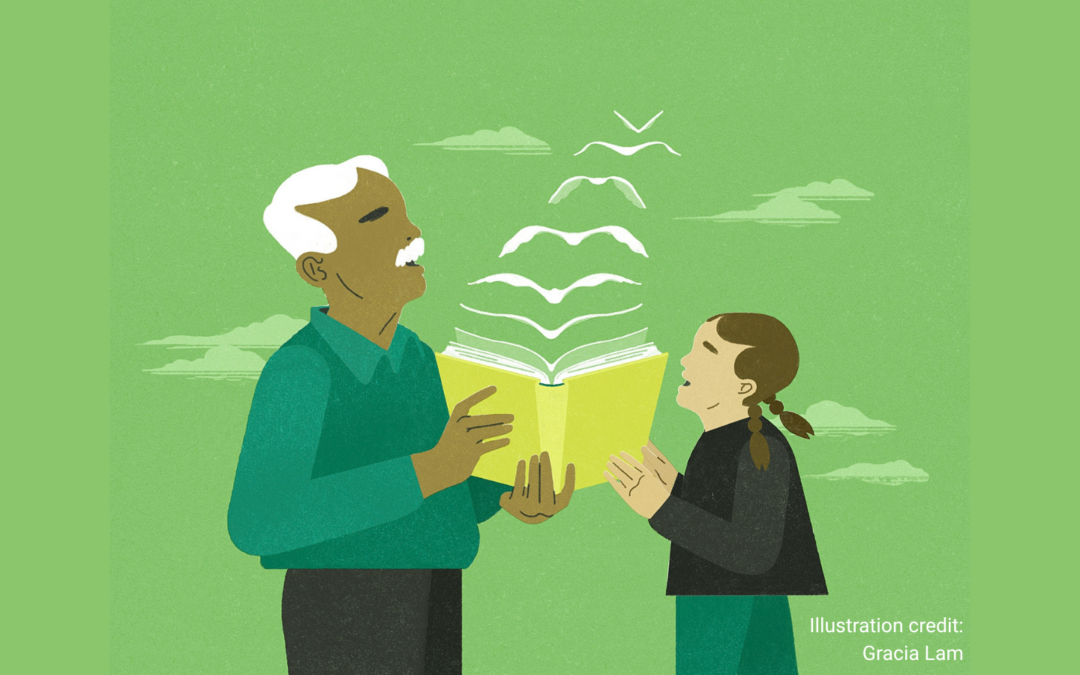
Intergenerational collaboration starts with our ability to be in genuine dialogue with one another. Use these questions to have a meaningful conversation with someone you’re just getting to know or someone you’d like to know better. Listen well and be vulnerable.The...
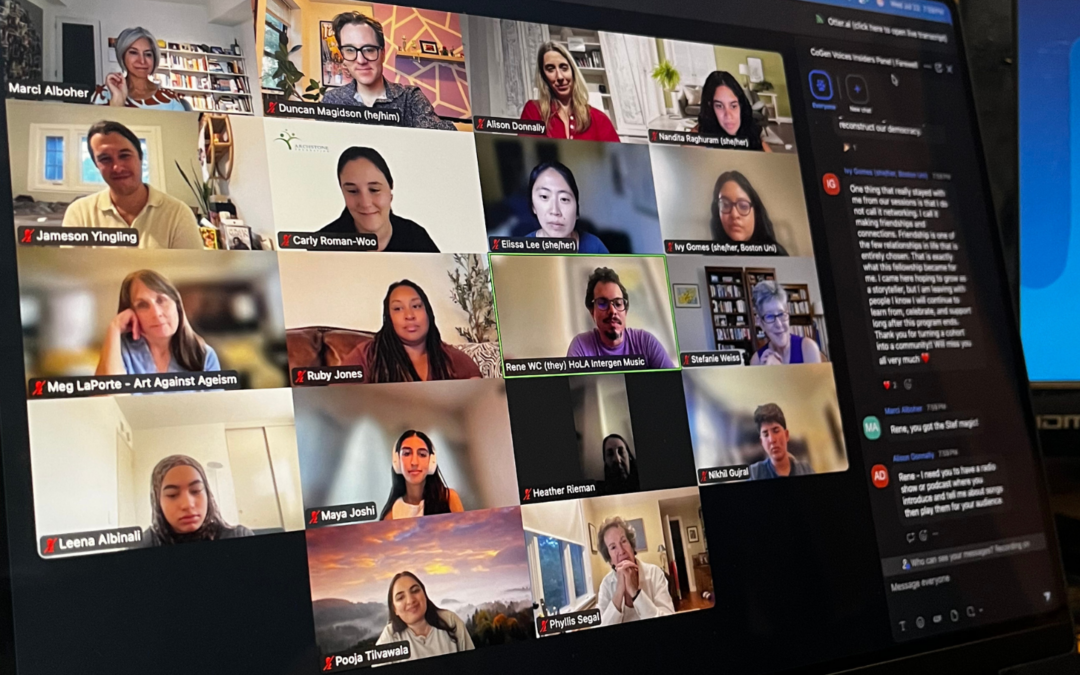
When we first began planning the CoGen Voices Fellowship, we knew we'd face a few challenges. The group of 21 community changemakers was intentionally diverse — by age (15 to 81!), race, location, work, experience, and more. We'd have to meet many different needs and...
At CoGenerate, we believe in the power of cogeneration: a strategy to bring older and younger people together to forge bonds across differences, combat polarization and ageism, and help solve today’s toughest problems. If you’re involved or interested in cogeneration,...
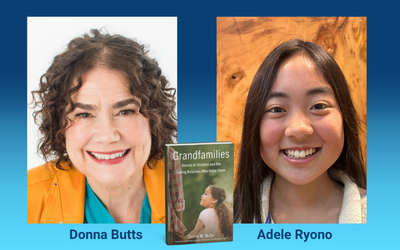
https://youtu.be/OedAsZVTm9U?si=q20TIH8zuwPEhE0a Today in the US, more than 2.4 million children whose parents are unable to care for them live in grandfamilies, where they are raised by grandparents or other loved ones. Until recently, their experiences have been all...
Event Recording: Designing Age-Friendly Communities That Connect Generations
Problems like social isolation, the youth mental health epidemic and the caregiving crisis can look like separate emergencies, but they share at least one root cause: communities built to keep generations apart.
Schubert makes the case for age-friendly communities intentionally designed so people across generations can connect, build real safety nets, and develop innovative solutions for today’s pressing challenges together.
I was saying just saying how excited I am for today’s conversation between Dr Cal Halvorsen and Dr Derenda Schubert. And I know a lot of you are excited too, which makes a lot of sense. It was really gratifying to see how many people are excited for this conversation, just like I am, before we get started, I’ll just ask you, if you have questions, please add them to the Q and A that’s going to help us moderate that as we get to the end of the call, it’s going to be a short one today, just a half hour, and I hope you’ll continue using The chat box for comments to connect with other participants, and you’ll see that we are recording the session, so we’ll include that recording in our follow up email. So I just want to quickly say that they have been connected to our work at CoGenerate. Each of them for years. Cal started working with us back in 2008 Derenda has been involved as a public voices. Five. Voices fellow in so many ways, and this book really feels like such an important part of what we talk about when we talk about cogeneration, so I don’t want to extend this any further before passing it over to the two of them to get this conversation started.
Dr. Cal J. Halvorsen
Well, thank you so much, Duncan. It’s a real pleasure to be here, and I am so excited to be here with Dr Derenda Schubert, Derenda and I have known each other for quite some time, but we haven’t had a chance to work together too much, and so I was really excited to get my copy of dere does new book, The Power of a Joyful Village, and to ask her questions about the book and hear her story. So I’m just going to jump right in, if that’s with you.
Dr. Derenda M. Schubert
That sounds great. Cal, I’m so excited to be here too. Look at my smile. It’s so huge,
Dr. Cal J. Halvorsen
Even in the planning for this call we, I mean, we could talk for hours about this hours. And so, you know, one of the things that attracted me to the work that you’ve been doing over the years is I was personally brought into the profession of social work because of my family’s own experience with with foster care and adoption, and my own very strong relationships, not only with my grandparents, but with a lot of older people who have served as mentors to me over my lifetime, and so in the so that’s what’s drawn me to your to your work over the years. And so, you know, looking at your book, even in the forward of your book, you tell a story of your time as a psychologist. When you met a boy who was in the foster care system, you called him Troy in the book and his foster mom, Joy. You also have led Bridge Meadows, an intergenerational community supporting children in foster care for 20 years as a board member and CEO. So could you talk a little about your career and how it inspired you to write this book?
Dr. Derenda M. Schubert
Thanks so much for that, Cal and thanks to your family for what they’ve done for youth who’ve experienced foster care and made them part of your family. That’s a beautiful story. Yes, so I have this beautiful Venn Diagram of growing up intergenerationally with my grandmas and aunts and then and just thinking it was normal. I thought everybody had grandmas and aunts and cousins all around and then I went to work as a psychologist, and was so struck by this family that had created this village around them, and that this woman, she had been a foster parent for years, she had dozens of youth who had experienced this beautiful village that she created, and this child who I met, Troy, he, you know, he had a pretty hard, rough beginning of his life, but then he just got scooped up by Joy’s village. And this is why the book is called that. It’s, it’s in honor of her joyful village that she created. And then fast forward many years, I meet him in the frozen food aisle that is a true part of that story. You have to change the names to protect them, but and he’s just was beaming about how he had a successful career in the military, and thank goodness for Joy, and he was still very connected, and he had family and the safety of it. And then Bridge Meadows, my love. You know, I see every day how the youth are just settling down their mental health. I get to see how parents are breathing because they have support. And then I get to see elders stand strong and tall and have meaning and purpose, and then I realized that foundation of my grandma’s being there was the root for why I believe so much in the power of intergenerational solutions
Dr. Cal J. Halvorsen
Yeah, and even in your book, you talked a little bit, I believe this is about your grandma’s but making pierogies at church.
Dr. Derenda M. Schubert
Yeah, so just, it’s a fun story, but basically, I would go make pierogis with all my extra grandmas once a year and and they were this safety net of grandmas who made sure I was on the right track, although their right track was that I was going to get married, they didn’t understand, because they their, their vision was they had come through Ellis Island to Chicago from Poland, and they just thought, well, that’s the next next thing. She’s going to go to high school. She’s going to get that but then she had to get married. Have a nice family. And I decided to go to college and then go get a PhD. And they were so confused. And so I tell the story how they gave me a scholarship of $500, these beautiful ladies who love me so much, and they were so proud. My grandma had tears in her eyes. And then they would say this, well, she’s a doctor, but, you know, not a real doctor, but she’s still a doctor. We don’t know what that means, yeah. So I see that somebody asked us to talk about what is Bridge Meadows?
Dr. Cal J. Halvorsen
Cal, Oh, that’s great, actually. Could you say what it is.
Dr. Derenda M. Schubert
So Bridge Meadows, we create intentional intergenerational communities to that support children who’ve experienced, who’ve been and families who’ve been impacted by foster care, and then elders who are 55 and older of limited economic means, and we create these beautiful neighborhoods using universal design, so everybody can get around, whether you’re in a walker or a stroller or you’re on your little bike, and then with trauma informed design. So how you if you all came to see Bridge Meadows, you would see a whole lot of windows for a line of sight and just the sense of safety and no dark corners. And it’s beautiful, and it’s intentionally beautiful so that people feel worthy. And we are now up to three Bridge Meadows communities here in Oregon, and our next one is in Tacoma, Washington, breaking ground in April, and then we just have them all down. I five, and we just learned we got a Congressional Award for one of them. So our vision is that, well, Dorenda’s vision is that they’re everywhere, but our boards envision right now, we’re going to stay in the west coast, but we would love to figure out how to help others make Bridge Meadows and and we are so grateful that our friends at Tree House Foundation came ahead of us, and they are five years older than us, celebrating 20 years, and we are celebrating 15 years of our first community being open.
Dr. Cal J. Halvorsen
Oh, that’s absolutely wonderful. And I should say I also do some work with Treehouse Foundation as well. We’re all family. Family, all family, yeah. And so in your book, you had a whole section just kind of that goes through, almost like the history of how different generations have lived together or haven’t lived together. And so how have you seen this change over time? And why have we changed how we live together across the generations?
Dr. Derenda M. Schubert
So many cultures around the world and around the block live intergenerationally, just naturally. It’s part of the family’s DNA. It’s part of the family’s culture. So please, we should. We want to acknowledge that that exists, and that is what we all should be looking to as our inspiration. For those of us in our country who have not lived intergenerational and connected to one another, but so we all, we used to live that way for health and well being and economic well being. And then as highways were built and transportation expanded, and educational opportunities expanded, and jobs expanded, and suburbs came to be. And none of those are bad things, but the consequence was we started pulling away from our family of origin. And also I want to recognize that not all of our families of origin are safe places to be, and so when I say family, please, know everybody I’m talking about your your for birth family and your chosen family. And so we we pulled apart, and then we started doing things like senior centers and child care centers, and we started doing programming for age segregation. And so we thought that was a good idea, right? Because elders like to be with elders, that’s the myth. And then kids like to be with kids, that’s the myth, and it is a myth. They really like to be with each other. I do admit that our elders do appreciate that they have their own apartments and that they can go take a break. So yes, we all need a break from noisy children, but coming together, we learn from each other, and we have each other, and we feel like we have meaning and purpose and we belong. And Marc shared, I know Marc is on this call, Marc shared with me this grandmother effect grandmother have offices where grandmothers are the reason that some communities go on and on, because the grandmas take care of the babies so that the mom can have more children, and so that the community grows and grows. And so we have to just honor those things and recognize that if we live intergenerationally, we have a safety net.
Dr. Cal J. Halvorsen
Yeah, yeah, I completely agree. As someone who grew up just a few blocks from my own grandparents, and I was there all the time, there was something very meaningful to that. And so, you know, since over time, it feels like many of us are living further and further from people of different ages. What are some of the consequences of that, if we call it age segregation, if you will.
Dr. Derenda M. Schubert
Well, the biggest one that our former Surgeon General wrote about was the epidemic of social isolation is that we are pulling in and not having time with one another, just anybody. We’re more likely to pull in and not go out, and we can all know that the pandemic contributed to that. And what’s happening is children’s mental health is increasing. As a psychologist, these numbers of the amount of child mental health needs, they’re huge, like they’re beyond any numbers that any of us psychologists have ever seen before. Now one might wonder, is it because we’re more open to that idea that children need mental health care? Yep, that’s surely a factor. However, I think there are these, the folks with the advent of social media and trying to figure navigate that as a parent for your children and your children trying to navigate that and their social life, we’re ending up in a lot of social isolation, so that’s one of the factors, and then the sense of, Do I belong? And, you know, in the past, we’ve kind of thought that social, social connection and belonging were these just nice, fluffy things. You know, if you got it, it’s nice, but actually they’re crucial and critical to our well being. Our brains are wired, that we are connected and that we have time together, that we lean on each other. That is how our human brains are connected. And so when we’re having this social isolation, there’s stress and anxiety and that’s what we’re seeing in our country. And I know there’s a lot of other reasons why we’re seeing that, but there, but the but for youth, definitely, that’s what’s happening. The loneliest, according to research, the loneliest people in our country right now are young adults.
Dr. Cal J. Halvorsen
Yeah, yeah. That’s true. That’s true. And so one of the solutions to this is intergenerational. Of living, and that is the key focus of your book. And in the middle of your book, you have a ton of examples. You describe things from age friendly communities to Blue Zones to shared sites, university housing for older adults, co housing, and then communities like Bridge Meadows that support families and children experiencing foster care in older adults. And so, you know, some of these models can feel very regimented or difficult to create, and how they come together, and others less so. So, could you talk a little bit about kind of the variety of types of intergenerational living and communities that are out there, and how people can get started, because it seems that there’s a little something for everyone.
Dr. Derenda M. Schubert
Yes, Oh, definitely. And it’s so exciting to see all of the intergenerational programming that’s going on in our country. And it was really important to me to highlight the Eisner Prize winners and fellows, because they’re my friends, and so there’s a lot of stories of those folks doing great work across our country, but I would start with in your family. You know, there’s things we can do in our own family, in our own community, to do intergenerational living. So I know I enjoy cooking with my elders and also storytelling. There’s nothing better than listening to the stories of the elders as kids. And now some people might say, Oh, my kid, my grandkids get bored. Hang in there. They’re listening. Or while you’re driving, just start talking. They’re captive audiences. And then FaceTime. And then ask the youth, you know, what are you worried? What do you what are you into now and come alongside them, you know, go to the soccer game, go to the watch the recital on, you know, the social media, but, and be with the kids so. But I one thing I would say is, could we get rid of the kids table because team? Could we do that? Maybe kids table just for dessert or but, or maybe have the kids table during dinner and Jen, do everybody together for dessert? Because I think we’re I know it’s the big joke like, oh, the kids table. I certainly was at the kids table. But what if we had an everybody together table for most of the holiday meal? Alright, in your neighborhood, get to know your neighbors, like our colleague, Marj Kleinman does Stoop Stories, and in her neighborhood, she sits on the Stoop and people come by and they make friends and and then there’s even an opportunity to have a big boot block party once a year. So that’s pretty exciting there. And then there’s been examples of Lake Saint Ann’s in Milwaukee, Wisconsin, for 30 plus years, they have been doing child care and elder care adjacent to each other, and then during the day, they come together, and the kids have elder friends, and the elders are helping with homework and how nice it is as a parent that you’re dropping your child off to a place that has so much love and care, and you’re only, not only helping your child, but you’re contributing to meaning and purpose for elders. And as time goes on and there’s the sandwich generation, I’m certainly one of those people. You have an elder who needs care, and you have a child that needs care. How nice to go one place you reduce stress. And then, then in communities, I think about, how do we want our communities to look in order to naturally have community, different age groups come together? And so often, there’s a park being designed right in our neighborhood. So comment on how you want the park to be wide enough for strollers and walkers and rollerblades and bikes so that people can be together, have benches so people can sit and not benches like you know, a football field apart, closer together and have lined a site so that parents can sit and engage in conversation with their neighbors and watch the kids at the same time. So I think about, if we put on intergenerational glasses, and think about solutions that are like when you’re doing something, either in your own life or in your neighborhood or in your family or in your community, will start to pour in this natural occurring antidote for social isolation and division in our country.
Dr. Cal J. Halvorsen
Yeah, thank you. When for my final question before we go to kind of Q and A with the participants, is, and you started to touch on this, but how do we go about encouraging intergenerational communities and living like what steps would you recommend taking from seemingly small ones to quite large ones? Because, you know, on today’s webinar, we have people just in their communities who might want to start something. We might have nonprofit leaders. Players, policy makers, like, what would you recommend that we do?
Dr. Derenda M. Schubert
Well, it first starts with awareness. That’s 75% of solving the problem, right? Is you are aware that, oh, yeah, I’m looking around. My friends are all the same age as me. Perhaps I should find a way to engage with people who are different ages than me. You know, join a dance class, join a class. And so I know I talk a lot about elders and kids, but I also want to emphasize elders and young people. And I say elders because that’s what the elders of Bridge Meadows told me to call them. And so I listen, and I think so start with awareness. Talk to somebody a different age of yourself. These are very low bar things. Learn about what’s going on, what’s the challenges for people who are different ages than you right now, our elders are worried about Social Security. You’re in your 20s and what’s that about? Learn about that you’re in your 60s, and AI is a thing we’ll learn about that from somebody who’s talented about that and may be younger than you. So look for these ways to broaden your own circle to be more intergenerational. That’s the low bar. And then I truly say, if you want to live that way, there are plenty of places around the country that are doing shared sites where youth are welcomed into senior living communities. We have that at Judson Manor in Ohio, where the youth provide the of the conservatory provide a concert every month. But what I love now is the elders and the students are coming together to do a concert. How beautiful is that? And then, if you are into music, and you’re in the LA area, there’s the intergenerational symphony. So I think it’s first Cal my the basic thing, I would say, is put on the intergenerational classes look around your life and say, How could I do that with two people different than my own age?
Dr. Cal J. Halvorsen
Yeah, yeah. The music comment you said at the end also reminded me, even as a kid, when I played piano, I didn’t give my recitals at random places. My piano teacher and I worked together with my grandmother, and I gave my recitals at the local retirement communities. Then people came to the recitals who actually wanted to come. So, yes.
Dr. Derenda M. Schubert
Yeah, oh, that’s beautiful. And you know, if you really want to find a specific program, our friends at Generations United, for decades have been collecting information about intergenerational programming across our country. So it’s a beautiful website to give a try
Dr. Cal J. Halvorsen
Wonderful and what this has gone fast. I’m going to pass it back over to Duncan to help with Q and A.
Duncan Magidson
Thank you so much, Cal. Let’s get started, because I think there are two questions here that really dovetail. Betsy is asking about the economics of Bridge Meadows, and Susan was asking about ideas for funding new communities. And I’m curious if you could talk a little bit more about the mechanisms by which you make Bridge Meadows work, and how that can help people who are interested in starting their own intergenerational communities.
Dr. Derenda M. Schubert
So I’m going to start at the very high level, because it’s a deeper dive discussion. And invite folks. We have a quarterly info session at Bridge Meadows called Bridge meadows 101, and you are welcome to come to that. And I’ll tell I talk more deeply. But basically, we to build them. We seek public financing for low income housing tax credits, and then municipalities have usually have money, and the states have money, and we it’s a mosaic, actually. It’s called the stack in the world of finance. But I call it a mosaic because some pieces are this big and some pieces are this much money, and so, so it’s a public money and then we get some philanthropy and we build them. And I make that sound really simple, and it’s incredibly complex. So come on over and we’ll tell you a little bit more deeper dive.
Duncan Magidson
And if anyone in the chat, I feel like might have a link to that, I can also include it in the follow up email, derenda, so that people can have more information.
Dr. Derenda M. Schubert
And can I ask? Yes, I see somebody asking when the next one is, and I don’t have at the top of my head, but we’ll, we’ll tell you Duncan, and you can share with everybody
Dr. Cal J. Halvorsen
And one of my follow up questions to your response, Brenda, is, my understanding is even some of the funding mechanisms themselves, in a sense, are age segregated. How have you dealt with that to fund an overall high quality program for everyone who lives in your community?
Dr. Derenda M. Schubert
So we have relied on the Older Americans Act to help guide us. So, there’s been legislation that can help guide us to thread the needle of making intergenerational communities. And so we end up under senior housing, and then we can have 20% of our community be under the age of 55 so. Um, that’s getting more difficult to do, as we have families who are being reunited, coming to live at Bridge Meadows, which is a beautiful part of our story. And so we are having to find other ways to do this so that we do not violate fair housing laws. And so stay tuned, everybody. It’s a lot of opinions from lawyers, and Eric and I are going to do this together, figuring out but so that’s what we’ve done so far, and I’m happy to share that in the 101, but thanks for asking Cal.
Duncan Magidson
I think there’s a fascinating question here from Lucy, who asks, How do you think about the how do you think intergenerational living connects to the fact of the US. And I think pretty much every country is aging overall, and we’re seeing more and more older people and fewer younger people.
Dr. Derenda M. Schubert
Well, all the more reason to do intergenerational to really emphasize intergenerational solutions, because we have elders who have so much time and wisdom to share with the younger generation. And we have five generations in the workforce right now, and there’s a lot of research that talks about, how do you navigate that? And so I always think about our elders as an asset. They are not a burden. They’re an asset. And instead of, you know the retirement age was created before we added 30 years of longevity. So the retirement age right now is a myth, right? So we have to think about just because you’ve hit a certain age doesn’t mean you’re done. It means you have so much more to give. And just because you’re little and young, you don’t your opinion doesn’t matter. That’s not true. You matter. And I see it every day at Bridge Meadows, where all of these, these, the older folks and the younger folks are living with meaning and purpose. So it to answer you directly. It’s like, fold everybody in.
Duncan Magidson
We’ve got a couple of questions here about just best practices. What are the must do is when it comes to intergenerational living. And I’m curious if you have any anything you’ve learned from Bridge Meadows or the other programs and things you’ve observed on the world that really make these communities successful.
Dr. Derenda M. Schubert
The must be is that there are community agreements where everybody understands that everybody matters, and we are here to support one another, I think in the Bridge Meadows communities and we have a therapist role who helps knit those communities together. I think when you are designing an intergenerational program where people might come for the day or an hour or two and leave is you sit down and you create the community agreements of how we’re going to be together. And beautiful example of that is at the road, and my friend Marc Marty has a program where they bring together youth, young adults or older teenagers and elders, and they talk about a civic conversation. And each of them first goes through a training about how we’re going to be active listeners and be respectful. And then they come together and do the same training. And then they have they talk about really hard topics in our country, our friends at United Neighborhoods. Terry Calver has created a whole, a whole document about how to do intergenerational programming and with much more guidance and much more detail. But first, respect.
Duncan Magidson
Thank you, Derenda, I mean, I think that’s such a good place to start. I want to do just one more question here before we wrap up, which is from George, how do we combat some of the stigma we see against intergenerational households? And I think this is true, George, you point out this is especially true in the US, in particular, against children who continue to live with their parents after they turn 18.
Dr. Derenda M. Schubert
Thank you for asking me that question, George, because I was just talking with a group of leaders who all grew up intergenerationally, and they asked me the very same question, what do we do? Dorenda, what do we do? I think that we speak out about the benefits, we use our voice and talk about the benefits, and this is how we all grew up. My husband lived at his mom and dad’s house until the day we got married, so we just have to talk about the benefits. And actually, I think right now, we are the youth can’t go buy get a leave college and go buy a house or go live in an apartment that they can afford. And so the economy is actually forcing us. We saw bumps in intergenerational living during the recession and during the pandemic, and they’ve continued in the trend has continued in living to coming to live together after the pandemic. And so George, what I’m going to say to you is we all are ambassadors for the power of intergenerational living, and we just we have to use our. Voice, and after a while, people are going to be jealous that they don’t have what we have, because I also live intergenerational right now, but I truly, I don’t mean to be silly, but please, it’s our voice that is what’s going to it’s going to take and our story.
Duncan Magidson
Thank you so much Derenda, and thank you so much Cal for being the perfect conversation partner, I just launched a poll here asking if this this session inspired you to include more older and younger people in your life. Before you go, I want to make sure everyone knows that the name of Brenda’s book is The Power of a Joyful Village. How intergenerational solutions and age-friendly communities can heal us all. Antoinette just put a link to the bookshop.org profile. Cal is holding it up. I will also include here, I’ve got links at Barnes and Noble and Amazon, and we’ll include all of that in our follow up email too. So thank you one more time, and thank you to everyone who came to join us today. And I hope you have a great rest of your day.
Dr. Derenda M. Schubert
Thank you everybody for being here and what you’re doing every day.
To provide the best experiences, we use technologies like cookies to store and/or access device information. Consenting to these technologies will allow us to process data such as browsing behavior or unique IDs on this site. Not consenting or withdrawing consent, may adversely affect certain features and functions.
Functional
Always active
The technical storage or access is strictly necessary for the legitimate purpose of enabling the use of a specific service explicitly requested by the subscriber or user, or for the sole purpose of carrying out the transmission of a communication over an electronic communications network.
Preferences
The technical storage or access is necessary for the legitimate purpose of storing preferences that are not requested by the subscriber or user.
Statistics
The technical storage or access that is used exclusively for statistical purposes.The technical storage or access that is used exclusively for anonymous statistical purposes. Without a subpoena, voluntary compliance on the part of your Internet Service Provider, or additional records from a third party, information stored or retrieved for this purpose alone cannot usually be used to identify you.
Marketing
The technical storage or access is required to create user profiles to send advertising, or to track the user on a website or across several websites for similar marketing purposes.
To provide the best experiences, we use technologies like cookies to store and/or access device information. Consenting to these technologies will allow us to process data such as browsing behavior or unique IDs on this site. Not consenting or withdrawing consent, may adversely affect certain features and functions.
Functional
Always active
The technical storage or access is strictly necessary for the legitimate purpose of enabling the use of a specific service explicitly requested by the subscriber or user, or for the sole purpose of carrying out the transmission of a communication over an electronic communications network.
Preferences
The technical storage or access is necessary for the legitimate purpose of storing preferences that are not requested by the subscriber or user.
Statistics
The technical storage or access that is used exclusively for statistical purposes.The technical storage or access that is used exclusively for anonymous statistical purposes. Without a subpoena, voluntary compliance on the part of your Internet Service Provider, or additional records from a third party, information stored or retrieved for this purpose alone cannot usually be used to identify you.
Marketing
The technical storage or access is required to create user profiles to send advertising, or to track the user on a website or across several websites for similar marketing purposes.