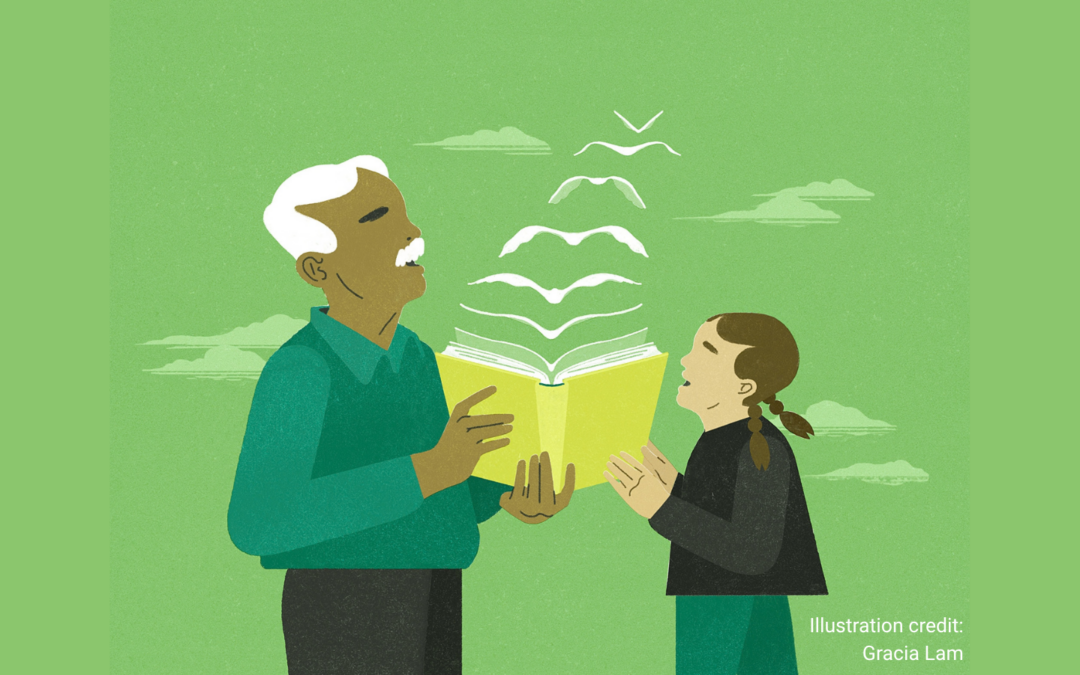
Intergenerational collaboration starts with our ability to be in genuine dialogue with one another. Use these questions to have a meaningful conversation with someone you’re just getting to know or someone you’d like to know better. Listen well and be vulnerable.The...
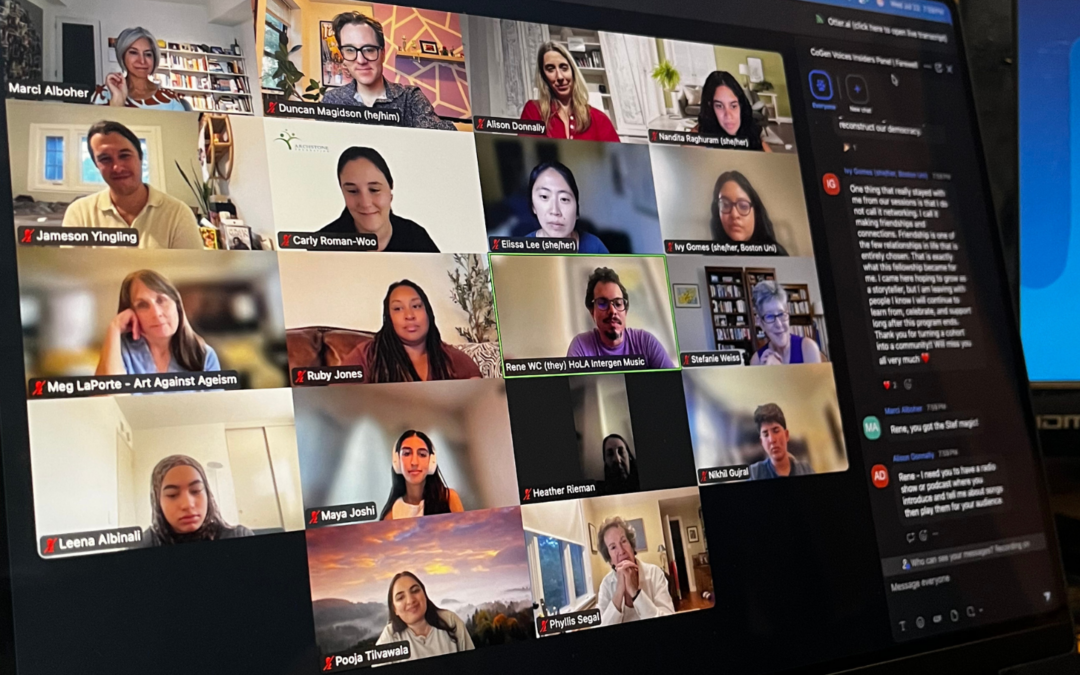
When we first began planning the CoGen Voices Fellowship, we knew we'd face a few challenges. The group of 21 community changemakers was intentionally diverse — by age (15 to 81!), race, location, work, experience, and more. We'd have to meet many different needs and...
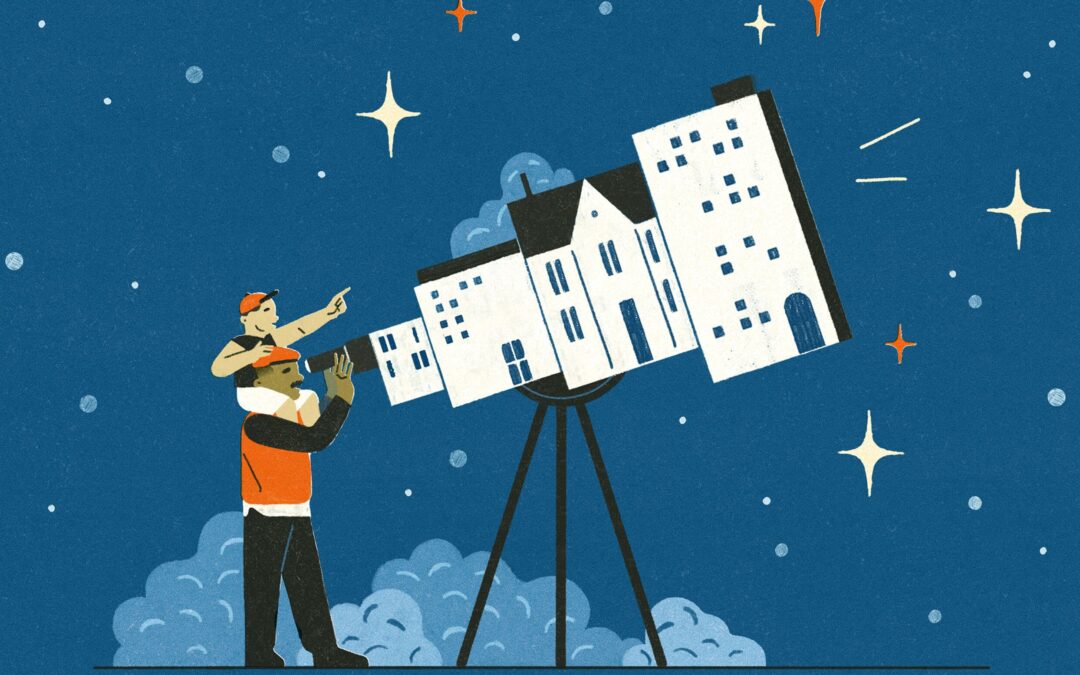
At CoGenerate, we believe in the power of cogeneration: a strategy to bring older and younger people together to forge bonds across differences, combat polarization and ageism, and help solve today’s toughest problems. If you’re involved or interested in cogeneration,...
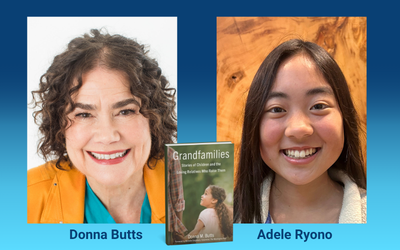
https://youtu.be/OedAsZVTm9U?si=q20TIH8zuwPEhE0a Today in the US, more than 2.4 million children whose parents are unable to care for them live in grandfamilies, where they are raised by grandparents or other loved ones. Until recently, their experiences have been all...
What can we learn about ourselves and each other when we take the time to listen to stories across generations, cultures, and borders? For author Ebony Walden, an eight-month journey through 15 countries became an opportunity to explore the power of storytelling, human connection, and the wisdom we can find in people of all ages.
In this conversation, Ebony Walden and Ruby Jones discuss the experiences behind Ebony’s book, Where I’m From: A Poetic Journey Across Five Continents, how growing up in an intergenerational family shaped her curiosity about others, and why sharing our stories can help bridge differences and build stronger communities.
Speakers:
Ebony Walden, author of Where I’m From: A Poetic Journey Across Five Continents and former Encore Public Voices Fellow.
Ruby Jones, journalist, storyteller, founder of Empower Media Exchange, and CoGen Voices Fellow.
Hello, everyone. Thank you so much for being here. As everyone continues to trickle in, I’d love to know where you’re all zooming in from. So please say hi in the chat. Let us know where you’re watching from. I’m calling in from Denver, Colorado. So shout out to any other Coloradans here, and welcome to everyone joining us from all over. All right, I’m excited to get started. Today’s conversation is being hosted by CoGenerate, an organization that’s on a mission to bring generations together to solve problems, bridge divides, and co-create the future. My name is Ruby Jones, and I’m a journalist, a storyteller, and the founder of Empower Media Exchange, which is a media-based nonprofit that supports the local news ecosystem by training the next generation of storytellers and helping people of all ages discover the power of their voices. I’m also a recent CoGen Voices fellow and a huge fan of Cogenerates work. In addition to storytelling, one of my favorite pastimes and passions is travel. So I’m absolutely thrilled to take part in this conversation with Ebony Walden, a former Encore Public Voices Fellow, a phenomenal storyteller and the author of Where I’m From: A Poetic Journey Across Five Continents. One of the things I appreciate so much about storytelling is how it really allows us to learn from people whose lives and experiences are different from our own. Ebony traveled around the world for eight months, and she got to meet and spend time with people from all walks of life. I’m so glad that she decided to share that experience in this soulful travel memoir that details her exploration across 15 countries. Where I’m from introduces us to the people, the relationships, and the lessons she learned along the way. It’s a beautiful story and a reminder that we have so much to learn from each other across generations, cultures, and borders. Ebony, I’m so glad to be having this conversation. Welcome.
Ebony Walden
Thank you, thank you, thank you so much, Ruben. I’m so excited to be talking with you. I think it’s going to be super fun.
Ruby Jones
Me too. Now, before we dive in with some questions about your incredible journey, I do want to let everyone know that we’ll have some time towards the end of the session for audience Q and A. So, throughout the Zoom, feel free to add your questions in the Q and A box, and we’ll get to them before we close. All right, Ebony. Before you begin, here we are. You made it. Now, before you began your journey around the world, you hosted an open mic poetry session that brought together voices across races and generations and professions. I thought it was the perfect way to embark on just the special adventure, especially since you invited your own family, which includes people from ages eight to 62, to write these “Where I’m From” poems together. Why was it important to begin your journey in this space, where people from different backgrounds and generations could share their stories?
Ebony Walden
Yeah, I think so. As you said, like the year before, I went on my around the world trip. So it’s 2009. I went on my around the world trip, and 2010 I hosted an open mic, and it was really one of the first places that I had seen. So I was living in Charlottesville at the time. So I think our country and our spaces are very segregated, like on on lines of age, on lines of race, socioeconomic status. So that was the first time I looked out into the audience, and I saw people of of black folks, white folks, all different ages, different folks that like lived in the low-income community that I volunteered and lived in at the time, and I was working for the city, so folks on city council and my poet, and and that was just a beautiful space, and I love that I cultivated that. So when I got the idea from the around the world trip, it was like I want to. Of course, I’m going around the world, but I want to be about creating and recreating those spaces across lines of culture, of cross ages, across just the differences that usually divide us. Because I think hearing each other’s stories makes us more human. It really opens up our understanding, our sim our sense of empathy, and you know some of the things I learned from just doing poetry around the world. We laugh and we generally cry at the same things, and it’s we have to practice and create spaces that practice the fact that we are more alike than we are different. And so I think you have to practice those things that. Home. So before I went and did where I’m from phones with people around the world, I hosted an open mic, which was also a fundraiser, is at the beginning part of my book with my family. And so I had my niece, who was eight at the time, and then my grandmother, who was probably about maybe she was like like 62 or 63. And so that was lovely because even in the midst of that, we have generations of where we’re from. Everything from our favorite foods to things that we that that were around and grew up in our neighborhoods and our joys and our tragedies. And you get to see that. So I did it. My mom did it. My niece did it, and my grandmother did it. So you just imagine just the different flavor that you’re getting across time, the same family of women and the lineage you get. So I just thought it was just a beautiful way for us to see each other, and I think that people are hungering to share their story, and I think that we all need to learn how to be witness to witnesses to each other’s story, and that poem and that open mic were really ways for me to practice that and to hold space for that.
Ruby Jones
That’s a wonderful answer. I love hearing you say that the where I’m from and hearing about everyone’s experiences and backgrounds, it reminds us that we’re all human, right? And I think now is a really good time to be reminded that we’re all human. But I also love that you opened this way. You made everybody a little bit more comfortable understanding the journey that you were about to go on. You know, because you had to meet a lot of different people. Yeah, I think storytelling. It’s you know I love that you hear people’s stories, but that also involves asking them their stories and listening to them and making people feel heard. So, you know, throughout your travels, you volunteered with a lot of children and young people. You immersed yourself in their cultures and you facilitated this “where I’m from” poetry and workshops surrounding it, and the people that you worked with were ages 11 to again around 63, or just you know around that age range. How did these experiences shape your understanding of culture, of service, and the power of storytelling Across generations,
Ebony Walden
yeah, I think I love that, and I think it’s rooted in learning how to be a witness, which I think you know we need to do. And I love that, almost like a like like ethnographer. I want to go in, I want to listen because sometimes we know facts of places, but you don’t know a place until the know you you know the story of someone from that place, and it’s not through the eyes of someone just that’s 11 or or just in their 60s. It’s like all in between. So how could I get a vantage point of humanity across time, across generations, across cultures. The the three lenses that I took with me as I went on my trip were: where can I find the beauty in the world? And of that, of course, that the the biggest beauty that I found was in people. Where could I find the brokenness? And could I find beauty in the brokenness, right? And I think in people’s stories, right? You you found all of those things, but you have to get a different vantage point from you know what that means. And I spend a lot of my time with children, so if you know me, I do not have any children? I’m not a kid person. God bless people who do. They’re doing God’s work, but like that. And then I sat at the. It was like, and then I sat at the feet of people in their 20s, their 30s, their 40s, their 50s, and 60s. And then just the richness that you get and perspective, right? The children helped me learn how to play again. You know, I’m serious. I’m trying to like. I have the mind of a journalist going around and picking up. And they were like, “Girl, put that down. We’re not even doing homework. We’re gonna dance.” Like the the children in India was like, “Okay, no homework. A song came on, and we’re gonna dance.” And then I’m talking to someone who’s in their 50s that survived the earthquake in their country and the changing in their country, and someone else who can tell the story of their particular community and changed over time, and have experienced things that younger people had experienced: the loss of her husband, her children growing up, and children being born. But so I also get the life cycle that is helpful to really understand that you don’t have to be in it to say, okay, this is just a part of life. What I could be looking forward at, and for me is how can I not take myself so seriously and have a little bit of play and levity, and from a younger person’s vantage point, but. Also, how can I gain the wisdom of age of somebody who has kind of like seniority and can look back and impart things? And those two, and I was in between because I was in my 30s. And so, hold all of that wisdom of youth, the wisdom of middle age, but also the the wisdom of elderhood. And I think that if we can begin to hold those things, I think we will be better human. I think ultimately, if I think about the trajectory of the trip, in the back of my book are 15 lessons. I think ultimately the book taught me how to be a better human being. Right. So before I left, I was bigger, better, faster, ambition, but I had to. I don’t know what part is the yin and what part is the yang. I had to grow this other part of myself that’s about empathy, that’s about connection, that’s about I don’t have to be the same age, race. We don’t have to even speak the same language. But I know how to connect with you as a human being, and I know how to sit and and be a witness to the beauty that is enfolded, that is unfolding in you, that has unfolded, and hopefully, you know, see the buzz of the things that will unfold. So that was just such an honor that I was able to experience that.
Ruby Jones
Can I just say that I so appreciate you referring to wisdom at every age. We, when we talk about intergenerational communication and relationships, you often hear people say the wisdom of the older ages, and you don’t really hear that wisdom being assigned to a child who wants to just jump rope or someone who is kind of like bridging the gap, maybe they have one foot in their youth, but one foot in their adulthood, and they’re trying to figure it out. There’s so much inherent wisdom that comes from all of that. So I love that. I also love, and someone in the chat also commented on your beauty and the brokenness. So I think it is not refutable that you are a poet. That’s a very poetic way to put to put that. So that’s great. Now you share a lot of looks at your early life in your book and your experiences growing up in an intergenerational household. Looking back, how did those relationships shape the person you became and the work that you create today,
Ebony Walden
yeah. So I backstory for folks. So I grew up in both of my grandmother’s houses were like kind of where I lived. So my mom’s mom’ house, and then I had some time spent with my dad’s mom, and then all of my grandmothers on both sides’ sisters were around, aunts, uncles, cousins, and it was just like we were all there together. I think it made me inherently curious about who these people are. So there’s a point in the book. I think I’m talking with my aunt Eunice, and I’m asking her all of these questions about her life, about her past, about she didn’t have. She wasn’t married and didn’t have any children. I later go on to like write an article about how she was a motto for me that it is okay and you can have a beautiful life, but I was always sitting at the feed of older people at like my grandmother be like get out of here girl with all of these questions. I’ve interviewed my grandparents and I just love because they can take you back to another time. Just the fact that they were somebody before I knew them, and and so I think I began to have this curiosity. And then all of my grandparents came to New York as part of the second wave of the Great Migration in the 50s, where half of all Black folks from the South moved north in some way, shape, form, or fashion, so they literally had a life geographically that was different from my life, and I was always curious about that journey. And I think it was like the one of the largest in-country human migrations in history, this like 7 million people moved up north, and so I always wanted to understand who these people were. So I was peppering them with with questions because I was trying. And then you see that throughout the book, me peppering life, peppering people with questions, and so I think it gave me a vantage point. It gave me inquisitiveness, but it also gave me this. I didn’t think that. Now, no, this is funny. You might appreciate. You know, little kids were like supposed to be seen and not heard. If you’re like a black folks from a certain generation, so you always like at the edge of the door. Folks are playing card. They’re having adult parties and adult conversations. So I was just like, “What are they doing in there?” But I love this kind of like salad bowl of a life that I had. That we’re always around, and they were being full human beings in front of us, even though they tried to shoo us away. And so I think that that made me curious about humanity, curious about people’s past, but also informed by their wisdom. So my younger sister is 10 years younger than than me, and me and my older sister grew up around all of these older folks. So and like immersed in it. Like there’s a part of me that’s a little country black girl, and so we’re always using this language. So if you’re doing something like you’re having like a revelry time, you’re like, oh, you know, this person is living the life of Riley. And then my sister says, well, who is Riley? And I think that’s a question. That’s funny. My grandmothers used to say that. So I looked up Riley. Riley is like the life of Riley is like this film from the mid 1900s where somebody’s just like traipsing around and like living in revelry. So I have all of these sayings, all of these like I love Southern food because even though I was from New York and grew up there, that there’s this connection. So a part of my heart and soul is curious, is just rooted in this wisdom and and rooted in so many of these black idioms, and culture and sayings from the south. And I think that made me inherently so. In the where I’m from home, you get people’s sayings, you get people’s foods, you get staples of things in their neighborhood, whether they live in the city, the suburbs, or the country. And those things were fundamentally evident in my childhood, and so it made me just really curious about how those show up in other people’s lives.
Ruby Jones
You know, the fact that you interviewed your grandparents is just so cool. I I love when people reach back for that wisdom, and you’re right. You know, growing up in the era of you, kids are seen and not heard. You know, sometimes I, I kind of want to bring that into my own life. That’s not you know a little bit of wisdom
Ebony Walden
in that, but you know, we gotta have a little balance.
Ruby Jones
Yeah, but you do lose a lot of wisdom that way, and so it’s it’s wonderful that you, growing up in that environment, recognize like, hey, I want to ask these questions that I didn’t get a chance to ask when I was
Ebony Walden
young.
Ruby Jones
And you know, when we talk about intergenerational connection and storytelling, you’re not new to this. So your projects like the Richmond Racial Equity Essays, there’s contributors from 20s to 80s, and then the Black Beyond Borders podcast features conversations with people across generations and borders. So, through all of that, what have you learned about the ways in which conversations about identity and race and community change deepen when the dialog happens across generations like that?
Ebony Walden
I think it makes it a rich dialog, right? So a lot of my work in general is around racial equity and diversity, equity, inclusion, and not surprisingly, having conversations across borders and difference. Which I think this my trip, my life informed, but very much my trip informed. And I was like, like you have to get the spectrum of people. You got to get like, cause how young folks think about things is very different. Of like that 20 something year old and that 80 something year old, I know them both and they know each other, but they have they have a very different perspective and different mechanisms. And I think that there’s something you look at movements that have moved a country, they’re usually fueled by young folks, right? But I think that we sometimes forget the wisdom of those who have gone before us and can teach us something. It may be different, right? Our strategy, but how can we find the threads of wisdom and have those voices in conversation with one another? Because we all live in our city, this world. So that was really, really always important to me because I like. Oh, and I’m like I turn 46 next week, so I’m starting to say young people. I’m like, oh Lord, these young people. But but I love that. Like I needed something done, and I was I was said to my niece, I said, “Girl, I do not understand. Please,” and she was like, “Doop doop doop doop,” and I was like, “Thank you, right? I don’t understand.” And she broke it down, and I was like, “Girl, I need some new music because I’m still stuck in the ’90s.” And she’s like, “Do do do do do.” And then I visited my friend on a book tour, and she has all of these albums from like from the probably the they’re her dads from like the 40s to let’s say the 80s and they’re just sitting and listening to that music. I just came back from Mississippi and Tennessee, so we’re listening to the blues, right? And that is that’ll that’ll shape your soul, right? So I think all of these experience have wisdom in it to shape our souls with at whatever point, right? If you are on the older spectrum, there’s so much that you can learn. I was just like, I can’t keep. Please help me. Please teach me, right? And then you have wisdom, and I think the the the beauty of middle. Age right is that you’re smack dab in the middle, and you can you can inform your latter years by the wisdom, but you can also still be, and we’re all still growing and changing. But I think that it’s a dialog that we need, just like we need it across ages and races. And you don’t get like when I sit down with folks that are older with me, I feel like there is just a wisdom and a patience. And then like younger folks are like just more restless. I’m probably somewhere in between, in between that. But I think we need both. It’s like yin and the yang. We can’t just be over here all the time. We can’t be over here all the time. So I think that there’s a balance, and when when you have that in the room, studies have shown that when you have a diversity of people, thought, age, perspective in the room, your outcomes and your impact are gonna are gonna be more. So so my Richmond racial equity essays was basically, what’s our vision for Richmond and how do we get there? How are we going to have a vision if we don’t have everybody as part of that vision? And Black Beyond Borders is what does it mean to be moving through the world as a black person abroad? And so I want different perspectives. Somebody who just moved to Segal is you know in their 30s, 40s, and then somebody who’s in their 70s that says I’ve been living here for 25 years. Here’s what I know, right? And so that that just a richness, and I think teasing that out is part of my. I feel like it’s part of my calling.
Ruby Jones
That’s so insightful. I I could sit here and ask you questions all day. Honestly, I did promise the audience that we’re going to get to some of their questions. So a reminder to everyone watching: if you have a question for Ebony, please add it to the Q and A. And we do have a wonderful question. I can’t wait to hear your answer. Deborah asks, “What are the characteristics of a good witness?”
Ebony Walden
Oh, that’s rich.
Ruby Jones
Good, yeah.
Ebony Walden
Ah, so I think you have to have presence, right? I can’t. When you’re witnessing, you get you you have full body attention. You got to pay attention with your mind. You have to pay attention with your body. You got to lean in your soul. So I think you you can’t be all like over the place in a grounded way. So I think presence is number one to be present with the person that you are sitting. I think curiosity. The now the the where I’m from kind of gets in people’s business. You have to talk about like your joys and tragedies. I don’t really the first one I did. I was like, girl, I’m in over my head. What am I doing, right? But but but a good witness. I didn’t have to do anything. I had to sit there, create the space, ask a follow up question, and sometimes just let the person finish and pick up where they wanted to. So I think a spirit of curiosity to ask the question that I think what I learned from the trip is people want to be seen and they want to be heard, but a lot of times we don’t give them the opportunity to do that because we think we know them, or we we’re just think everybody’s going to be like all self revelatory because why you’re not going to reveal something if you don’t know. So I think curiosity, presence. I think you have to have a some level of spirituality because you’re witnessing the the heart and soul of a person. So you have to be connected. I think with yourself, with your own heart. So you need some emotional intelligence, and I think that connects to presence. But like it’s like a three-way connection: your own heart, the creator, and the story of the person. Because I believe everybody’s made in the image of God, so you’re witnessing the beauty of this unfolding human being in front of you. So I think you have it doesn’t have to look religiously, but some level of there is something that is holding both of us together in this space, and you need space. What does that mean? It could be mental space, emotional space. It could be actually the room, the space in which you hold that. I think is really, really important.
Ruby Jones
Well, that’s a great answer, and you know, you touched on like earlier. You think you know a person, but until you actually hear their story and kind of get those background details, what do you really know about them and what makes them human? You know, along the that line, Patty asks, “What was the methodology used to capture the Where I’m From poems from people?”
Ebony Walden
Yeah, so Where I’m from, it’s a seven-line script poem, and if you buy the book, it’s in the back. Or if you go on my website, ebony www.ebonywelden.com, it’s there. It’s seven lines. Another poet gave it to me. It’s usually it’s not uncommon. People do it in schools and like activities, and it’s like names of people in your family, joys, tragedies, food. Thoughts like seven different things, and then it’s a what is it called anaphoric poem. So you repeat where I’m from over and over with those answers. So in the book, I do interview style, right? Because these are people across languages. So I don’t just want them to fill it out. It’s just like me interviewing them. I want them to tell me their story around it. So I I ask them these questions, or they write it down, and then we move through it. So I’m like, hey, what’s that? Or what’s this? Or or tell me about that. So it’s very much like a conversation, and then I get them to stand up and recite it. And some more than often than not, I capture that on video, so it was a whole kind of like process, and it was always just me and that person, unless I was doing. I did some workshops with them. It’s always me, so it was this really intimate experience. Probably took about an hour or so, or or would continue, where the the person really gave me a piece of themselves, a piece of their lives and story, and I was writing down. I was asking follow up questions. I was the person behind the camera, which is kind of funny because I became the person both behind in front of the camera in my my current life. So it was kind of prophetic in that way.
Ruby Jones
I just really wish that we had more time. We are coming to the end of this already, which I cannot believe. Patty did ask one more question, so I’m going to give you a lightning round question.
Ebony Walden
Okay, let me
Ruby Jones
interview one person at a time or a group of people at once for where I’m from. Poems.
Ebony Walden
So the poems are usually one person at a time. When I did a couple poetry workshops with youth around the world. Like, and you’ll see in the book, I did a poetry workshop with kids in Kenya and some other places. But it was usually one on one, so I do it with about 15 people around the world. I think 12 of those are in the book, including you get mine at the end and you get my mother’s at the beginning at the open mic for my family, so you kind of have kind of my family where I’m from around the world, and then you get my where I’m from from home at the end, but usually one on one.
Ruby Jones
And they’re so wonderful to read, Ebony. Thank you so much for your willingness to share so much of your experiences and your life with us. I really appreciate you joining
Ebony Walden
us today. Thank you.
Ruby Jones
Yeah. Now, before everyone leaves, please answer this one-question poll asking if today’s conversation inspired you to include more older and younger people in your life. And I encourage everyone watching to purchase a copy of Ebony’s book, Where I’m from, a poetic journey across five continents. You’ll find a link in the chat, and you’ll also receive more information about the memoir in a follow-up email. I did see a question someone was asking if you’ll get this conversation, and you will. I’d even go a step further and encourage everyone to look for ways to spark connection with people from different places or generations, whether that’s through travel or just engaging in conversation with someone new. I appreciate you all for tuning in, and thank you, thank you for your ongoing support of CoGenerate. And I hope you have a very wonderful day.
To provide the best experiences, we use technologies like cookies to store and/or access device information. Consenting to these technologies will allow us to process data such as browsing behavior or unique IDs on this site. Not consenting or withdrawing consent, may adversely affect certain features and functions.
Functional
Always active
The technical storage or access is strictly necessary for the legitimate purpose of enabling the use of a specific service explicitly requested by the subscriber or user, or for the sole purpose of carrying out the transmission of a communication over an electronic communications network.
Preferences
The technical storage or access is necessary for the legitimate purpose of storing preferences that are not requested by the subscriber or user.
Statistics
The technical storage or access that is used exclusively for statistical purposes.The technical storage or access that is used exclusively for anonymous statistical purposes. Without a subpoena, voluntary compliance on the part of your Internet Service Provider, or additional records from a third party, information stored or retrieved for this purpose alone cannot usually be used to identify you.
Marketing
The technical storage or access is required to create user profiles to send advertising, or to track the user on a website or across several websites for similar marketing purposes.