As colleagues from different generations (X and millennial), Marci Alboher and Duncan Magidson have been leading talks and workshops sharing their insights about working across generations. As they plan, they often text furiously, sharing ideas and reflections. In...
https://youtu.be/Ukh_wa9eXJI What if higher education worked for all ages and stages of life? From career preparation and mid-career retraining to post-career learning and renewal, the “Life Course University” offers a new framework for rethinking higher education to...
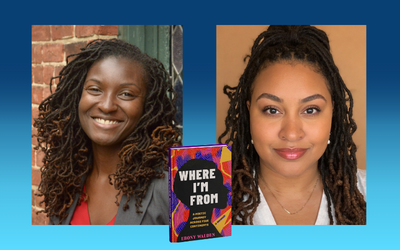
https://youtu.be/V1-_uDN4E9M What can we learn about ourselves and each other when we take the time to listen to stories across generations, cultures, and borders? For author Ebony Walden, an eight-month journey through 15 countries became an opportunity to explore...
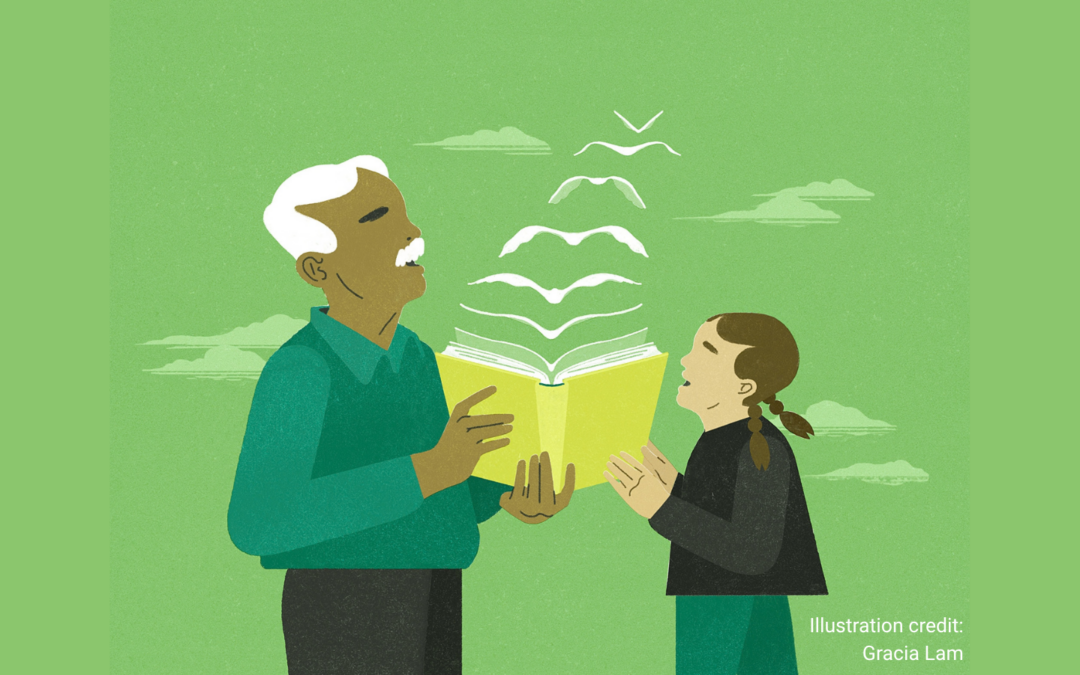
Intergenerational collaboration starts with our ability to be in genuine dialogue with one another. Use these questions to have a meaningful conversation with someone you’re just getting to know or someone you’d like to know better. Listen well and be vulnerable.The...
Event Recording: Aging & Age Diversity By the Numbers
America is living through an extraordinary demographic moment. We are the most age-diverse society in human history, with nearly the same number of people alive at every age from birth to 74. But the balance is tipping. For the first time, there are more people 62 and over than under 18.
In this, 30-minute briefing, Dr. Cal Halvorsen, associate professor and co-director of the Harvey A. Friedman Center for Aging at the Brown School of Social Work at Washington University, and CoGenerate’s Senior Research Fellow will presents his research.
For more information, take a look at Dr. Halvorsen’s slides (featuring additional content not presented in the webinar) and his original research on America’s age diversity.
Speaker:
Dr. Cal Halvorsen, Associate Professor and Co-Director of the Harvey A. Friedman Center for Aging at the Brown School of Social Work at Washington University, and CoGenerate Senior Research Fellow.
Hi everyone. I am Eunice Lin Nichols. I’m co-CEO of CoGenerate, a national nonprofit helping leaders and institutions bring generations together to solve shared problems, and in the process, form cross-age bonds that can alleviate isolation, reduce loneliness, and increased belonging. We call the power generated by younger and olders coming together cogeneration. And our work includes finding and developing promising cogenerational approaches, helping leaders test and strengthen them, and then spreading what works so intergenerational collaboration can become a common feature in American life. Want to invite you, as many are right now, to introduce yourself in our chat box, and we’re going to get this started. I’m here today with my longtime colleague and dear friend, Dr. Cal Halvorsen. He is Cogenerate’s senior research fellow and the associate professor and co-director of the Harvey A. Freedman Center for Aging at the Brown School of Social Work at Washington University, but more personally, I have had the privilege of working with Cal for nearly two decades, working together on projects to evaluate the impact of some of our signature programs like Experience Core and the Purpose Prize, now both run by AARP. We did an enlightening public opinion research report on America’s interest and appetite for working across generations for the greater good, and most recently a survey on religious communities and their views and behaviors on building connections across different age groups. But more than that, Cal is a wonderful person, one of the kindest people I know, beloved by his students, and I recently, in a conference, got to see a student come up to him, hear his full name, and then squeal and say, “Oh my God, Dr. Cal Halvorsen, I have been citing you for many years, and it was like a celebrity sighting.” So I’m excited to have Cal here with us. It’s going to be a gift to you. So, Cal, I’m going to invite you to tell us about one of the most underappreciated demographic trends that’s happening in the United States right now. A trend that has tremendous ramifications for how our society operates. Then we’re going to have a conversation about what it’s going to take to create a world where everyone, young and old, can flourish, and then we’ll leave a little time at the end for questions. So if you have questions, put them in the Q and A box so we can find them. It’s going to be quick. We did call it a briefing, so it will be brief. But you know what they say: always leave your audience wanting more, which I’m sure you will. So over to you, Cal.
Dr. Cal J. Halvorsen
Great, thank you so much, Eunice, for your introduction to everyone. I’ve worked with Eunice for years, so this is a real pleasure to keep working together and to have seen you a couple weeks ago in person. So, just for the sake of time, I’m going to go ahead and start sharing. This is not a ton of slides; it’s going to be real quick, so then we can get into some discussions. But I thought it would be useful to provide some background information. So, as Eunice said, I’m an associate professor here at the Brown School of Social Work. I’m also secondary faculty at the Bursky School of Public Health. And related to today’s talk, I’m also the co-director of the Harvey A. Freedman Center for Aging here at WashU in St. Louis. Now, a little background for you: We have about 11,000 people that are turning 65 each and every day in the United States, and this is going to continue to be true until at least 2030. Now, for those of you who have been kind of in aging-focused organizations or been working on issues related to older adults, we’ve been saying something similar to this, by the way, since 2008, we used to say 10,000 people were turning 65 in every every day, but now we’re at what’s called peak 65, and so we have about 11,000 people turning 65 every day. But how is this looking over time? Well, the American population, on average is going to continue to age until at least 2100. So the left bar that is 2020, and then now we look at projections all the way through 2100. So the right bar is 2100. The top yellow sections those are people over the age of 60. The blue middle sections, those between the ages of 20 and 59, and the bottom green sections, those are people under the age of 20. And so now, in 2026, we actually have about roughly equal numbers of people below the age of 20 and over the age of 60. And by 2100, we’re going to have roughly double the number of people over the age of 60 than under the age of 20, and so when you hear predictions or projections like this, it can be overwhelming. But one of the things I’d like to tell you is that this is over a period of about 80 years. This is a very slow transition, and so this. This gives us plenty of time if we actually take steps to prepare to prepare for this. Now let’s look at these numbers in a slightly different way. This is a statistic that that I created using data from the U.S. Census Bureau that I’ve shared with CoGenerate, and they’ve used with a bunch of their publications. The U.S. now has more people over the age of 62 than under the age of 18. This happened in 2024. So why did I choose these these ages? Well, under the age of 18, I think is pretty self-explanatory. That’s that tends to be when we think of you as like a child or a young adult. 62 I specifically chose because 62 is the age at which you can take what’s called early Social Security retirement benefits, and so what you can see is the projections are through 2100 that we will have slightly fewer 18 year olds than we have today, or people 18 and younger. Excuse me, 17 and younger, but it’s going to be a slow decrease. Whereas you’re going to see a quicker increase. So the slope is a little bit steeper. A quicker increase in those over the age of 62 through at least 2,100. Okay, so now let’s go back to school. And the reason I’m saying this is the question here is what is the median? And the median is always the person standing in the middle. If you have a lineup of people from in this case zero to 101, the median is different than the average. The median takes the person directly in the middle. Now I’m showing you this because I’m about ready to show you just three slides related to what are called population pyramids. This is what is considered to be a classic population pyramid. The left-hand side are men. The right-hand side are women. Each row is within a five-year age group.
Dr. Cal J. Halvorsen
So the bottom row are those newborns to just under the age of five. Second row is those ages to five to nine and so on. These are called pyramids because they used to be shaped like pyramids. Now, if you were in my classroom, I would pause and ask you to guess what year this was. But we are not in the classroom, so I will tell you. This classic population pyramid was from 1950, when the median age of the United States was 30.2 years old. What this means is that about half of the population was below the age of 30, and about half of the population was above the age of 30. That was in 1950. Fast forward to 2024. This is the last year that I have data for from the Census Bureau, and you can see it’s no longer a pyramid. It looks more like a rectangle. We have roughly equal numbers of people pretty much at every year of age until you get into the 70s. The median age here is 39.2. That’s about nine years older on average when you look at the median, where half the country is below 39, half the country is above 39. Now, if you were in my class, I would ask you to guess which entity this is. This is a state. It is the oldest state currently in the country, but I will tell you it’s Maine. And so this is where a lot of the United States is moving toward. The median age in Maine right now is 44.9. So again, that’s about half of the state of Maine is below 45. About half of the state of Maine is above 45. It still looks kind of like a rectangle, but it’s shifting a little bit. And so to cap this off, what do all of these charts mean? And this is coming from a gerontologist. My my study in social work is older people. So yes, our population is getting older, but ending the story here, I would argue, is far too simplistic and incredibly unhelpful, because we still have a lot of younger people in our society, and we will all the projections out. We’re still going to have young people, and we have a lot of people at midlife. So I would argue that another way to view these demographics is that we are now more age diverse than we’ve ever been, and we’re going to continue to be age diverse. And I believe that this framing can change how we view social issues, challenges, and opportunities. And so, I’m going to take one second here to switch to a different screen. And what I’d like to show you is a website, and it it’s agediverse society. Center for aging. Wustl. Edu. You don’t have to memorize this. We are going to share this with you. And this is a project that I did over the summer with my student Logan Fox, and then a colleague of mine at the Bercy School of Public Health, Tim Zelenko. And what I said was, I wanted to find a different way to visualize the changing age demographics in our country, and we wanted to create more of a interactive website. And so, when you’re on here, you can actually explore. So this chart right now is a more of a traditional chart that people tend to see, where you see this large wave. It’s sometimes been called a silver tsunami of older people. In this case, over the age of 50. And you can hover over this on the website. So in 1900, you can see that 13.3 percent of the American population was over the age of 50 by 1925, 16, and you can keep going in 25 year increments to 2025 36, and then the projections are through 2100. It’s almost half and half, 47.5, or over the age of 50. Now, to some people, this can be overwhelming, but what I would invite you to do is up above, you can actually click on the other button where older Americans are becoming more age diverse, and this shows you that even the way we treat older people, and I’m using that in quotes, because people over the age of 50 are so different from one another, just like people below the age of 50 are so different from another.
Dr. Cal J. Halvorsen
Now, when you start here, you can look again by 25-year increments, and I’m going to go to 2025. And what you can see is in 2025 we have roughly the same number of people in every five-year age span. So between six to 7%, usually, of the entire population are in these five-year age groups, and this is true basically up until you get into your early 70s. And so, this is part of my argument that we are now at the most age diverse time in our country’s history. And it’s not particularly helpful just to show what percentage of the population is over the age of 50, considering there are so many abilities and desires and experiences of people in that age group, it’s incredibly diverse. So I’m going to pause here and pass it back over to Eunice.
Eunice Lin Nichols
Thanks, Cal. Love the the fact that you’ve built something where people can interact with the data, just to recap, I feel like your main point here is that America is now the most age diverse society we’ve ever had in human history. Our structures are not generally designed for that age diversity, but I think you gave us some hope that we have time. This is not a house is on fire situation. There’s time to rebuild things, but we do need to focus on actually doing that. So, my first question for you is: Given the information you shared, what would it take to bring our stories, our policies, and our infrastructure up to date for a country that reflects the statistics you just showed. One
Dr. Cal J. Halvorsen
of the the first things I would say is we need to make sure we have more age diversity in the people who are making these decisions. So I’ve heard arguments that says we need to you know perhaps vote out older policymakers, things like that. That makes me a little uncomfortable. What I would say is we need more age diversity among our policymakers across all adult ages for the policymakers for people who are making decisions at the local level or within organizations. It would be helpful to have diversity in terms of ages and life experiences and and things like that. So these these backgrounds and experiences and different perspectives can actually shape policy because we do know that having people from diverse backgrounds and experiences creating programs can sometimes lead to more innovation than before. There has been some research on this, and then the other thing I would argue is it could also be helpful for more younger people to start speaking out about the importance of fixing key programs that are a part of our social safety net, a clear example right now is Social Security. Social Security has not been majorly changed since 1983. It’s been more than 40 years since we’ve made changes to that program, and if we do nothing, that then by the early 2030s, people will get about 22 percent or so less than they were promised. And so this is true for young people now who are in the workforce. If they are planning to have Social Security and if they would like to have Social Security, it takes young people now advocating along with people in midlife, in later life, to say that we would like to have a program that is strong now and in the future. And so, the long story short, we need more age diversity in our advocates and in our policymakers.
Eunice Lin Nichols
That’s a great answer. I have a board member, Arielle Galinsky, who is 24, and she often says, “Aging policy is youth policy. That the future of aging is cogenerational. It’s an issue we all need to care about. It’s one reason why CoGenerate is so passionate about driving a reframed national conversation about aging in America as one that absolutely involves both old and young. We need both. At the table, so thank you for saying that. And we need to find the places where young and old have shared stakes. I think too often we’re setting things up as a zero sum game, as if older people get something, young people don’t, and if young people get something, older people don’t. I think there are far too many, or I should say, not far too many. There are many things where all ships can can rise. So that does bring me to my second question, which is if you are listening to this briefing and you’re a young person, these statistics and conversations are often framed as topics around the field of aging. You said yourself, Cal, you’re a gerontologist who studies older people. Why should a young person care about these numbers, and how might the research link to things that they care about?
Dr. Cal J. Halvorsen
Yeah. So, so the first thing I would say is, as a young person, I’ve talked with enough, for example, undergraduates on campus, also graduate students, who, when you ask them about what they think is happening with an aging population, they might say something almost fear-based or alarming. Like we have all of these older people, and we don’t know what to do with them, and we’re going to go bankrupt as a result. And I don’t think that’s particularly true. First of all, second of all, that’s rather alarmist and defeatist, and we could actually all come to the table to change not only our policies and programs, but social norms around what it means to grow old. The other thing to think about is that all of us are actively growing older. Even if you’re a teenager, you are actively growing older. So aging is a universal or a universal joy or a universal experience that happens to us all, and if we have the right, you know, policies and programs and environments we grow up with, with with good personal decisions and a little bit of luck in there, all of us will grow older. And so these numbers that I’m showing, the projections of the number of people in you know 2060, 2070, and so on, who are over the age of 5060, whatever, those are young people today and still to come. And so we need to create systems that allow people to age healthier, more actively, more engaged, and more interacting with younger people to create these better systems.
Eunice Lin Nichols
I love that. I also see some comments in the chat box about how this issue feels very intersectional, connects many dots. We follow the work at the Othering and Belonging Institute, and John A. Powell talks about intergenerational bridging as the short bridge in a world where we feel many long bridges, things that feel insurmountable to come across difference, and I think it’s because of what you talked about. It’s the you know old and young is the one difference that actually isn’t a difference. We’re going to if you’re younger get older. We it’s the ultimate when we develop policies that are good for younger and older people, we’re benefiting everybody. So I love that. I have a question related to mental health and loneliness and isolation. We’re at Cogener. We’re always looking for issues that should matter to old and young, where maybe they’re experiencing shockingly similar things, but kind of flip sides of the same coin, and I think about concerns we have about older adults becoming more isolated. And then, of course, if you look at the data, young people are reporting the greatest rates of loneliness, mental health, and then once again, the toll of less social connection on the tail end of life are once again things that could have a common solution. So I’m curious about what you think the data means for how we might weave older and young back together in this area around isolation, loneliness, and mental well-being.
Dr. Cal J. Halvorsen
Yeah, no, I really like that question. You know, first I’ll be a I’ll be a professor just for a quick second here. So oftentimes we use these two terms that can be conflated with one another. One is isolation and social isolation, and at least in the research, we treat this as an objective factor. That would be the sheer number of friends or contacts you have. The other is loneliness, and in the research, we would treat this as a subjective factor. That’s your sense of not having these connections, the support to rely on. You can have situations where you have objectively, you are objectively more isolated, but subjectively less lonely, or you’re objectively filled with friends, but subjectively you feel very lonely. And so we sometimes see this in the data where you have, for example, some groups of older people who objectively may have fewer friends than before. I remember hearing my own grandmother talk about this: how her her best friends and her family members had died, but they still had rich lives without a sense of loneliness because of the other things in their lives. But now, when. Look across the generations. What we’re finding, and this is not my research, so I just want to be very clear about that. But other researchers are finding that one people do feel a sense of loneliness across the lifespan. Not everybody, but a lot of people. And against stereotype, at least to me, I’ve seen a lot of stories about lonely older adults, and certainly there are lots of older adults who are lonely. But one of the things I would like to say to those listening who focus on that is that we also know that younger people are saying that they are quite lonely. In fact, a lot of the research is showing that younger people have higher rates of loneliness in the United States than older people. And so I think one of the solutions here is to find ways to bring people together, not just for these one-off interactions, but to actually grow relationships, learn about one another, check in with one another across the generations. And I do think intergenerational initiatives are one part of the solution to really focusing on the problem of loneliness,
Eunice Lin Nichols
I really appreciate that. I’ve been really intrigued by some data coming out of the Belonging Barometer, and there’s another study on human flourishing. That’s a global study done in dozens of countries across the world, and in both, it showed that older adults reported higher rates of sense of belonging and greater human flourishing compared to young people. And I’ve had many thoughts about whether or not older generations can be called to extend the their sense of belonging and flourishing in in their older years to young people who are feeling such a moment of anxiety and crisis, it’s hard to pull yourself out and see hope if none of your peers see it either. You need somebody else who’s feeling more stable in that area to expand the community. So appreciate that framing. I have another question. I want to take a couple questions from the from the people who are listening, one person asks, “How big a factor is it that the baby boomers are a bubble that have moved through, and will we actually see a shift when the baby boomers have moved beyond where our population doesn’t have that boom, especially with fewer young people?” So, what’s the yeah? What’s the impact?
Dr. Cal J. Halvorsen
No, I’m glad that question was asked. So the the thing I would say is baby boomers were often described as kind of like a pig and a python, where it’s this big group of people that have been moving through the lifespan, and we we just have to wait for them to pass through, and then then we’re all going to be okay. So so one that’s actually rather offensive to baby boomers because I know plenty, and baby boomers are an incredibly diverse group of people, and I know that’s not what the the person meant here. But two, and this is very important, it’s not actually a pig and a python. After the baby boomers, you end up having a lot more other people. Gen X was a pretty big generation. Millennials are pretty big generation, and so you just have a lot more people being born now. The projections are, of course, through 2100, we might have fewer people being born than before. And so when you look at the proportion of the population over the age of 50, it is going to be growing. Part of that is just because we’ve done such a great job keeping people alive longer. Now the goal is to compress that morbidity so people are alive longer and healthier. But that’s one of the reasons people are just living longer. Fertility rates have declined. If the expectations are that immigration rates decline due to policy choices by the government, then all of those things combined lead to a situation where we have fewer younger people than we are used to, and it is still true that we have a lot of young people coming forward. So there was no pig in the python situation.
Eunice Lin Nichols
Interesting. There are some questions here about the impact of having far more, eventually, more older people than younger people on many metrics, social security, which you’ve already talked about a little bit, schools, which are showing kind of a cliff in enrollment. Do you have any thoughts on how we can make sure that those don’t become deficits in society, rather than like, is there an opportunity here instead of different kind of asset framing.
Dr. Cal J. Halvorsen
Yeah, I mean, I would say if we do nothing and we don’t change our norms and expectations for how certain institutions function, then we are going to have some serious issues. But you know, I would also invite us to think about how can some of our key institutions we have in society be reenvisioned to be more age inclusive. So a classic example of that are smaller liberal arts institutions, which are phenomenal, phenomenal places to get a degree, but due to many reasons, and I won’t pretend to know all of them. But we do have fewer 18-year-olds already in certain parts of the country, such as New England, combined with rising costs of higher education and younger people, rightly so, questioning the value of the education and how much they should be spending to get these degrees. You have situations where several smaller liberal arts colleges are now closing, and so one of my questions would be: How can we think about these institutions as places where we can grow community, where we can invite people throughout their careers, not just older adults who are retired, but people throughout their careers and those who are retired to come back to the university or to the colleges in different ways, and so this is just one of the things that the ways I might approach it. It’s not there are no easy solutions here, but we have time if people feel a small sense of urgency and actually get to work to try to re envision how these places run.
Eunice Lin Nichols
Can that have teed that up better myself, Cal? We have a whole initiative focused on higher education as places that could be transformed into intergenerational hubs of learning and connection, and even co-living. And I think there we’re going to see more innovation there in the days to come. Cognizant of time, so I want to ask you one last question. Maybe it’s the researcher’s dream, but if you were unconstrained by time or resources. Looking at the demographic data you shared with us today, what research would you call your fellow students and researchers to do that will help us realize the potential of our age diverse society?
Dr. Cal J. Halvorsen
You know, one of the top things I would say is we still just don’t have enough research on the benefits of intergenerational initiatives. We have key programs that have been studied a lot and that have shown phenomenal results. An example would be Experience Core that both you and I worked on. But more than that, we need additional research on the overall benefits of intergenerational engagement. Why is it good for you? In what conditions is it good for you? How can these programs increase their impact even more? Because at the gut level, I just love the idea of living in a society and living in communities where older and younger people feel comfortable being together, where it’s completely normal to be together. This is how I grew up, but a lot of people don’t grow up this way, and I think it’s good for society, but it can’t just be based off of my own gut instincts and my own personal experiences. The research through both qualitative and quantitative means, better yet, if it’s mixed methods, that’s where you basically use both. Are looking at how these things can actually help society and the individuals at the same time. So, if I had complete like all the resources in the world, that’s where we would do it. We would do randomized control trials. We would do pilot studies. All of that to try to ascertain how we can actually create a culture where intergenerational initiatives are the norm and they are used to improve society.
Eunice Lin Nichols
Well, let’s hope some folks listening to this are decision makers in the world of philanthropy and academia and research. I think there’s work in at that highest bar that we can do. I think there’s also work that the field can do to collect pre and post, even self-reported data. If we can roll that up, be sharing it more with each other, we can create a collective case. It’s so important. As we round the corner on our 30 minutes together, I did say it would be brief. We’re gonna put a poll in our chat, a one-question poll asking you a question on whether or not this conversation has inspired you to lead a more cogenerational life. We hope the answer is yes. But I also want to just say, Cal and I are two people who started in this work as young people. We both grew up in a very intergenerational environment. We made choices in our early career to center this work in our 20s, and more than two decades later, we’re now increasingly older people. I turned 51 this year who are just as committed to the intergenerational work, based on what you heard from Cal today, this work is actually more relevant and urgent today than ever before. And so, I’m going to speak on behalf of both of us that we invite you, the audience, to join us in making the well-being of our country a shared endeavor across generations, one that can be, as it has been for the two of us, the most meaningful and joyful work of our life. And let’s go get the data that shows us not just what we know in our bodies to be true, but that it actually has that meaningful impact in the world. Thank you for being with us today. We look forward to seeing you the next time around.
To provide the best experiences, we use technologies like cookies to store and/or access device information. Consenting to these technologies will allow us to process data such as browsing behavior or unique IDs on this site. Not consenting or withdrawing consent, may adversely affect certain features and functions.
Functional
Always active
The technical storage or access is strictly necessary for the legitimate purpose of enabling the use of a specific service explicitly requested by the subscriber or user, or for the sole purpose of carrying out the transmission of a communication over an electronic communications network.
Preferences
The technical storage or access is necessary for the legitimate purpose of storing preferences that are not requested by the subscriber or user.
Statistics
The technical storage or access that is used exclusively for statistical purposes.The technical storage or access that is used exclusively for anonymous statistical purposes. Without a subpoena, voluntary compliance on the part of your Internet Service Provider, or additional records from a third party, information stored or retrieved for this purpose alone cannot usually be used to identify you.
Marketing
The technical storage or access is required to create user profiles to send advertising, or to track the user on a website or across several websites for similar marketing purposes.