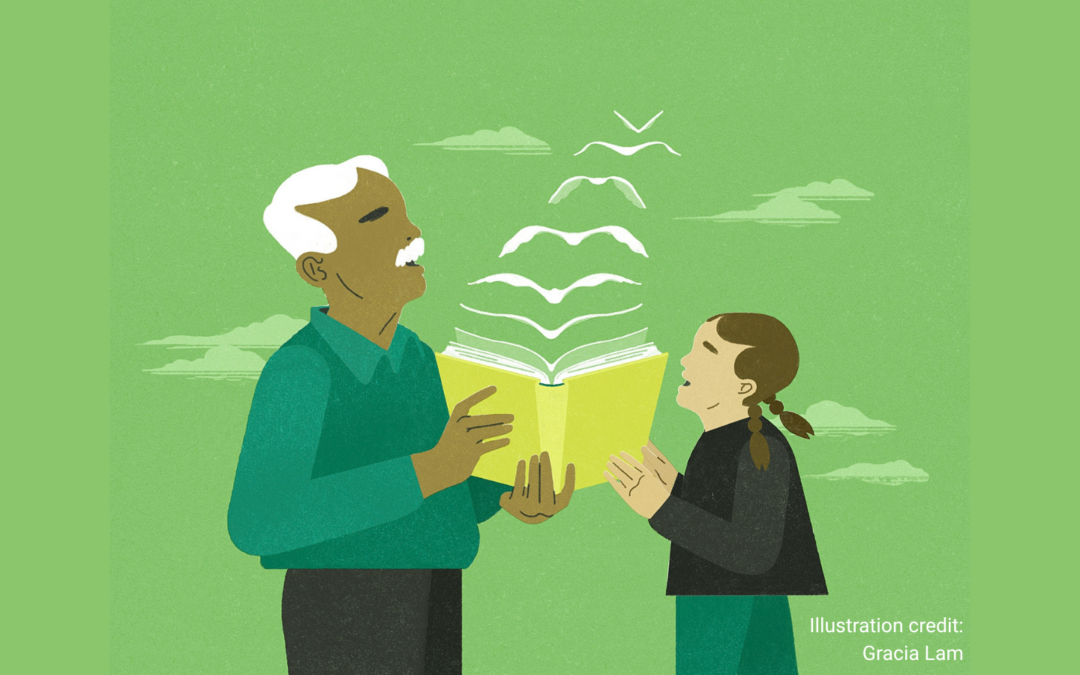
Intergenerational collaboration starts with our ability to be in genuine dialogue with one another. Use these questions to have a meaningful conversation with someone you’re just getting to know or someone you’d like to know better. Listen well and be vulnerable.The...
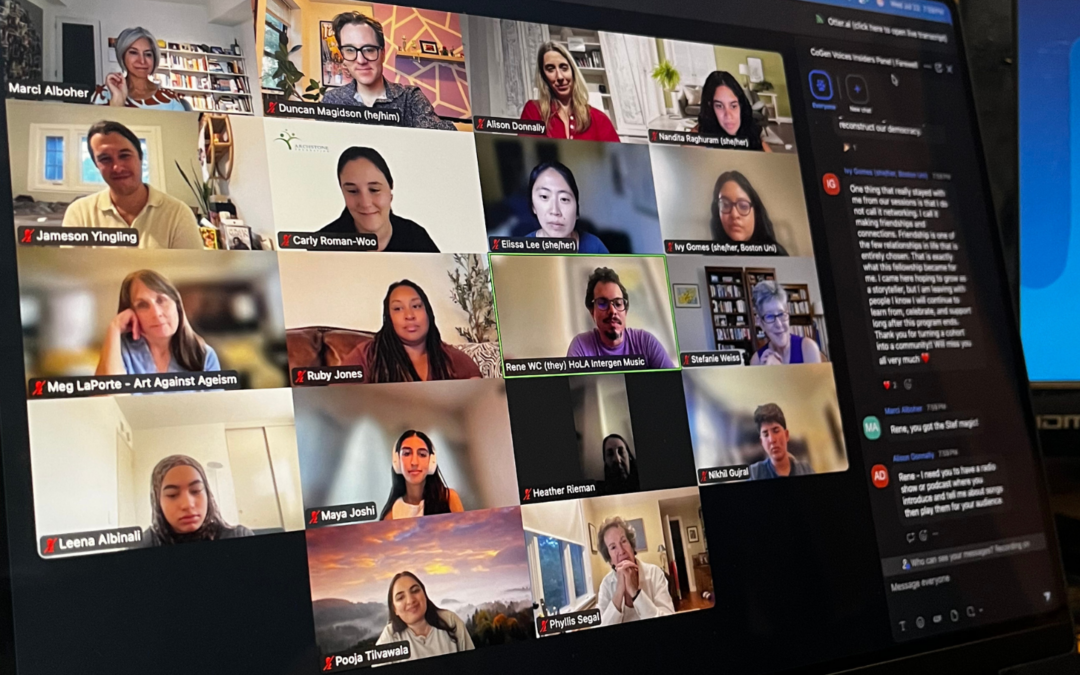
When we first began planning the CoGen Voices Fellowship, we knew we'd face a few challenges. The group of 21 community changemakers was intentionally diverse — by age (15 to 81!), race, location, work, experience, and more. We'd have to meet many different needs and...
At CoGenerate, we believe in the power of cogeneration: a strategy to bring older and younger people together to forge bonds across differences, combat polarization and ageism, and help solve today’s toughest problems. If you’re involved or interested in cogeneration,...
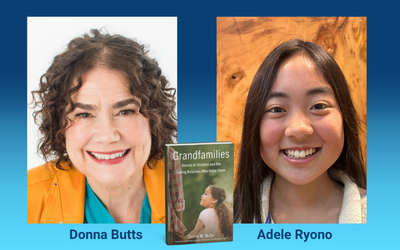
https://youtu.be/OedAsZVTm9U?si=q20TIH8zuwPEhE0a Today in the US, more than 2.4 million children whose parents are unable to care for them live in grandfamilies, where they are raised by grandparents or other loved ones. Until recently, their experiences have been all...
Event Recording: The CoGen Big Ideas Challenge to Reimagine Higher Education
The CoGen™ Big Ideas Challenge lifts up visionary ideas and innovations that can transform campuses into thriving centers for intergenerational collaboration and learning. Through a national open call, CoGenerate will seek up to five higher education models that bring generations together to foster economic opportunity, lifelong learning, and institutional sustainability. Then we’ll tell the world about them. At a time when higher education leaders are rethinking relevance, revenue, and resilience, the Challenge offers the opportunity to spotlight what’s working – and what’s next.
Well, thank you everyone for joining us. We are excited to see where you are all calling in from for today’s info session on CoGen, big ideas. I am Cristina Rodriguez, and I’m the innovation Director at CoGenerate, and I’d like to briefly introduce my colleagues from our engagement team who are here with us today. Marci, if you can just give a quick wave and Duncan also, you’ll be hearing from them both throughout our session. And before we begin, just a few quick notes. The session today is being recorded and it will be shared afterwards. Everyone is currently on mute, and then you’ll have time for questions later, so you’ll be able to come off mute or drop your questions in the chat, and we’ll be able to address them after the presentation. So for our agenda today, we’ll pull up our slide.
Duncan Magidson
Are you not seeing the agenda slide? Cristina, yes.
Marci Alboher
You see it? Cristina, right.
Cristina Rodriguez
Well, I am not seeing it. Let me see.
Marci Alboher
Oh, do you want me to do it?
Cristina Rodriguez
I’m not seeing the slide. Yeah. Are you seeing it? Yes, yeah. Is everybody else seeing it? Okay, well, I’m not going to use this slide, so hopefully we we sync up because I can see it. I’ll let you know our agenda for today. We’ll go over the and intro to CoGenerate for those that are new. We’ll also give you an overview of the big ideas challenge, the eligibility. We’ll go over the eligibility and the criteria, and then we’ll share what selected applicants will receive, as well as a brief overview of the application and timeline, and then we’ll have questions time for questions for Q and A. So with that, I’ll pass pass it on Marci, so she can share with us a little bit more about what CoGenerate is about. Great.
Marci Alboher
It is really nice. I’m looking and seeing, wow, some familiar names. So I think there’s some people who actually know us and could probably recite our mission and the reason we exist even better than I can. But as many of you know, we are living in one of the most age diverse times in history, with equal numbers of people living pretty much at every age between seven and 70. It is not the way the demographics used to be, but that is our reality now, and is why there’s so many conversations about navigating a multigenerational world. Yet at the same time, many of us are feeling quite age segregated. We have younger people in school, middle people at work, older people often self segregated or isolated in 50 plus communities or retirement communities, and we we see that as a problem and an opportunity, and we have this ability to kind of work with bringing those generations together, both to co create something better in our society, and also to solve the rampant isolation and disconnection so many of us are feeling today. So echogenerate. Our mission is to bring older and younger people together, having the distinctive assets of each of those groups, to co create a better future for all. And a lot of our work is done in the spheres in which we live and working with leaders who have the ability to scale big ideas and solutions. So that leads us to what we’re going to talk about today.
Cristina Rodriguez
Yeah, thanks Marci for grounding us and where we are in this moment, especially in our society, in this age diverse world. And I would love to tell you all a little bit about why we’re focusing on higher education and why this CoGen Big Ideas challenge. And I think right now, higher education is in a real transformation moment. Campuses are confronting declining enrollments, funding challenges and a rapidly changing student body. And as Marci was saying, like we are the most age diverse right now, where we have the most, like, equal rough number of people living from age seven to 70. Yet a lot of our world continues to be designed in these age silos that tends to keep generations apart. And we are living longer lives, which is like, yay. That’s awesome. And as we do that, like people will move through different careers, will seek new purpose at different points in life, and there’ll be a need for more opportunities to reinvent ourselves. So we are seeing some sparks of hope. It’s not just generations being siloed, and it’s it’s generations that are coming together, and they’re not just coexisting, but they are working together to create shared purpose and to solve problems, exchange with them and really, Reimagine what campus life could be, and and some of it is already happening. So we’re seeing things like intergenerational housing models that pair students with older adults. We’re seeing classroom experiences that bring generations in conversation with each other, and civic partnerships that build belonging across age lines. And these are just a few examples that remind us that we’ve only started to scratch the surface of what’s possible. And as students prepare to enter this five Gen workforce, they’re looking for Pathways to economic opportunity, to stability and to purpose. And older adults are also looking for many of the same things, so skills to navigate the age diverse workplace opportunities, to stay engaged, to reinvent themselves and to remain economically secure as they prepare for for longer lives. So we believe that the best place for this to happen is in higher education, and it can really become the central square where these challenges are solved. A lot of it has to do because higher ed institutions have the resources have the physical spaces, and they have the potential to bring people of all ages to learn, to work and to lead side by side, and that’s why we are launching the CoGen Big Ideas challenge, to really find and to lift up bold, visionary models that show what’s possible when higher higher education fosters social connection, economic opportunity and lifelong learn, learning across the lifespan and at the same time, these models can be a recipe for institutional stability.
Marci Alboher
So you may be wondering, what is an example of a big idea? So here are some ways that we’re thinking about how to look at a big idea. So a big idea is not just like one little program off to the side on its own with very little attention or support. A big idea has the potential to radically shift how higher ed operates. So imagine if I if a big idea takes seed in five or 10 years, you will walk on campus and you would see students of all ages, learning, living, working together. So it could be reimagining a dorm as intergenerational housing, or off campus housing in a similar way. It could be making use of empty buildings on campus in to care hubs that serve both young, young families and older adults, or maybe redesigning classes so that they’re co taught across generations with mentorship flowing in both ways. It can mean policy changes to make it easier for mid or later life career changers to return to school. I know there are people on this call right now who are working on midlife transition programs. Can it, can there be a way to transform those programs so that they are truly intergenerational and not cordoned off in one area as a special program for a special population? What kind of kind of new, visionary ways of thinking would have to happen for that to become reality. That would be a big idea. So what we want to emphasize that we’re not looking for like a program. We’re looking for something that maybe it starts with a program or a program as a platform, but it paints a bold vision that really could transform how an institution works, thinks about itself and prepares people of all ages for the future. So we’ll talk a little bit about the kind of criteria that we will judge the big ideas by. We we are going to choose up to five. They need to be US based, and we’re looking to work with higher education leaders or community members who have visionary ideas and innovations, again, that transform campuses into intergenerational hubs for collaboration and learning. So we are going to look at the strategic fit. So is there alignment with an institution’s mission and leadership? We’re looking for intergenerational front design from the start. Is there reciprocity across age groups? Are there people of all ages involved in the design? Is this kind of two way and not one group coming in to serve or kind of rescue the others, or to do traditional mentoring? We want programs or ideas that are scalable. We want credibility, good partnerships, solid relationships. Buy in from leadership, media attention, if something has started already. Recognition among peers is a good way to show that we care about stories, because we know that stories can change hearts and minds, so we’re going to look at narrative potential, and we would like to have in the ultimate mix that we choose. We will be looking for diversity in all ways, including kinds of institutions. So four year institutions, community colleges, trade schools, specialized schools, HBCUs, however, you can think about the different kinds of institutions that exist out in the world. Ideas can be at any stages so they could have already been implemented. There could be an early pilot already in place. There could just be an idea with a plan and a very powerful way of telling the story about that plan. So I think that’s a I know there’ll be lots of questions on this, so I’ll pause there and let Cristina kind of talk a little bit more about where we expect to see applicants from.
Cristina Rodriguez
Yeah, so we expect to see applicants from many different places. And this is just a list. It’s not limited to this particular list, but just to give you some examples, it could be higher education institutions, as Marci was mentioning, we’re looking for a diverse of institutions like community colleges, HBCUs, HSIs, public universities, and so more and many more, nonprofits, social enterprises, think tanks, any policy shops that are working with campuses, student leaders, faculty, institutional leadership, social entrepreneurships that are entrepreneurs that are partnering with colleges and universities. So it can really be anyone that has a bold idea with a plan, and you should not apply. These are the three like things that would really just, you know, disqualify the application is if the initiative is not anchored in the assets of both younger and older people and what they can bring to the table if the initiative has a partisan political agenda or promotes a specific faith where it might exclude others from from participating, and if your project is mainly benefiting people outside of the US. So as part of the big ideas selection process, we the applicants will receive a professionally produced video that will capture their big idea. We’re really excited about this partnership with Brief But Spectacular, which will give the your idea national visibility. A little bit more about Brief But Spectacular, they’ve been Emmy nominated for the short form series video production, and they’ve been able to garner more than 400 million views and feature subjects, basically taking their own take on thematic issues in short segments. So that’s a really exciting opportunity. We’ll also have a four month light touch peer cohort, where you’ll have access to coaches and advisors and your other innovators to help tell your sto your big idea in a compelling way. We will also have the opportunity to elevate your idea through a national virtual showcase and also an inclusion in our field shaping report for the field, and also an opportunity to be spotlighted at Campus, sorry, at compact 26 next year in Chicago, which is the nation’s largest national conference on higher ed role in building healthy communities and Just and just democracy. And we’ll also have a special event there, which is an exclusive breakfast with university presidents and senior leaders and other network working opportunities. So that’s a little bit about what the applicants will receive. And to dive a little bit into the application, it will take about two to three hours to complete. Or it could also be shorter. You can start and save and return to it at any time, the application will be on jot form, and here just a couple of questions that will be asked. So there’ll be some basic there’ll be a section on basic information around your institution, your role, and then a section on your big idea. So we want to know. Tell us about your big idea. You know, what is the problem that you’re solving? And why does it matter now? How will generations come together in mutually beneficial ways? Has your idea been researched? This is the part of of the credibility, right? So, if it’s brand new and it hasn’t been tested or anything like what else can you show us in that section that builds credibility? What have you learned? What have you accomplished today? Are there any partners that are interested in this right now and then, really painting a vision that for for what you believe your big idea could accomplish? Then we’ll also have a section on the the populations that will be served. We are placing an emphasis on low and moderate income populations and how that idea could help advance economic opportunity for them. So Marcy is going to share some tips soon on on how to make how to strengthen your application. But there also be an opportunity to submit letters of support if you have those, or a short video about your big idea. Yeah.
Marci Alboher
So a few tips. We get questions on these all the time. We’ve added a video component. It is optional, but it really helps bring you to life. So if there’s somebody on your team who likes talking? I think video is really helpful. It is often the best way for people to tell their story, and it’s really nice to have a compliment of like using words and using video. So we’re looking for vision, and even if your idea is anchored in a single program or in an in a single institution or department. How can this? How can you paint a bigger vision for why this has this opportunity, for scale, for growth, for attention, how it can be replicated in other institutions, and how you’re committed to that so that would be really important. We want you to be specific and avoid jargon. Tell the story in a way that someone outside the field could understand, and we are trying, as in today, to get it give as much support as possibly for so we have office hours you’ll see it on the website, and an office hour if you want to get a little more feedback, even before you start the application, we this will all be in the materials that are freely available, but I’ll run through the selection timeline. The applications are, are due on October 23 we care about the time of the day. We cut it off. It’s 5pm Pacific Time, 8pm Eastern time. So give yourself a little wiggle room so you make the deadline. We plan to make decisions and notify the applications applicants by November 20, and we will make a public announcement of who is chosen later this year, if you do get selected. This is the timeline for involvement, and what we’re asking people to commit to and understand they’ll be part of. So there is a four month cohort, which is for light meetings. I believe they’re an hour each, and they will help you get to know each other, to work on honing your story and prepare for the showcase. So that’s what we’re doing in those meetings, you would build community with the other innovators, so that you’re a part of a cohort advancing the idea of cogenerations, cogeneration and campus life. And you will lead with a really sharp story. This is something we are known for. So anybody who’s been involved in our programs before, there’s something we pay a lot of attention to, and it would help you also be prepared to be part of the big ideas video that we’re working with our partners at Brief But Spectacular on So as you’ll see, there are these, oh, it’s three cohort meetings and the showcase, sorry. So that’s the poor meaning arc. There is also independent coaching available in between the sessions that can help you developing your story and making sure you show up for the video in the best possible way and at the ultimate showcase. So the dates are all listed here. We also the in person spotlight at comp compact. You’re not required to attend the Chicago conference, but it’s an opportunity we’re making available.
Cristina Rodriguez
Thanks, Marci, so now we have some time for questions so you can, I haven’t looked at the chat yet, because I’m not that great at multitasking, but if there are any questions that you have, put them in the chat, or you can also go off mute, and we can answer those. Try to think of questions that might benefit the whole group. If there’s something specific about your project, we’re happy to have a one on one office hour with you. So yeah, do we have any questions that can’t have come in yet? Duncan.
Duncan Magidson
The only question we’ve gotten was from Marilyn, who asked that the presentation will be shared, which Marci said, we’ll share the video. If it’s helpful, I can include the slides in our follow up email as well.
Cristina Rodriguez
Absolutely great. Well, if anybody has any questions and would like to come off mute, we’re happy to to answer whatever’s on your mind.
Speaker 1
I’ll break the ice with a question. Can we talk a little bit about financial component of this? It looks, you know, a lot of the great benefits, the IMPACT Conference, or the compact conference looks amazing, but it doesn’t sound like that. This is a funding vehicle for the idea, or the vision, is a framework that is going to help accelerate. But then, obviously the funding is not this.
Cristina Rodriguez
Right okay, yeah. I mean, the, you know, this is our first iteration of the big ideas. So our goal is really to lift up the models and tell the stories. And our hope is, you know, this is later on we are able to, you know, to find other opportunities to help implement those ideas. We can’t necessarily guarantee that, but it’s something that we would love to do. And right now, you know, the field is so new, and sometimes people have a hard time imagining what’s possible, and so that’s really the goal of this first iteration of it.
Speaker 1
Great, great. Thank you. Sure.
Speaker 2
I have a question. So we’d like to propose something that we tested out and have some great stories, but we don’t really have institutional support or a financial model going forward, and so, you know, we would like to be, I mean, we’re trying a new approach, but, you know, our original model has a lot of merit, and I think could be replicated elsewhere and replicated at our institution, but there’s some significant barriers to it. So is that something that would be appealing for a big idea, even though we know there’s some barriers out there.
Marci Alboher
That is a tricky question. Because I think, I think the idea is to figure out, Is there a way to propose the kind of institutional support like it’s unclear whether being recognized as a big idea would then be helpful to getting the institutional support. So I think if that is part of your case making, I think that is probably a way to position it. But if you know right now that the institution is not going to be behind the idea it’s going to be really hard for so for us to say, Wow, this has real potential to grow.
Speaker 2
Yeah, and I don’t think that our institution is against the idea. I think we’ve just had so much upheaval with senior leadership that it’s been hard to even get back on the radar, and especially in this current environment around where higher ed is. So, you know, we had a provost that loved the idea of what we were doing. She supported us. We piloted an idea covid hit. She left. The President left. I mean, so we’ve had so much churn, I would love for us to come back to talk about this, because I still think what we were doing was really powerful and could fit really well as an innovation, but it’s just been it’s been hard to get on the radar in this current environment.
Marci Alboher
I will say one thing, and I think we have some people in the room who also on our team who may want to add to this. And if you are on our team and you want to add something, please jump in and respond. But I’ll start which is, is there a way, even prior to the application, that you may be able to think about pitching this idea in ways that actually help the institution meet its own articulated goals, rather than be something that feels extra at this moment. So is there a way, you know if, and I think if this is a spark to you, to try to do that, it would strengthen your application, but it also may help you get the kind of institutional support you’re going to need to be sustainable. Anyway, I’m looking in the room, and you know who you are, but if one of my colleagues wants to come off mic, feel free,
SImon Chan
I think you’re talking about me, Marci. So my, my take on, on that is, I think, if you’ve got a model that you think makes sense and is a big idea that maybe doesn’t have institutional support. Currently, I think this is a great mechanism to use to garner institutional support, at least resurface it. And also, let’s be honest, a lot of this is FOMO. So when other presidents at other presidential forums are talking about this, whether it be the breakfast, whether it be the upcoming October 7 webinar that I’m sure all of you have signed up for, talking to the three college presidents about this, I think part of the big ideas is about trying to elevate ideas that presidents can see, or senior leaders can see, are opportunities for inspiration. So I think if you’ve got a model that’s been tried, there’s been successful stories, it just wasn’t the right time or the right context, I think, resurfaced. Using this as an avenue to resurfaces is a really good opportunity to do so. And to Ben’s point about funding, I think, yes, this may not, this process doesn’t lead to direct funding, but I think that this is a great way to sharpen your story and give you assets that you would probably normally not be able to do unless you’re gonna hire a professional team to be able to create assets, both internally and potentially for external funders as well.
Marci Alboher
and for knowing it was you that I was beckoning. Okay.
Janet Oh
I just wanted to add one comment that in terms of what Kate brought up, is that I think that is the case for many applicants and many of us. So you’re definitely not alone. And I think that is the work of this challenge overall, is how to how to position this work with leaders for institutional support, how to make the case of alignment with the top strategies of the higher ed institution. So I think this is a collective effort, and that is what you know, in your application, trying to make the best case for the avenues to do so what you’ve tried, what has worked, what hasn’t, just being transparent with that, I think would be really helpful as we review you.
Cristina Rodriguez
Yeah, okay, any other burning questions?
Cristina Rodriguez
Okay, I guess we were really clear in our info session, but if you still have questions afterwards or anything specific about your project, we’ll stay on for a little bit longer. And then also we’ll have office hours. So we’ll drop those links in the chat to the our FAQs, where you can read more of the information if, if that is helpful, and then also the link to our office hours. We will be sending the call from today with the slides and the links and everything after this call, so you’ll have access to that. And I also want to give a quick thanks to MetLife for funding our CoGen Big Ideas challenge, and also to our signature partner and collaborator on this Campus Compact. Just a few reminders. The application is due on October 23 at 5pm Pacific, 8pm Eastern Standard Time, so you still have some time to to come to office hours to share your ideas with your team members and and really submit your best proposal. I think those are, those are all our updates. If there’s anything else, Marci or anybody, yeah.
Marci Alboher
I would say one other thing. I mean, I’m guessing that those of you who are engaged enough to have come here have also been following all the strands of this work. And if your institution is a member of Campus Compact, we just want to encourage you to check out our affinity network, right? It’s still possible to join that, and that’s another way. I just put the link in there for joining the affinity network if your institution is part of Campus Compact, because that’s another way we’re creating spaces for leaders in higher ed who care about cogeneration to kind of make sure you’re a part of it.
Cristina Rodriguez
Yeah, that’s a great opportunity. And the webinar on October 7 with three college presidents, which will be a really amazing conversation, just showing how different presidents are thinking about longevity and cogeneration on their campus, and they’re they have all different approaches and examples of how they’re doing that. So if you’re interested in that, Simon will be there. He will be moderating, so you’ll get to see him again, and it’s going to be a great conversation. So we’ll also include that link in our in our follow up email.
Marci Alboher
Thanks everyone. We really appreciate your taking it seriously enough to come to this session.
To provide the best experiences, we use technologies like cookies to store and/or access device information. Consenting to these technologies will allow us to process data such as browsing behavior or unique IDs on this site. Not consenting or withdrawing consent, may adversely affect certain features and functions.
Functional
Always active
The technical storage or access is strictly necessary for the legitimate purpose of enabling the use of a specific service explicitly requested by the subscriber or user, or for the sole purpose of carrying out the transmission of a communication over an electronic communications network.
Preferences
The technical storage or access is necessary for the legitimate purpose of storing preferences that are not requested by the subscriber or user.
Statistics
The technical storage or access that is used exclusively for statistical purposes.The technical storage or access that is used exclusively for anonymous statistical purposes. Without a subpoena, voluntary compliance on the part of your Internet Service Provider, or additional records from a third party, information stored or retrieved for this purpose alone cannot usually be used to identify you.
Marketing
The technical storage or access is required to create user profiles to send advertising, or to track the user on a website or across several websites for similar marketing purposes.
To provide the best experiences, we use technologies like cookies to store and/or access device information. Consenting to these technologies will allow us to process data such as browsing behavior or unique IDs on this site. Not consenting or withdrawing consent, may adversely affect certain features and functions.
Functional
Always active
The technical storage or access is strictly necessary for the legitimate purpose of enabling the use of a specific service explicitly requested by the subscriber or user, or for the sole purpose of carrying out the transmission of a communication over an electronic communications network.
Preferences
The technical storage or access is necessary for the legitimate purpose of storing preferences that are not requested by the subscriber or user.
Statistics
The technical storage or access that is used exclusively for statistical purposes.The technical storage or access that is used exclusively for anonymous statistical purposes. Without a subpoena, voluntary compliance on the part of your Internet Service Provider, or additional records from a third party, information stored or retrieved for this purpose alone cannot usually be used to identify you.
Marketing
The technical storage or access is required to create user profiles to send advertising, or to track the user on a website or across several websites for similar marketing purposes.