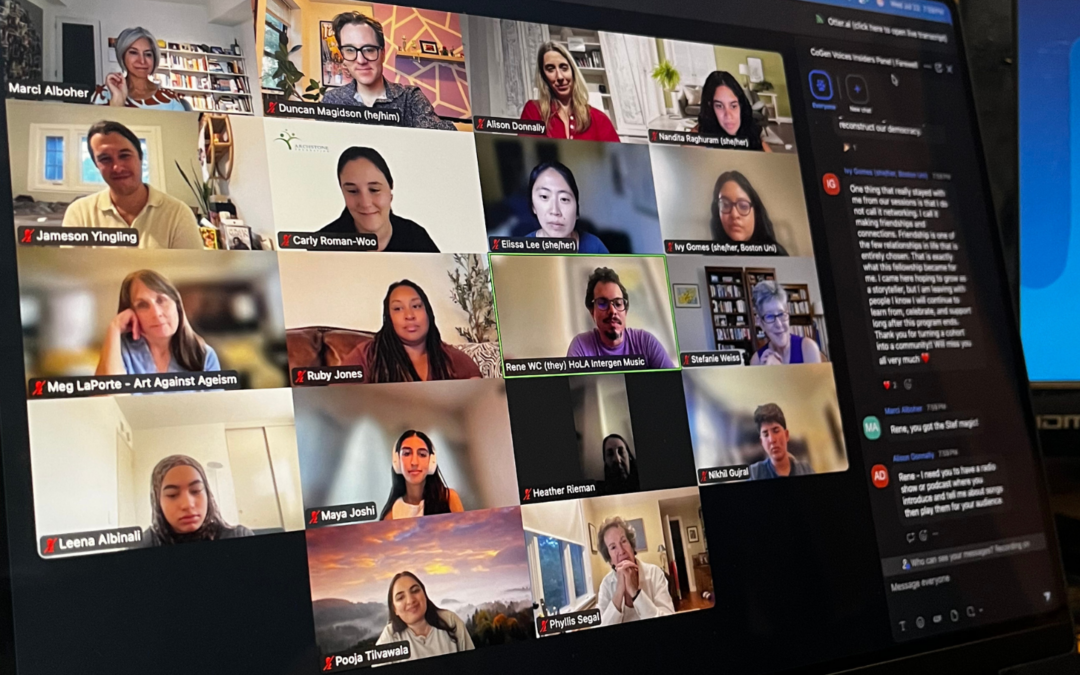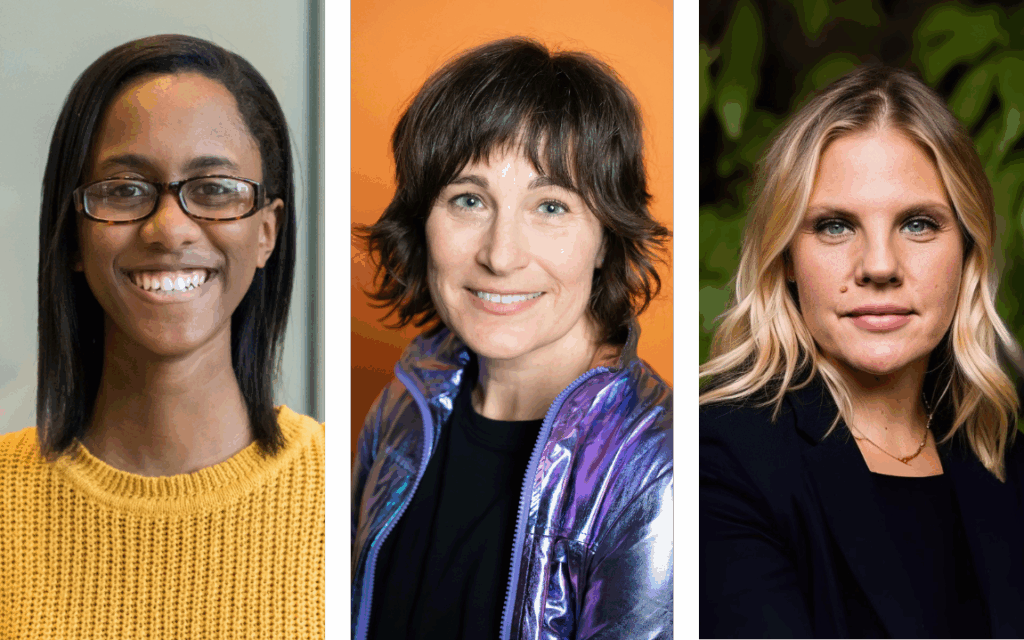
At our recent Campus Innovation for a Multigenerational Society webinar, three remarkable leaders — Markya Reed (Johns Hopkins), Karen Morris (School of the Art Institute of Chicago), and Lindsey Beagley (Arizona State University) — shared how they’ve built successful cogenerational initiatives on their campuses.
Whether you’re just getting started or ready to deepen your efforts, here are some of their most practical tips.
1. Start small and stay scrappy.
“If I had started by thinking I’m going to partner with all these schools—I never would’ve started.”
Instead, Karen Morris began with a simple experiment: gather young and older LGBTQ+ folks, feed them, and let connection emerge.
Takeaway: You don’t need a grand plan. Start with one partner, one class, one lunch.
2. Find your people by knowing where to recruit.
To find younger people, look for:
- First-year and transfer students looking to connect
- Student clubs with social justice, civic, or health missions
- Classes aligned with generational work (Civics, Gerontology, Developmental Psych, Healthcare)
- Community-based learning or service-learning offices
To find older people, look in:
- Public libraries (many host adult programs)
- OSHER Lifelong Learning Institutes
- Local Ys
- Faith communities
- Independent and assisted living centers
- Retired faculty/staff groups or emeriti networks
Takeaway: Start by asking one older and one younger person where they naturally connect with other generations. You might find clues for redesigning what’s missing.
3. Repurpose what already exists.
“Look at what already exists on your campus. What can be opened up to older adults? What spaces, programs, or experiences are re-purposable? This isn’t about building something new from scratch, it’s about reimagining what you already have.”
Lindsey Beagley suggests inviting older learners to audit classes, co-hosting events with a local senior center, or turning a guest lecture into a cross-generational dialogue.
Takeaway: Look around before starting something new. College campuses and the communities around them are full of resources and networks that, with a little creativity, can fuel your cogenerational project.
4. Build trust with community-based learning.
Community-based research and learning courses are powerful ways to bring lived experience into the classroom.
And, Markya Reed adds, “Lived experience is expertise too.”
Takeaway: Create roles for community elders as co-educators, partners, or mentors.
5. Get creative with structure.
Karen’s dialogue project grew from a side experiment to a credit-bearing course, research project, and a vibrant community with 160+ participants over time.
She suggests the following ideas for flexible formats:
- Short-form dialogue series (4–6 weeks)
- Intergenerational art/storytelling projects
- Co-hosted library or museum events
- Sponsored events in bars
As Karen put it, “Start small. Be patient. Be flexible. Let it grow.”
Takeaway: Not everything has to happen on campus or in the classroom! Some of the most powerful connections start in unexpected places, like a bar, a basement, or a borrowed classroom.
For more information, check out:
Want to hear the full conversation? Check out the full recording and transcript from Campus Innovation for a Multigenerational Society.