Funded by foundation grants, corporations, public dollars, and individual donors, Hope Chicago currently helps about 1900 students and 300 parents, guardians, or grandparents attend more than 30 higher education institutions.
It works in five economically vulnerable neighborhoods — Morgan Park, Englewood, Pilsen, Little Village, and Garfield Park — at open-enrollment, neighborhood high schools. Every student, regardless of GPA, can receive Hope Chicago’s support. Crucially, one parent or guardian can, too.
Hope Chicago’s intergenerational approach rests on the premise that economic mobility is intergenerational. “If we can stack the economic mobility of two generations in the same household on top of each other,” Kuecker explains, “we can elevate people out of low- and moderate-income categories more quickly.”

By linking students and parents within the same educational ecosystem, we are rebuilding confidence in higher education, strengthening workforce pipelines, and proving that institutions can thrive by serving whole families.
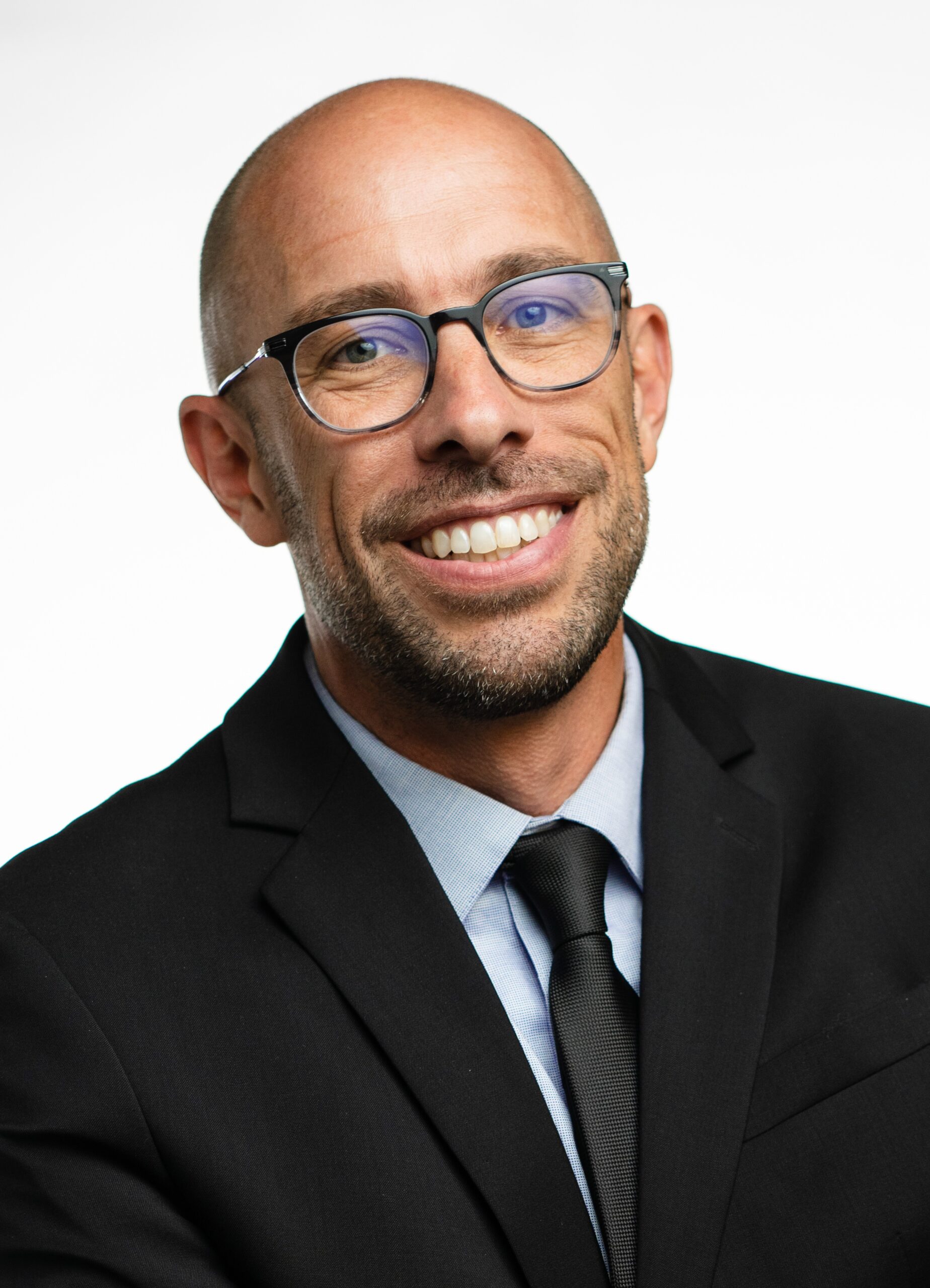
Aaron Kuecker
CEO, Hope Chicago
That’s because it’s often harder to move up the economic ladder if your parents are on its lower rungs. A first-generation college graduate can earn the additional lifetime income that their degree typically provides, but that increased wealth often goes to pay off college loans and help support the rest of the family. When students and parents graduate debt-free, the family has a much stronger path to financial health.
Higher education, in turn, becomes “a shared family endeavor, one that deepens connection, fosters resilience, and builds collective pride in achievement,” Kuecker says. Students and parents cheer each other on, compare GPAs, and hold each other accountable to complete homework or study. They also check on each other’s academic progress, help set goals and organize their time. Kids even pitch in with chores so parents can do homework.
Take Sharon Jones and her grandson Ahsan Payne. Forty years ago, Jones left college because she didn’t have access to adequate childcare or transportation. Now she’s back in the classroom, studying human development and family studies at Olive-Harvey College, while her grandson studies mechanical engineering at the University of Illinois-Chicago.
Attending college together with help from Hope Chicago strengthened Jones and Payne’s relationship and pushed both of them to perform better in school. “It’s almost like this quiet, unspoken competition,” Jones says. “I can’t be a slacker.” Her grandson Payne says when he sees his grandmother succeeding in school, it motivates him to succeed as well.
Ultimately, the more engaged the older generation is, the more their child achieves, and vice versa, Kuecker says. Simply put, family members don’t want to let each other down.
The numbers make the case.
- College enrollment at Hope Chicago’s partner high schools is up. Over the past four years, for example, Morgan Park High School and Benito Juarez Community Academy jumped from 400th and 531st respectively in Illinois’ ranking of college enrollment, to tied at 26th. The sustained increase in postsecondary enrollment at all partner high schools is 30 percentage points.
- The “one-year persistence rate” is high. The percentage of Hope Chicago’s first-time college enrollees who stay in school after the first year hit 78 percent recently, the same as the national rate. For older learners working with Hope Chicago, the one-year persistence rate is 76 percent, while nationally, that number is just 45 percent.
- Academic success rates are up. At Morgan Park High School, for example, the number of students enrolled in AP classes has risen substantially over the past three years.
- Discipline problems in high schools are down. At Farragut Career Academy, critical incident reports have dropped from nearly 2,000 per year to less than 200 per year. Keucker attributes that to a shift in the learning environment at the school, due to a combination of excellent high school leadership, increased opportunity, and the ways that school leadership and Hope Chicago demonstrate belief in the potential of every single student.
- Entire neighborhoods stand to benefit. Kuecker estimates that there will be 500 additional college graduates in one Chicago neighborhood, Pilsen, over the next four years. That amounts to about $600 million of additional, debt-free lifetime income in the neighborhood and an additional $30 million in state income tax revenue.
Hope Chicago’s formula for success starts in high school. Staff members serve as “student success coaches” advising high school students on college placement and fit, financial aid, and careers. Other staffers help traditional-age college students with on-campus counseling and advising to improve graduation rates.
And “parent success coaches” help older students access certificates, workforce training programs, or higher education degrees. Coaches answer a wide range of questions – what to do if a student is struggling in a class, how to handle a parking ticket on a tuition bill, or how to land an internship.
Although Hope Chicago provides robust support, Kuecker says families typically don’t require an inordinate amount of resources. “These families just need help navigating the system,” Kuecker explains. “They’ve got all the skills they need.”
What’s next? As its first cohort prepares to graduate from college, the next phase for Hope Chicago is “cracking the workforce code.” That means getting students and parents into jobs and internships, but also bringing employers into the process earlier.
At Trinity Christian College, Kuecker helped create a program in which a local hospital paid nursing students’ tuition for the final two years of school, offered graduates a guaranteed job, and asked for a three-year work commitment. He envisions a similar program for Hope Scholars in which employers fund scholarships then employ these same students when they graduate.
Beyond that, Hope Chicago wants to see more K-12 schools, workforce training programs, and post-secondary institutions adopt practices that support students and their families simultaneously.
That could mean coordinated advising across an entire family if multiple generations are enrolled rather than treating children and parents as separate individuals. Colleges could also offer families different pricing options or discounts. Policymakers, educators, and funders who support educational equity also need to support approaches that lift up entire families and communities, he says.
“It turns out,” Kuecker says, “that if you tell people that ‘We believe in you and you have a good future,’ and we can remove some of the constraints that get in the way, they will soar.”
CoGenerate and the Stanford Center on Longevity recently named Hope Chicago as one of six winners of the Big Ideas Challenge to Reimagine Higher Education. All winners have the potential to transform campuses into thriving centers for intergenerational collaboration and learning, while fostering economic opportunity, lifelong learning, and institutional sustainability. Learn more about the other winners.