Intergenerational collaboration starts with our ability to be in genuine dialogue with one another. Use these questions to have a meaningful conversation with someone you’re just getting to know or someone you’d like to know better. Listen well and be vulnerable.The...
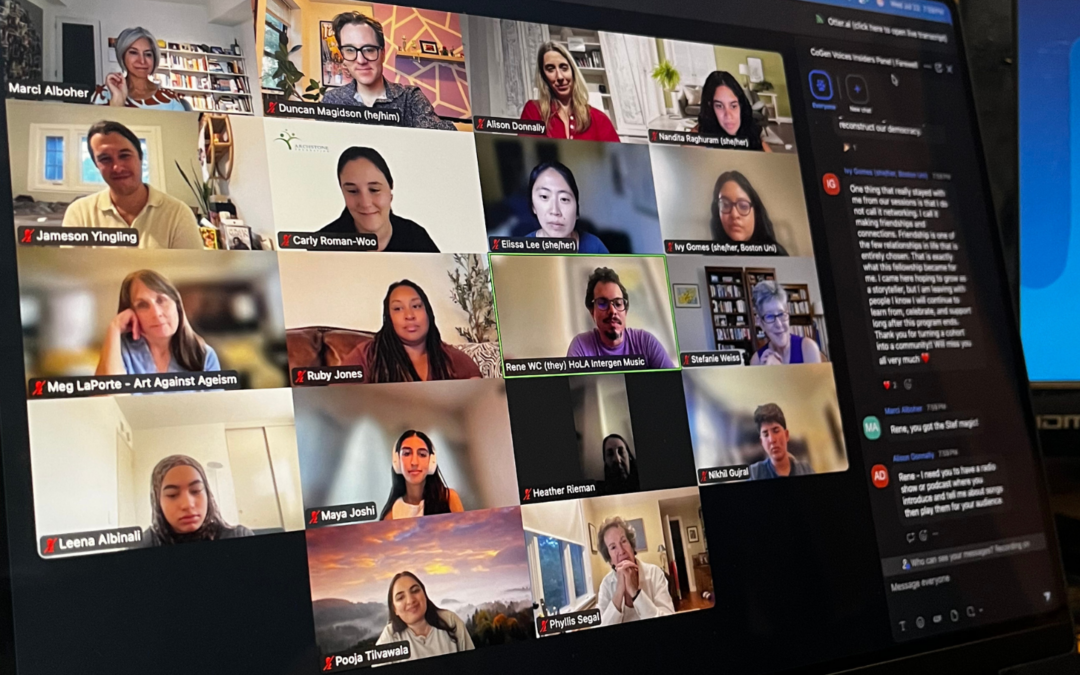
When we first began planning the CoGen Voices Fellowship, we knew we'd face a few challenges. The group of 21 community changemakers was intentionally diverse — by age (15 to 81!), race, location, work, experience, and more. We'd have to meet many different needs and...
At CoGenerate, we believe in the power of cogeneration: a strategy to bring older and younger people together to forge bonds across differences, combat polarization and ageism, and help solve today’s toughest problems. If you’re involved or interested in cogeneration,...
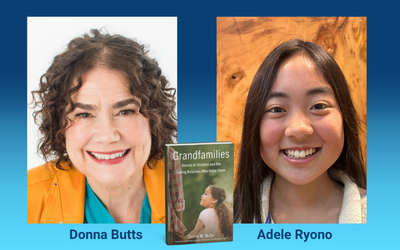
https://youtu.be/OedAsZVTm9U?si=q20TIH8zuwPEhE0a Today in the US, more than 2.4 million children whose parents are unable to care for them live in grandfamilies, where they are raised by grandparents or other loved ones. Until recently, their experiences have been all...
Is your organization ready to tackle one of the toughest but most transformative shifts in intergenerational collaboration? In this session, you’ll hear from three leaders spearheading efforts to diversify board involvement. This will be a learning-in-public conversation—grounded in real experiences, open questions, and honest reflection.
Together, the panelists explore how to build stronger boards by drawing on the distinct strengths, perspectives, and brilliance of both younger and older leaders.
Speakers:
Alex Edgar, co-founder of Youth250 at Made By Us, CoGenerate board member
David T. Hsu, Senior Director of Programs and Policy at Omidyar Network, CoGenerate board co-chair
Gara LaMarche, co-chair of Leadership for Democracy and Social Justice at the Colin Powell School for Civic and Global Leadership, CUNY
Okay, hi everyone. Welcome so nice to have you here. We’re just gonna let people kind of hop on for a few beats before we get started.
Janet Oh
Yeah. Well, I’m Janet Oh. I’m Senior Director of Innovation and programs at CoGenerate, and the reason I wanted to do this in a meeting format, and sorry Duncan if this was like an added hurdle, but, like, I really wanted this to be a conversation amongst practitioners. So I wanted to be able to have everyone see each other’s faces, and you know, as appropriate come off mute, offer your knowledge and your experience. But I’m so excited to be having this conversation with these three lovely guests, Alex Edgar, David shoe and Gara LaMarche, and we at CoGenerate have been hosting a community of practice for Youth Leadership organizations who are bringing youngers and older SR to strengthen their communities. And I have found that as organizations start to do this work, they start to look internally at their program staff, and they also start to look at their boards, and a number of them have realized CoGenerate included that age diversity at the board level is long overdue, but changing that highest level of an organization is hard, and frankly, it is scary. So that’s what this conversation today is about. Is about having a frank conversation with people who have multiple board contexts and are able to bring their experience to the conversation, to share what they’ve learned, what’s worked well, and what continues to be hard. So as I mentioned, we have Alex Edgar, who is co founder of youth 250 at made by us, and also a new CoGenerate board member. So thanks for joining Alex. We have David Hugh, Senior Director of Programs and policy at o mid yard network, and he is the CoGenerate board chair, the co chair of the board, and then Gara LaMarche co chair of leadership for democracy and social justice at the Cole and Powell School of civic and global leadership at CUNY. Okay, so looking around the Zoom Room, I know that we have a lot of leaders who have a wealth of experience. So again, like feel free to join this conversation in the chat, or you can raise a hand to come off mute. So first I wanted to share a little bit about what you all said when you registered for this session to kind of ground us in the context of the work. So Duncan’s going to share some slides about what is, what are you currently focused in terms of who you’re trying to bring into your board? So I found this really interesting. Majority said Young Leaders, which is perfect for this conversation, but very close people said both younger leaders and older leaders. So I think some of the questions that popped up were just about like, how do you recruit board members who are committed to your work? So some of that is just very like, practical and, I think foundational. And then some of you, for some of you, you’re looking to recruit primarily older leaders. And then for others, your plates are full. You’re not currently working on this yet, but you’re curious. And then the other question we asked is, where is your board today in terms of age diversity, and as is often the case, boards are mostly older people. So we see that reflected here. Others have a mix. You know, others have mostly youngers, and then some have some meaningful age diversity. But I just want to say that in the context of this conversation, we are kind of assuming that people are age diversifying their boards by bringing in younger members, and that’s like the balance that we’re trying to set but we know that some people are doing the opposite too, so we will just hold that in mind. So I wanted to start just with a question to all three of our panelists, if you could share a moment when you saw a board really shift because of generational diversity or struggle because it wasn’t there.
Alex Edgar
It’s always hard to just toss something at us, Janet, but first of all, I just want to say thank you for having this discussion, and I’m really excited to talk with these two, but also to engage with all of you on Zoom. So please ask away. One thing I’ll share is on the board of directors of CoGenerate, but also for the past year and a half, I’ve been on the board of directors of Points of Light, which is an international community service organization, mobilizing over 4 million volunteers annually. And obviously, when it comes to volunteer service, a lot of community service is being done by young people, but oftentimes the leadership of that service is done by older adults for younger generations. And I think as I was entering the board at points of light, one of the biggest kind of learning experiences for myself, but also for everyone else on the board, is that oftentimes, you know, board structures tend to be very far removed from the programmatic, day to day work that these organizations are doing, and oftentimes we’ll be able to see when the community is doing the work. Are not the ones that are leading the work. And I think being able to bring whether it is a young person, but also more broadly, bringing community leaders who may not be in a stage of life that is traditionally seen as when board service becomes more prominent by bringing community leaders, especially younger leaders, onto the board, it does increase everyone on the board’s understanding of the realities on the ground in a way that is not kind of filtered through the levels of the organization, not in like an intentional way, but oftentimes, the types of things that a young or community leader might bring to the table, off the bat, is very different than what someone who works within the nonprofit or organization might be thinking is the most important thing to surface.
Janet Oh
Thanks.
Gara LaMarche
Alex, the so I, you know, I’ve been on a lot of boards in my life, and I in this current phase of my life, I helped to train boards and board chairs and help people with their boards of directors. And I’m very late to the table, even as somebody who’s used to support CoGenerate in philanthropy and who is a fellow CoGenerate four or five years ago, and who, by all rights, should be really attuned to these issues. I myself have been very late to the table in my board work with respect to intergenerational work, and so I, as you’ll hear throughout the next hour, I don’t, I don’t hold I don’t hold myself out as an as an expert, or somebody who’s done it particularly well, although I do have the experience of having been on a board very young, but it’s StoryCorps. When I was the board chair for 10 years, not so much deliberately, because we were seeking younger members, but we happened to recruit somebody in their 20s to a board that, like most of the boards I would talk about, are full of people in their 50s and 60s and older. So there was a generational difference on that board. And this person was terrific. She happened to be a comedy writer in California, but I guess I would say, and this is going to be rather predictable, that she had a different kind of cultural competence than anybody else on that board, you know, for an organization that was trying to kind of reach people and change hearts and minds, her sense of the media environment, you know, her sense of what resonated with people her age, and she wasn’t there to represent young people. And that, by the way, I think, is actually kind of a key that people need to be themselves. They may happen to be young, they may happen to be old, but, you know, it changed the conversations on the board by her very presence just because. and her cultural touch points were different and enriched the board’s discussion. So that was a positive example of something we kind of stumbled into, but and she’s to this day, a very valuable member of the StoryCorps board.
Janet Oh
Thanks, Gara.
David T. Hsu
everyone. Shout out. Andrew Brenda in the audience, I see you over there. It’s it’s about seven o’clock here on the East Coast, and I love making cocktails. So I was thinking like the cocktail that I would make for this call is definitely two ounces of humility, one ounce of candor, few dashes of humor, and served on ice in a glass that is definitely half full, because I’m super grateful to be on the board of an organization CoGenerate that is willing to try, fail, adjust, grow, experiment, and So that’s kind of the posture that I’m speaking from as a co chair of the CoGenerate board. I will talk about a time where things didn’t, didn’t, did not shift, yes, cocktails all around. So there was a time that I was the young member of the board. When I joined the Encore board, I was 37 these beautiful gray streaks had not come, come through yet. And honestly, like I my presence on the board as, like the young member at the time, I don’t think a lot shifted. I think a few, few years later, we brought someone who was actually younger, and maybe around 30 or so. And I think like, maybe, like, people would probably say that, like things felt like they were wanting to shift, but maybe, like something was not really shifting. You know, I think that’s the way people would generally say it. So I would say that that just underscores one of my headlines for all of this, which is that age diversifying a board is kind of just like the tip of the iceberg. And like the iceberg is building a culture of belonging on your board, right? And that is kind of the discipline, the practice that all of this comes from. I will say when, when Alex Ariel and Ben, who are our three most recent board members, joined, I think people did feel a bigger shift happening, but it’s for reasons that go beyond the three new people who showed up, and we’ll get to that later.
Gara LaMarche
Can I piggyback on that for just a second? Janet, yeah, I think that in any kind of diversity, and many of us in recent years have had more experience being more deliberative and intentional about racial diversity or gender diversity or or those kinds of diversity. And, you know, I think the same applies to age diversity, if you can’t be tokenist about it. Number one, nobody wants to be thought of only in terms of whatever identity box they happen to be represent. But also, it’s not surprising, I guess, that you know one young person, a relatively young person, by themselves, wouldn’t change the dynamics of it, because I think when you when you do that in isolation. It’s a different experience, and it’s a much more challenging experience for the person coming in as the young person, for instance, whereas, if you have kind of a critical mass of people, everybody is a little bit more liberated to be themselves and not just the representative of their age cohort or whatever it might
Janet Oh
Yeah. I mean, that’s a perfect segue to the next question. But I also wanted to appreciate David your cocktail comment, because in prepping for this, David said, let’s remember to have, like, a sense of humor about this topic. And I honestly thought to myself, like, how are we going to bring humor into this? I don’t, I don’t have any jokes about this. So thank you for showing me that that path, David with, with the cocktail metaphor. But okay, so So echo generate. As we’ve been working on this and and stumbling and having some moments of success, we kind of put together these seven tips for what to keep in mind as you age, diversify your board. And so today we’ll touch upon like a handful of those, and then we’ll share at the end of today’s session the list of the all seven, so you could take it to your organization and apply it. But the first one is exactly what Gara was saying about being the only is lonely, that one rule we try to follow is to avoid bringing on a single younger or a single older, because they will inevitably have to represent an entire Generation. So Alex, I want to ask you, from your perspective, if you could share what it feels like to be one of the only or one of the very few young people on a board, and what others often miss about that experience
Alex Edgar
100% and because David made the cocktail metaphor, I just, I think, like a funny anecdote to share about this is, I think, because how often organizations leap to, well, let’s just bring a young person in. I can’t tell you the number of conferences I went to under age that because they didn’t expect young people to be there. They didn’t check IDs. So just sit with that in terms of a very small example of what it looks like when we’re not designing spaces with young people, and, you know, age diversity in mind, but specifically in the board context, I think what is is really difficult about this type of process. And I want to be, like, very upfront about this. My for belief always is, if you don’t think you can do it, well, this is not the spot to kind of start your approach to age diversity, because if everything underneath the hood is not ready for age diversity, your board probably isn’t going to be ready for it either, as Gary was mentioning, I think a lot of this is about the culture that like is present there. And as David was mentioning, even CoGenerate in its many iterations, has needed some of those changes. And I’m a firm believer as someone who’s really focused on like, what is positive youth development, that it is the onus is on the older leaders to not put young people through negative experiences for your opportunity to grow. And I know that’s like, it’s like a hard truth to sit with, but I really think it’s important as leaders of organizations, as board chairs, to really think through the steps that are necessary and to be done intergenerationally with you know, younger and older leaders, to make sure that before you do the nice, important thing of bringing two or more younger leaders onto your board, into your leadership spaces, that we’re making sure that it’s going to be a safe space for them to be part of this process. And that’s not to say that you’re going to have everything figured out, but that is to say that I think it is really critical that folks that care about young people don’t play a role in pushing young people out of doing this type of work. Because I can’t tell you the number of people who have been placed into these types of spaces at a young age that are no longer doing the work because they had such negative experiences with tokenization and the way older adults approach them in these spaces. And the last thing I’ll say say from my experience having been the youngest person in far too many rooms for far too long, is that I really think it’s, it’s important to remember that if you are doing this process intentionally, you are bringing these younger leaders in as equals, and it’s important to have conversations with them as equals. I think it is, it is really critical when we’re doing this that like, just as you would talk to your friend about your kids. You can talk to a 1920 year old about your kids. What I kind of ask people to be careful about is comparing said young person on your board to your children, right? Thinking through in the same way when we’re talking to older adults, right? Don’t compare an older board member to your grandparents, right? Think through how some of these age dynamics might make people feel uncomfortable, especially in a place that is designed to be equals, because that’s a really incredible way for us to kind of break down some of these barriers that we see between folks based on age.
Janet Oh
Thanks, Alex, yeah, I heard you say kind of like first rule is, like, do no harm. So in kind of thinking about what you’re inviting a young person to participate in and taking that responsibility really seriously. Gary, I wanted, I was curious if you wanted to share anything from your perspective. I know that you’ve shared that earlier in your life. You were the youngest person working with the ACLU, and now you’re often on the older end. So I’m curious if you had anything you wanted to share to that it
Gara LaMarche
happens and you live long enough you go from being the youngest in any room to being the oldest in most rooms
Alex Edgar
and still young at heart.
Gara LaMarche
But don’t be patronizing the I was a, no, I’ll be 72 this year. So 54 years ago, when I was 18, I was actually, I was younger than 18. I was 17 in the same so it’s a lot. I’ll give it a short version of the story. So I was graduating high school, I was going to go be a student at Columbia as a freshman. And I had a former high school teacher who had moved to New York and was doing some work with the American Civil Liberties Union, which I’m not sure at the time I’d ever even heard of, and the American Civil Liberties Union, this is in the, you know, early 70s, after the campus protests of the 68 and 70 and they had a very prestigious committee of the ACLU called the academic freedom committee that had been founded in 1926 by the founder of the ACLU, Roger Baldwin and John Dewey, and you know, other great, Reinhold Niebuhr and all these great figures of the of the earlier part of the century had, at one time been on it. This meant very little to me at the time. I didn’t really know all that history, but maybe if I did, I’d be even more intimidated. So they they had a notion this committee which which considered weighty matters of policy about universities, that they should have a student member. All the members of the committee, and that in the time were mostly, not only older, very old, to me at the time, they were probably ranged in age from 55 to 70, but maybe a little older. We’re mostly white male college professors. The Dean of my college was on the committee right, and so somehow they thought they should get a student member to get a student perspective on things. And my friend, my former teacher, proposed me as this bright young thing coming to Columbia. And somehow they, they, they, they brought, brought me on. And there was a kind of a pro I had to be interviewed by the senior ACLU staff and voted on by the ACLU board. And all this happened before I turned 18. So I show up in New York for the first meeting, and there it was in a kind of a wood paneled conference room. Remember, I just been I was wearing bell bottoms and, you know, long hair, and I this was a new world to me, and they served a full bar of spirit drinks that Davis be very happy, or you could get a martini when they over the meeting, and a hot meal served. And I don’t think I opened my mouth for the first three months, I had a fairly cocky attitude and opinion of myself, but I was just a world I had done no knowledge of. But, you know, I acclimated myself, and I think two years later, I was the vice chair of the committee, so So I served on that until they hired me for the ACLU board. I don’t know what the lesson of all that is is, but I think my chief value on the panel here is as I was a former young person, and I knew what it was like to be in that situation, and I was the token member, and they did patronize me in well intentioned ways, but I think as time went on, I kind of got the lay of the land, and then I moved beyond being the person they saw, only, you know, as a young person, and I was in fact, able to provide a bit of perspective as a student, which is very valuable if you’re dealing with, you know, something like university policy, and the only people you have in the room are people who are tenured college professors. You’re going to skew your discussions in a certain way. So I mean, all I would say about that, and it applies more to my life as an employer than as a board member most of the time, is I have never forgotten what it was like both to be the younger person in the room and to be given opportunities to be the younger person in the room. And so in my hiring life, I’ve always made a point of trying to have age diverse staffs. Now the challenge is to try to think that way about boys. I think there are some different obstacles there, which I’d like to discuss, but I’ll hold off for a minute.
Janet Oh
Okay, thanks, Gary, yeah, I feel like we’re touching upon a lot of things. One of the things I wanted to turn to David to talk about is like we have found that leadership commitment is essential, that the role of the board chair is important in setting the tone for how seriously the work of ages diversifying your board is perceived. So David curious, like for you as a co chair, what you think the role is of that board chair and creating a more age, diverse board. What happens when you have that commitment? What happens when you don’t
David T. Hsu
Great? Well, you know, the question begs that, yes, leadership matters. I have the honor of serving with Ray Jetson as co chair. One of the reasons I think we were both excited is that both of us are attuned. You know, we don’t, we don’t wake up in the morning excited about like bylaws of the board. Necessarily, we respect them, but we are both people who really pay attention to the culture of the board. And so Ray is someone who excels at shaping a container, knowing how when certain things need to happen, and I’m someone who excels at stewarding a container in many, many of the non grand ways, many of the some sometimes imperceptible ways. And so I’ll just say three concrete examples of ways in which leadership can can matter. One big and two small ways. One big way is in shaping a nominations conversation to the board that is based on readiness and not just on characteristics such as age. That’s important because to build a culture of belonging, right like you know, if you were to look at two of our youngest members on the CoGenerate board, Alex and Ariel, who’s in the audience. Hello, Ariel, who’s in law school currently, you might you might think, Oh, these are two young members who both bring youth to the board, which they do, but Ariel instantly has become our top, most qualified legal and policy thinker, she is highly networked and expert level within the Aging and Longevity space, whereas Alex brings expertise, significant networks and fundraising experience In the youth development space. They are not in the same they are not exactly working in the same spaces, although they increasingly find themselves in similar rooms. So that’s one example. Is a conversation about readiness that takes into account all of what a person brings, number two as a smaller way, which is like, like as co chairs, a big part of the way that we lead in creating a board where everyone belongs is by facilitating, well, right? By ensuring that everyone’s voice is heard, that there’s room for all voices, and that it’s not just being at the table, but having your voice valued and shaping the outcomes. The third is in scheduling meetings. So for sure, scheduling meetings will be more challenging with age diversity on your board, and it’s just something that you have to push a finger on and make sure that you’re trying to do your best to accommodate as many schedules.
Janet Oh
So those are some examples. Yeah, thank you. I mean the the last one, you said scheduling meetings in the content of program, work and something that came up with the Community of Practice, even just hosting, it was like how, you know, even the time of finding a time that’s after school across time zones, which then is very late for adults who have jobs where they’re doing all of this for their job, it is, I think, not insignificant, is just the ironing out the logistics of inclusion and access. Who can
Gara LaMarche
participate? Janet, can I say that? I don’t that. I think it’s it’s with other kinds of diversity as well. But the question is not so much how you fit younger people, for instance, into a board. It’s how a board must change to be the kind of place which is both welcoming and where someone can do their best work, and that applies to younger people. Yes, schedules might be different. I’m on a global board where most boards reflect, understandably, you know, a kind of a the structural biases of generations, right? You know, toward older people, toward white men, to whatever it may be. And so, like, I’m in a global board that has members in Vietnam and India and so on. And if we have all of our meetings by zoom at the middle of the night in Vietnam, then, then you’re you’ve got to have a bias towards the people of the West. So we’ve learned that you kind of have to change meeting times, and then there are language issues. So it’s really about the institution has to be reflective about David was indicating about how it needs, how it needs to change. Because I think the whole structure of most nonprofit boards, I believe, was designed for a time where most of the members of those boards were old white men wearing suits, you know, who were professors or lawyers or corporate people. And that’s not the world we have today, or want to have today in any event. And so I think the norms of the board work. I’ve been thinking a lot about this, not only in this context, but others have to shift, or at least should be examined.
Alex Edgar
Yeah, and one thing I’ll just add on that note, I was literally just talking about this yesterday with someone probably lots of you might have might know, Kay Shana gwensberg, who used to lead circle out of Tufts. And one of the things we were discussing is that, honestly, as Gary was just mentioning, like boards kind of don’t work well for everyone. Like, you know, it is a very strange system, and especially as all sorts of diversity has become more common, it is a very unique system that often every single board operates a little bit differently, and there’s different structures and there’s different understandings that you need to have. I remember the first time I was in a board meeting and was like, huh, fiscal responsibility for fiscal fiduciary responsibility. Like, what is that? Why do I have it? What does that mean? Like, there are so many different things that come with the board role that, like, beyond, just like the youth piece, I think so much of it is also like, anyone coming into a board role is going to need additional training and understanding. And it only is, you know, even more important when it’s someone’s first time, regardless of whether they’re 1830 or 60, there’s, there’s a world of learning that is necessary.
Janet Oh
Perfect, a perfect segway to the question of, like onboarding. And I think Alex like, the obvious instinct with onboarding is like, how do you prepare the young board members to be a part of it and talk about fiduciary responsibility and all of that. But the question is also, how do you prepare the existing board members to welcome new members and be open to change? And I have loved how, like David, you’ve been throwing in lots of concrete examples the going from three hour meetings to one and a half hour meetings. I think these are all revealing of the how and hopefully, are like things that people can just take and try. So I’m curious to hear from the three of you this, if you could touch upon like, what does good onboarding look like, both for the newer, younger members as well as the current board?
Alex Edgar
One thing that I have have helped an organization, actually currently with, and I found to be really, really helpful, was to kind of have an initial session with the board after they’ve decided that this is something that they want to go through with, with someone who is actually deeply involved in youth development and understands, you know, this type of work, like many of the folks here at CoGenerate, to kind of talk through some of these unknown biases that a lot of people have about young people, and to really like, have that space as a board, to like, talk through the types of changes and ask the types of questions that, again, going back to my previous point of not putting the kind of onus on the young person to bring the change to really enable that space for the board to be like, hey, you know, this part of this change is scary. It makes me a little uncomfortable. I don’t know how to do or feel XYZ thing and really create that space internally, in addition to, kind of, like, some of the education about, you know, how do you operate in these intergenerational relationships that CoGenerate has done some really incredible research reports on that I definitely would recommend folks check out. But I do think having that space for the existing board members to just kind of like really talk through and get out any of those questions and concerns they might have, while kind of in the parallel track, doing a lot of that education for the new board members, because it is a very unique new world, and it’s different for every board. And the biggest tip on kind of the new side as well, that I’d share is we know every board, there is a different power dynamic, whether it’s the you know board share it is a certain board member that’s been there for X number of years that has more influence than you know a traditional board member. Or if there’s certain groups of people that came on at certain times or are associated in other ways, if you’re going to bring you know a young person into that space, make sure you give them the honest truth about what space they’re entering, because that will definitely make their process on the board and feeling acclimated to the space that they’re in so much easier if they’re not also, in addition to learning about the board dynamic in general, having to navigate, oh gosh, this is the existing kind of like social and cultural dynamics on the board as well.
Janet Oh
A real quick Alex, can you name, like a few of what you said, the unrecognized biases about young people that have come up in the board context?
Alex Edgar
Yeah. I mean, I think one thing that comes up all the time is that every young person should be an expert on social media, if your goal of bringing a young person onto your board is to get them to help you think through your content, I’m going to tell you, hire a consultant, hire a full time Gen Z social media staff, manager. Don’t, don’t do that in the board space, right? Like I think that is one thing, that there are certain things that because of generational differences and expectations. You think by bringing a young person, they’re going to have expertise in all of these different spaces, and to kind of go to David’s point and talking about bringing Alan myself onto the board like there, there are many different young people all across the country that are experts in so many different fields that are helpful to a board, and I think that that piece of bring this young person also, and not treating them like they’re just the expert on youth, but bringing them in as an expert on the topic area that they have expertise in is really, really helpful. And one thing as y’all are thinking through kind of best practices, both in like having them on the board. But also the recruiting process is that, for points of light, for instance, we kind of went through this process where they brought on myself as the First Gen Z board member, and just a few months ago, we brought on our second Gen Z board member as kind of this, like longer term process of kind of board readiness. And the one thing I’ll share is that the initial kind of inclination from the board was, hey, this, this Alex guy, worked out pretty well. Like, who else is, like Alex that we can bring on the
Alex Edgar
board. And I think what you know, we were able to successfully, kind of have many open conversations with the board about was that actually what would be most helpful is not to have two of the same type of younger board member, but actually two very different board members that are going to bring very distinct perspectives into the space. So now I’m on the board alongside the Head of Marketing for UTA is next gen division China, who is a stellar person who is not in my spaces at all, which makes it a really, really positive experience for everyone involved, because it is shifting a lot of the expectations they have about what a young person in this type of role is experiencing.
Janet Oh
Thanks. Alex
Gara LaMarche
Gary or original question, I think had to do with with onboarding challenges, but I don’t, I think I many of the times when we’re talking about how to deal with you, and we’ve been, we’ve been talking mostly about young people, I could also share the experience at some point of onboarding a 95 year old, new board member at StoryCorps, but, but, but, yes, it’s true that most boards are and should be looking to be more age diverse with respect to younger people and but I want to say that most boards don’t do a very good job of onboarding period, right? And as somebody who trains a lot of boards and board chairs, many people, even who are middle aged and expert experience a lot of things, still have the challenge of navigating the culture of a particular board and understanding where the power dynamics lay. That’s not something that’s peculiar to younger people at all. Boards need to do a better job of onboarding generally and also understanding and acknowledging their own culture. So I think, you know, the younger people would benefit from it, but it’s, it’s, it’s, it’s not only about, about about younger people and where recruitment is concerned, which is, yeah, this impulse. So let’s get another person like Alex. I mean, the thing is, I believe in general boards are too micro, focused on particular kinds of expertise. We need somebody knows finance. We need somebody who knows communication. Those people become like the one eyed man in the land of the blind. That the right expression you know that you don’t want to subcontract your you know some area of policy or scenario of the work to some board member who happens to have expertise in it, because another person with the same expertise might bring different perspective, and particularly with respect to young people, if you the thing you have going for you is that you’re young, that’s a diminishing return over time, there has to be something else that doesn’t, that doesn’t last forever. So I think the big challenge for boards that are not age diverse now is people social circles, often, not always, but often tend to be their own age cohort, or maybe older. And so, you know, they don’t, it’s a little hard to fit, because most boards operate on a kind of and maybe this is a bad thing to begin with, and we know that it’s been a bad thing over the years with respect to things like race and gender, that if you have an all white board, those people are not likely to have, you know, contacts among people of color historically, and the same is true where age is concerned. So I think boards have to break out of the mold of nominating committees like who knows who we’re dealing with this right now on the library board, where I’m vice chair now, sit with the nominating committee. I don’t think there’s anybody on our board younger than 50, and at 72 I am far from the oldest member of the board, and we just have to do a better job. But when we’re sitting around thinking about younger people, some of the issues come up about time commitments and availability, and some of the comments just come up about people well, you know, they think about their children’s friends or whatever, you know. And also, of course, age is a continuum, right? So I think I was first a member of a board when I was real board, not the ACLU thing when I was 35 years old, but I was already kind of inching toward middle age, and the experience 35 is a different generation, practically, than 18 or 19 or 20. So there’s it’s not so binary?
Janet Oh
Yeah. I mean, I think this question of, like, how do you recruit for readiness, not just representation? And when I think about Alex and Ariel, like, we met you as partners of our work, and I think so in terms of, like, that question of social circles, and who you can nominate and who you know, I think one thing that did work for us was like focusing on the heart of the work that we’re doing out in the world, and then expanding our network that way. I wanted to turn to this topic of board norms and expectations, because I’ve felt like, I’ve heard that come up a lot of like, what is the unwritten power dynamic, the unnamed social dynamic of what’s happening on on board, and that is so hard to identify, talk about, and then try to onboard someone in all of that. So I’m kind of curious if, if you all could share a little bit about that, and maybe David, I’ll ask you, if you have any ideas about like, are there certain methods or practices you’ve seen work in terms of helping someone understand a board culture?
David T. Hsu
Yes, I will try to go to one of the hardest things, which is money. So let’s see. You know, I think it’s a fairly common norm with nonprofit boards to either have a or to have, like a give, get policy. You can give as a board member, make a contribution, you can help attract or go chase down grant money. And we used to, I think, just basically say something along those lines, you know, give, get, give. We want to make sure everyone on the board gives something meaningful to you. And I think that is basically what we said for the full time that I was on the board. I think when, when we had, we kind of learned as we went. And that was one of the things that was like least specified. And we sort of decided very recently to both evolve the policy from to give, get serve, so that some people who were much more wanting to contribute their gift of time could do so. And then we also try to be as transparent as possible to say what the giving range was. So, for example, on our board, the giving range can be anywhere from $500 to sub 10s of 1000s of dollars in any given year. And we do. We’re just trying to not have someone you joining the board. Guess whether meaningful? It means 10, 10k you know, particularly if you’re in school or just beginning a career. So that’s just one example
Janet Oh
we’ve been and I think, oh, Gary, did you want to say something?
Gara LaMarche
Well, no, I was just going to say that, not so much in the context of age diversity, but in the context of other kinds of diversity. I wish I had this conversation with the board I advised yesterday, this morning, and all the boards I’ve added gone through that. So give or get and give, get serve is a nice formulation. I hadn’t heard that before. But, you know, people always think about the give part and not enough about the get part. So I guess I’m of the belief for everybody, that you could be 19 years old and not have two Nichols to scratch together, but you if you are passionate about the mission of the organization, you have just as much right and capacity to ask somebody else for money as somebody who’s a multi millionaire and a big giver. It’s all partly it’s about training, giving people the tools to do that, helping them the reluctance to ask for money or the insecurity about it is, is age, blind people at all ages have that, you know, and so I don’t think there’s anything. So I think give, get has to be better defined, like you say, which is great. And I’m going to take that and apply it, you know, in other places, but also it the anybody can, and should be able, to communicate the mission of the organization, you know, and sit down with somebody if they’re giving whatever is a meaningful gift for them, you know. And it may be, I’ve been on boards where it’s well lower than $500 right, but it contains people who they all they can do is $100 but they could take part in a meeting asking somebody else for money. That’s what I mean. We’re all meaning, I think talking tonight about how, you know, you ride in on the question of younger people on boards, or age diversifying boards, maybe with older people as well. And you end up inevitably going into these questions of, well, why do we do it this way to begin with? You know, like I wrote a piece for encore when I stepped down from running organizations for 40 or 45 years about I found, one of the things I found in my kind of post CEO life was I felt liberated from routine meetings, you know, all the meetings you have in your life in an organization. And I thought, This is great, you know, why did I wait so long for this? And I thought, well, maybe, maybe the meetings didn’t need to take place in the first place. You know. Maybe everybody, people are living these desperate lives of too many meetings in their work lives. And why wait till you’re like, 65 years old to end that? Maybe we should be questioning the meetings right now, you know. So I think, I think that way about some of these things about the boards, the questions that are arose. They may come up in the context of how you’re more welcoming, let’s say the younger people, but they actually about
Janet Oh
everybody, so it’s actually a huge opportunity to change and improve your board. So I it was interesting, like, I think for us when Alex and Ariel joined and Ben too like there’s also this transition of board chairs, of going to co chairs, so it’s like a whole moment of change when there is the opportunity to rethink and go from three hour meetings to one and a half and do all of those types of things.
Alex Edgar
Oh yeah, sorry. I wanted to add one quick point with what are just said. And I think that, like, part of it, of what i we i think all we’re talking about before, of like, it’s not just the board, it’s the organizational shift that’s important is also that, like, your funders, talking about the get part, right, are going to recognize, if you’re talking out of your ass and are just saying, we’re committed to young people, right? Like a good funder is going to be able to recognize you’re not, you know, walking the walk. And that’s one thing I think that becomes so powerful by having a more intergenerational board, and also a board that has more diverse backgrounds and experiences when they’re entering the board space, is that the as Gary was just mentioning, like the type of kind of messenger for your organization, for your ED or CEO, to take this board member who has deep, lived experience and professional experience in a space, and maybe is also younger, into a conversation with a funder and is actually able to be a much better messenger than you can as the ED, as the CEO, because they’ve actually lived that life in a way that you haven’t is a an absolute game changer. And again, it’s not just something that is for, you know, age diversity, but like, really across the board, like that. That is what the point of a strong board member is, as someone that brings those unique experiences. And I think oftentimes, you know, there’s a little bit of kind of fear around what those different voices might bring to the board space. And I think it is actually just such a massive opportunity.
Janet Oh
Thank you. Thanks. Alex Duncan, I was gonna ask if you could, like, unpin everyone so we could see each other and sort of be in a room together, and I would love to just open it up for questions. I know that there’s a couple of questions in the chat, so maybe I’ll start off with one of those. But would love if someone has a question to come off new or raise your hand and I can call on you, but I wanted to ask this question about like, do you conduct board retreats and orientations? And if so, what are some of the features of creating that age diverse board retreat or orientation? So David, I think you were talking about, like, stewardship and like, what that meeting actually looks like. I wonder if we could give some examples of how you might do a board meeting differently. If you have an age diverse board.
David T. Hsu
We have not done a board retreat, full board retreat yet that I would consider to have done. You know, done a great job of that, but so TBD on that. I think our name is CoGenerate, and I think that that is a very good place to begin. Which is we, which is to ask and listen and to co create agendas. Co create priorities, the priorities that we have set as co chairs for our board are based on having spoken to each individual board member as well as key staff members, then we just reflected that back to the board With a little massaging. And so I would say co creation is one, you know, I think that some boards i i If I can bring in that, you know, one ounce of candor. I think boards can sometimes ease into a place of thinking that the point of a board is to just talk and sound smart around a table. And I think that that, you know, you know, I don’t know that young people join boards so that they can sit around a table and sound smart. I think young people want to get things done, and we’re, you know, at least the one, the ones that like really want to join a board, and so, you know, targeted, action oriented conversations that get feedback in a focused way. You know, having clear agendas that don’t, you know, sprawl for hours. You know, these are like some basic disciplines that I find are very useful for the context that I work in.
Janet Oh
Thanks, David, anyone have, anyone want to come off mute and and ask a question or offer an insight
Janet Oh
while people are thinking, someone asked a question, do you have board meetings in the evenings, and does it affect participation?
David T. Hsu
I’ve not experienced that.
Gara LaMarche
No, I don’t. I mean, as I think about the boards I’m on, they have varied. I mean, some have been, you know, four to six in the afternoon meetings. You know, four times a year, right? That’s during the work day. For many people, my wife’s organization does have evening meetings. You know, from I don’t know, six to eight or something like that. A lot of groups have, you know, you travel someplace, and maybe me, over a couple times a year, over a weekend, I’ve been on those kinds of boards. You know, who that affects? You know, if you’re often not always, the older you get in the workplace, the more flexibility control you have over your own time, right? So most of my life, I’ve been in jobs where I was the CEO or whatever, and I nobody was telling me I couldn’t go to that board meeting, you know, or that I had to do something else. But you know, very much, younger people are unlikely to have family obligations, so they have a certain kind of more flexibility. But people who have young children very often, you know, an early evening meeting, the last thing that they would want to do is child care involved during time to get to see the kids. So so I think all of this kind of argues for something that is actually not the norm, which is maybe over the course of a year, enough flexibility in scheduling that it can accommodate all the different kinds of needs that people have. You know maybe you’re not always meeting at a certain time. You’re varying it over time, because you recognize that an age diverse board will have people for whom no time of day is perfect for everyone. So you have to mix it. Mix it up a little bit
Alex Edgar
100% I think a couple things on this note, of like, how do you fit this into their lives? And I think that’s incredibly important, especially when you’re looking at not just younger beers, but folks who, as I was just mentioning, like, are not in positions. Like, the more senior you get, the more you’re able to kind of flex, and especially if it’s aligned with the purpose of the organization you’re in. Like, I will say, you know, I take PTO to go to board meetings if they’re especially if they’re in person, and depending on how long if they’re virtual, and that does mean that those are less days that I’m taking for personal enjoyment and other things that you know, going on vacation, and so those are, like, kind of the easiest level, some of the changes I just wanted to On another note, shout out Nia West Bay, who’s the executive director, the National collaborator for transformative youth policy, and a real expert around youth development, one of the things we were talking about recently in a conversation about youth leadership, is that one of the things you have to think about also as this kind of expanding piece, is like, do you have funding to cover travel for your young people to go to boards, or are you making them pay out of pocket to attend your board meeting if you have a young parent, do you have funds to cover child care or support an additional plane ticket if they need to fly with their young children to your board meeting? Is there space where you’re having the board meeting for child care. Or are you, are you able to support if someone has a, you know, physical disability and needs additional support to attend an in person board meeting? Like, is that set aside as part of your goals in diversifying your board? You know, are you prepared for some of those additional costs, especially as you’re thinking about young people, right? Obviously, that changes as you go towards older generations, who might have a lot more of their own resources, but in thinking about a young person’s first board experience, I think a lot of how the wraparound support to enable them to show up as their best selves and support your organization’s work is incredibly important.
Janet Oh
Oh, I see Audra, your hand
Audra
Thank you so much, and thanks for having this session. This has been wonderful so and Alex, I know you and I have talked about what I’m about to ask about in in a minute, but I and I appreciate all the things that you just mentioned in terms of making it possible for, you know, for a set of differentiators, for different people to be able to join boards. The one thing that I wonder about, worry about, wonder if people can speak to, is this notion of thinking about where people are and in terms of the financial aspect, right? So it’s one thing to be able to get funding for travel, and the organization can fund travel, but actually taking the days off is sort of a thing that you are able to do. And how do you get, you know, a more diverse board where some people may not have the luxury of taking days off because of the kinds of jobs that they work, etc. And I just wonder if anybody has thoughts around that.
David T. Hsu
Sorry if I understand your question correctly. Audra, an example would be for a long time encore. CoGenerate used to meet twice a year in person, and we decided to move that to one time a year, so that we did most of our meetings virtually, with some more frequency, so more frequent, shorter meetings and only one board retreat. That was our solution. And we do have budget set aside for folks who need assistance to attend exactly the
Gara LaMarche
question, well, yeah, I mean, I think we’re talking about ways to the boards need to change to to make sure they they are meeting the needs of all kinds of diverse people, I don’t, I think on the other end of that is there is a certain set of expectations about board membership, and there needs to be a certain degree of rigor about it, right? And in, typically, in recruiting for boards, you know, with people I’ve not wanted, as people sometimes do to undersell the time commitment involved, because you want people to make a certain amount of commitment to the board. Now there may be different ways that we can experiment with how that commitment plays out. So I think the sweet spot of this, for me is, I mean, if you go too much toward remoteness, if you go too much toward fewer meetings, you attenuate the governance both the building of a culture, which is really important, as David and others have said, and the kind of rigor that a board may need. So my sweet spot is to is to try to make sure that it is work to be in a board, but also to accommodate as much as possible to make sure, with all the list of things, for instance, that Alex said might be available, I’ll say one other thing about it, and that is that I now it was lost by my trade of thought. What an embarrassing thing.
Janet Oh
At the end
Gara LaMarche
of the thing, it’ll come back to me. See this is why you need age diversity on the board, you know, so people remember the things that they were that they were starting
Janet Oh
out saying, well, for sure, to be continuing with Gary’s thought and like, I still have more burning questions in the chat.
Janet Oh
Okay, this is, this is the beginning of a rich conversation. I really want to thank Alex and David and Gara for sharing so frankly and with so much candor your experience. I want to thank all of you for coming, especially if you’re on east coast time, and it’s like getting into the wee hours of your evening. Duncan’s going to launch a really quick poll. We’d love to get some feedback, and we will send out the seven tips that I mentioned so that you have that so thanks so much. So nice to be with you, and we will see you soon. Bye.
To provide the best experiences, we use technologies like cookies to store and/or access device information. Consenting to these technologies will allow us to process data such as browsing behavior or unique IDs on this site. Not consenting or withdrawing consent, may adversely affect certain features and functions.
Functional
Always active
The technical storage or access is strictly necessary for the legitimate purpose of enabling the use of a specific service explicitly requested by the subscriber or user, or for the sole purpose of carrying out the transmission of a communication over an electronic communications network.
Preferences
The technical storage or access is necessary for the legitimate purpose of storing preferences that are not requested by the subscriber or user.
Statistics
The technical storage or access that is used exclusively for statistical purposes.The technical storage or access that is used exclusively for anonymous statistical purposes. Without a subpoena, voluntary compliance on the part of your Internet Service Provider, or additional records from a third party, information stored or retrieved for this purpose alone cannot usually be used to identify you.
Marketing
The technical storage or access is required to create user profiles to send advertising, or to track the user on a website or across several websites for similar marketing purposes.
To provide the best experiences, we use technologies like cookies to store and/or access device information. Consenting to these technologies will allow us to process data such as browsing behavior or unique IDs on this site. Not consenting or withdrawing consent, may adversely affect certain features and functions.
Functional
Always active
The technical storage or access is strictly necessary for the legitimate purpose of enabling the use of a specific service explicitly requested by the subscriber or user, or for the sole purpose of carrying out the transmission of a communication over an electronic communications network.
Preferences
The technical storage or access is necessary for the legitimate purpose of storing preferences that are not requested by the subscriber or user.
Statistics
The technical storage or access that is used exclusively for statistical purposes.The technical storage or access that is used exclusively for anonymous statistical purposes. Without a subpoena, voluntary compliance on the part of your Internet Service Provider, or additional records from a third party, information stored or retrieved for this purpose alone cannot usually be used to identify you.
Marketing
The technical storage or access is required to create user profiles to send advertising, or to track the user on a website or across several websites for similar marketing purposes.